
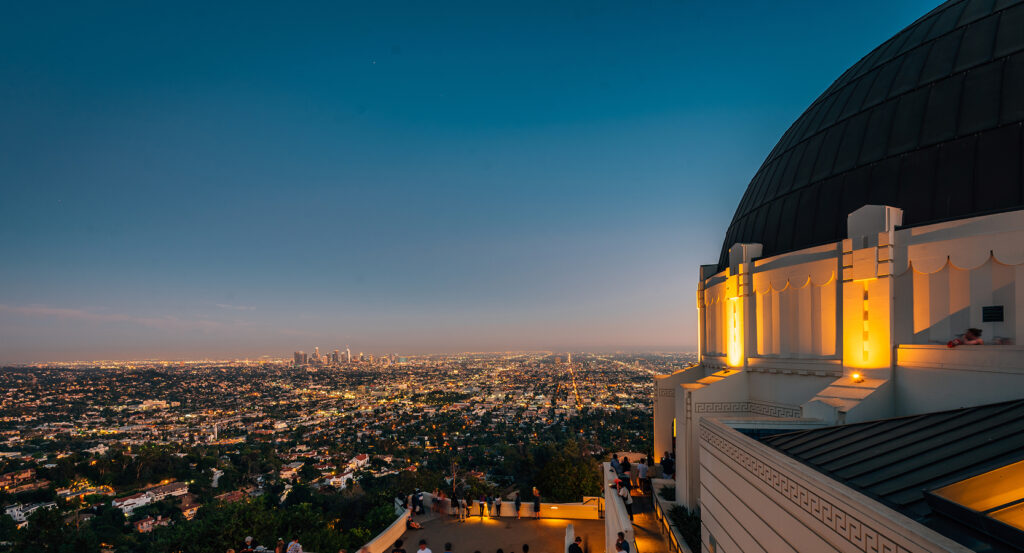
Why 4th Street matters.
4th Street is an eclectic corridor where Historic Core's commercial heritage, civic development, immigrant entrepreneurship, and enduring reinvention as one of Downtown's most historically layered districts shape one of the city's defining east-west streets.
Running through Historic Core between Bunker Hill and the Arts District, the corridor connects civic landmarks, historic commercial buildings, theaters, public markets, educational institutions, and adaptive-reuse residences that collectively preserve more than a century of metropolitan growth. Beaux-Arts office buildings, early department stores, restored theaters, brick commercial blocks, and contemporary residential conversions preserve a corridor shaped by railway expansion, streetcar mobility, and successive periods of reinvestment. Residents, businesses, preservation organizations, cultural institutions, and public agencies continue reinforcing 4th Street's importance while supporting commerce, housing, education, and civic life throughout Downtown. The result is an experience defined by historic continuity, architectural preservation, and the enduring character of the Historic Core.
What you should know 4th Street.
4th Street is best known for documenting the emergence of Downtown as the commercial and administrative center of Southern California during the late nineteenth and early twentieth centuries, when transportation investment fundamentally reshaped the city's urban form. Following the arrival of the Southern Pacific Railroad in 1876 and the rapid expansion of the Pacific Electric Railway and Los Angeles Railway systems after 1900, blocks surrounding 4th Street filled with banks, wholesale businesses, hotels, department stores, office buildings, and municipal institutions serving a rapidly expanding population. As commercial activity gradually shifted westward after the Second World War, many historic structures entered a prolonged period of decline before the Adaptive Reuse Ordinance of 1999 encouraged rehabilitation and residential conversion, restoring economic activity while preserving much of the corridor's early twentieth-century architectural fabric. Today 4th Street reflects more than a century of transportation planning, preservation policy, and commercial reinvestment that continues defining the Historic Core as one of Los Angeles' most significant urban districts.
Grand Central Market, opened in 1917, remains one of the city's oldest continuously operating public markets, housing dozens of independent vendors within the historic Homer Laughlin Building. Angels Flight Railway, originally constructed in 1901 and reopened at its present location in 1996, preserves one of the world's shortest funicular railways while connecting Hill Street with Bunker Hill. The Bradbury Building, completed in 1893 for mining investor Lewis L. Bradbury and designed by George Wyman, is designated a National Historic Landmark and remains internationally recognized for its wrought-iron staircases, skylit atrium, and open-cage elevators. The City of Los Angeles, Metro, and preservation organizations continue investing in historic rehabilitation, pedestrian infrastructure, transit accessibility, and streetscape improvements that sustain 4th Street as a principal corridor through the Historic Core.
How 4th Street fits.
4th Street works as an exploration of Downtown's transportation history, commercial architecture, and urban preservation.
Begin at The Bradbury Building, where one of the city's most celebrated nineteenth-century landmarks introduces the architectural ambition that accompanied Los Angeles' commercial expansion. Continue to Grand Central Market, whose century of continuous operation reflects the multicultural commercial traditions that have long defined Downtown. Conclude at Angels Flight Railway, where the restored funicular provides a fitting finale demonstrating how historic transportation infrastructure continues linking the Historic Core with Bunker Hill. The progression moves naturally from architectural innovation to enduring commerce before concluding with preserved transportation engineering, revealing why 4th Street remains one of Los Angeles' defining corridors for understanding the city's commercial and civic evolution.
Where your story begins.
Foresyte Travel reveals places that feel extraordinary long before you arrive.
Enjoy editorial crafted for luxury travelers.
Foresyte may earn a commission when you book.





































































































