
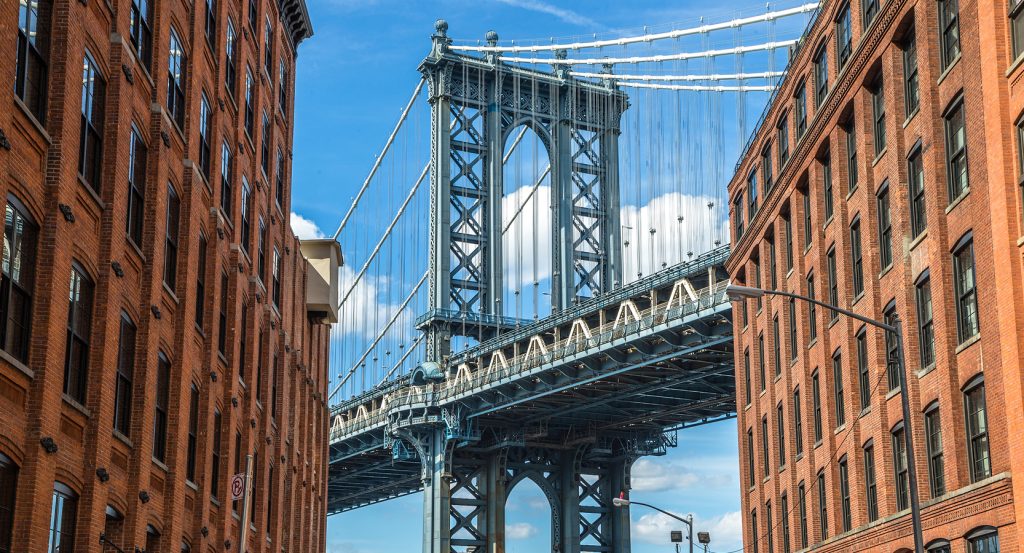
Why you should experience Wallabout Street in New York, NY.
Wallabout Street is a historic Wallabout corridor where industrial heritage, maritime history, and neighborhood reinvention converge along one of North Brooklyn's enduring local streets.
Running through Wallabout between Williamsburg and Clinton Hill, this historic corridor connects former industrial buildings, residential blocks, educational institutions, neighborhood businesses, and civic landmarks that reflect more than two centuries of Brooklyn's evolution. Historic brick warehouses, converted manufacturing buildings, modern residences, and neighborhood streetscapes create an urban landscape shaped by both industry and renewal. The surrounding neighborhood developed alongside the nearby Brooklyn Navy Yard, whose enormous economic influence transformed Wallabout into an important residential and commercial district serving generations of shipbuilders, laborers, and local families. To the east, Clinton Hill extends naturally from Wallabout Street through historic residential avenues, institutional landmarks, and preserved nineteenth-century architecture that reinforce the corridor's lasting significance. The result is a street defined by maritime legacy, architectural continuity, and neighborhood resilience.
What you should know about Wallabout Street.
Wallabout Street is best known for its proximity to the Brooklyn Navy Yard, the historic naval shipbuilding facility that constructed some of the United States Navy's most significant vessels for more than 160 years before closing in 1966.
Established in 1801, the Navy Yard became one of America's most important military-industrial complexes, employing tens of thousands of workers during periods of peak production and helping shape Brooklyn's economy, population, and built environment. Warships, battleships, aircraft carriers, and countless support vessels were designed, built, repaired, or modernized within the yard, leaving an enduring imprint on the surrounding community. Today, the former naval complex has been reimagined as a thriving innovation and manufacturing campus while preserving many of its historic industrial structures. Wallabout Street offers a direct connection to this remarkable legacy, placing visitors within one of the most historically significant industrial landscapes in New York City.
How to fold Wallabout Street into your trip.
Wallabout Street works as an exploration of Brooklyn's maritime heritage, industrial history, and neighborhood evolution.
Begin at Brooklyn Navy Yard, where the corridor's defining relationship with American shipbuilding, manufacturing, and innovation immediately comes into focus. Continue to BLDG 92, whose engaging exhibits provide a deeper understanding of the Navy Yard's history and its lasting influence on Brooklyn's growth. From there, make your way toward Fort Greene Park, where one of Brooklyn's oldest public parks offers a broader perspective on the neighboring communities that developed alongside the borough's expanding industrial economy. Along the route, you'll encounter restored industrial buildings, historic streets, neighborhood businesses, contemporary workspaces, civic institutions, and preserved architectural landmarks that demonstrate Wallabout's remarkable transformation across generations. The progression moves naturally from renowned naval shipyard to interpretive museum to historic public park, revealing how Wallabout Street connects Brooklyn's industrial past with its innovative future. Wallabout Street remains one of North Brooklyn's most rewarding historic corridors, preserving a distinctive balance between maritime legacy, adaptive reuse, and neighborhood vitality.
Where your story begins.
Foresyte Travel reveals places that feel extraordinary long before you arrive.
Experience premium editorial crafted for luxury travelers.







































































































