
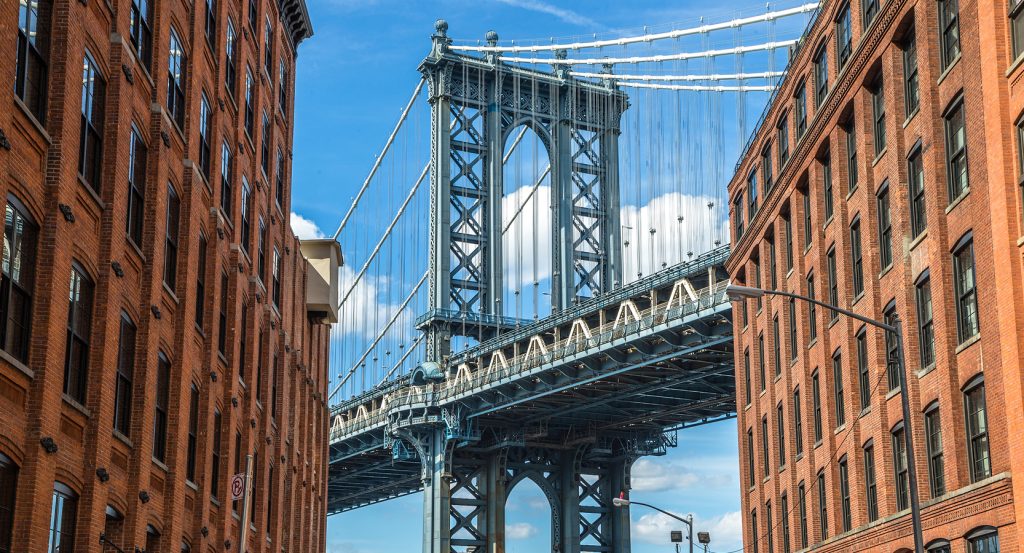
Why you should experience Hamilton Avenue in New York, NY.
Hamilton Avenue is a historic South Brooklyn corridor where maritime industry, transportation innovation, and neighborhood resilience converge along one of the borough's most important thoroughfares.
Running through Carroll Gardens, Gowanus, Red Hook, and Sunset Park, this major corridor connects active industrial waterfronts, historic warehouses, neighborhood businesses, transportation infrastructure, community institutions, and residential districts that collectively reflect Brooklyn's remarkable industrial evolution. Working piers, brick factory buildings, freight facilities, adaptive reuse industrial spaces, and thriving commercial corridors create a streetscape where generations of manufacturing, shipping, and commerce continue to shape the neighborhood's identity. Hamilton Avenue developed as a critical transportation artery linking Brooklyn's working waterfront with inland industries, supporting the borough's emergence as one of America's great maritime and manufacturing centers. The result is a corridor defined by industrial heritage, economic importance, and urban connectivity.
What you should know about Hamilton Avenue.
Hamilton Avenue is best known for being home to the Brooklyn-Battery Tunnel, the longest continuous underwater vehicular tunnel in North America when it opened in 1950.
Constructed beneath the Upper New York Bay after years of planning and engineering innovation, the tunnel permanently transformed travel between Brooklyn and Lower Manhattan by providing a direct highway connection beneath the harbor. Its completion represented one of the most ambitious civil engineering projects of its era, requiring advanced underwater construction techniques while dramatically improving regional transportation and commerce. Today, the tunnel remains one of New York City's busiest transportation links, carrying millions of vehicles annually and reinforcing Hamilton Avenue's longstanding role as one of Brooklyn's principal transportation corridors.
How to fold Hamilton Avenue into your trip.
Hamilton Avenue works as an exploration of Brooklyn's industrial waterfront, maritime history, and neighborhood character.
Begin at the Brooklyn-Battery Tunnel entrance, where one of North America's landmark engineering achievements immediately establishes the avenue's defining transportation legacy. Continue toward Louis Valentino Jr. Park and Pier, whose sweeping New York Harbor views reveal the working waterfront that fueled Brooklyn's industrial rise. From there, make your way to the Brooklyn Waterfront Greenway, where scenic pathways connect historic piers, maritime landmarks, and evolving public spaces that showcase the remarkable transformation of Brooklyn's shoreline. Along the route, you'll encounter historic warehouses, neighborhood cafés, architecturally significant industrial buildings, active port facilities, welcoming waterfront parks, and energetic commercial streets that reveal the corridor's exceptional depth. The progression moves naturally from pioneering underwater tunnel to historic harborfront park to celebrated waterfront greenway, demonstrating how Hamilton Avenue connects engineering innovation, maritime commerce, and contemporary urban life within one of Brooklyn's most influential corridors. Hamilton Avenue remains one of the borough's most significant thoroughfares, preserving a distinctive balance between industrial legacy, transportation innovation, and waterfront identity.
Where your story begins.
Foresyte Travel reveals places that feel extraordinary long before you arrive.
Experience premium editorial crafted for luxury travelers.







































































































