
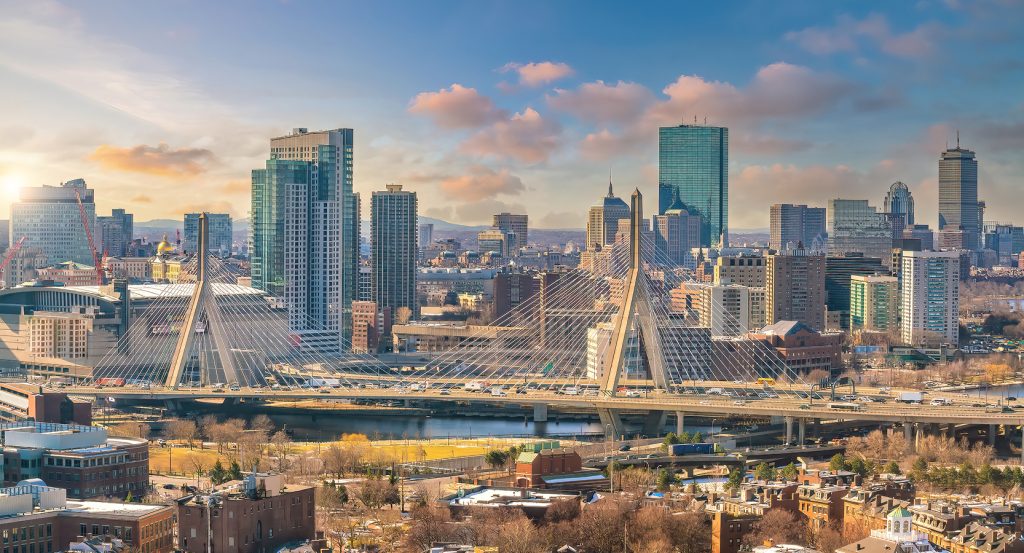
Why you should experience Adams Street in Boston, Massachusetts.
Adams Street is a graceful corridor where Dorchester's civic heritage, neighborhood traditions, architectural continuity, and riverside character create one of Boston's most enduring local streets.
Running through Dorchester between Lower Mills and Neponset, the corridor connects historic commercial blocks, parish churches, neighborhood institutions, and established residential streets that reflect more than two centuries of community development. Each successive block reveals brick storefronts, granite churches, mature street trees, traditional triple-deckers, and carefully preserved masonry that reinforce the corridor's longstanding role within Dorchester's urban fabric. The defining moment arrives as Adams Street demonstrates how transportation, industry, and neighborhood life have continually shaped one another without diminishing the street's distinctly local identity. The result is an experience defined by historical depth, architectural character, and one of Dorchester's most engaging corridors.
What you should know about Adams Street.
Adams Street is best known for developing alongside the Neponset River as Dorchester evolved from an independent colonial town into one of Boston's principal streetcar suburbs following Dorchester's annexation in 1870. Growth accelerated during the late nineteenth and early twentieth centuries, when electric streetcars, expanding residential construction, and commercial investment introduced substantial collections of Queen Anne, Colonial Revival, Classical Revival, and Triple-Decker architecture distinguished by brick masonry, granite foundations, projecting bays, decorative cornices, slate roofs, and finely detailed woodwork that continue defining the corridor's architectural identity. Proximity to the historic Lower Mills manufacturing district, established around the Walter Baker Chocolate Company, reinforced Adams Street's commercial importance while connecting neighborhood businesses with one of New England's most influential industrial centers. Original granite curbing, brick sidewalks, masonry storefronts, and historically scaled commercial buildings continue expressing the craftsmanship established during Dorchester's principal era of expansion. Collectively, the corridor's industrial associations, streetcar-era growth, architectural diversity, and enduring material quality established Adams Street as one of Dorchester's defining historic corridors.
The Dorchester Historical Society preserves photographs, maps, business records, and architectural documentation that trace Adams Street's evolution from a village connector into a principal neighborhood corridor shaped by successive generations of residents and merchants. The Lower Mills Industrial District, listed on the National Register of Historic Places, reinforces the corridor's historic character through its surviving mill complexes, granite retaining walls, and river infrastructure that remained closely tied to Adams Street's commercial development for decades. Mature American elms, red oaks, granite retaining walls, and original iron fencing continue framing substantial stretches of the corridor, preserving the visual rhythm established as Dorchester matured during the early twentieth century. Together, these historical collections, nationally recognized industrial resources, and surviving landscape features demonstrate how Adams Street's architectural continuity is strengthened by an equally enduring relationship with Dorchester's industrial and neighborhood heritage.
How to fold Adams Street into your trip.
Adams Street works as a walk through Dorchester's industrial legacy and riverside neighborhoods.
Begin at Dorchester Lower Mills, where preserved mill architecture and the neighborhood's commercial heart establish the historical foundation that shaped Adams Street before naturally guiding the experience toward the river landscape. Continue to Pope John Paul II Park Reservation, where restored salt marshes, Neponset River trails, and expansive open space deepen appreciation for the natural setting that influenced Dorchester's development before leading toward the neighborhood's cultural centerpiece. Conclude at the Edward M. Kennedy Institute for the United States Senate, where immersive civic exhibits provide the intellectual and historical payoff while connecting Dorchester's local story with the broader evolution of American public life. The progression moves naturally from industrial origins to the river landscape before culminating in a civic institution that broadens Adams Street's neighborhood story into one of lasting national significance.
Where your story begins.
Foresyte Travel reveals places that feel extraordinary long before you arrive.
Experience premium editorial crafted for luxury travelers.







































































































