
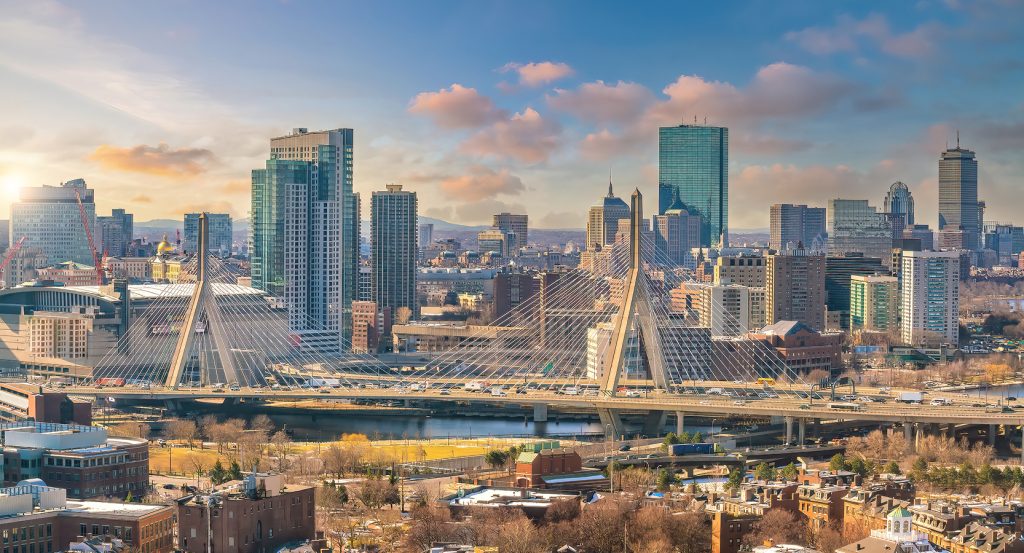
Why you should experience St. Paul Street in Boston, Massachusetts.
St. Paul Street is a refined corridor where Brookline's residential elegance, academic influence, architectural heritage, and neighborhood vitality create one of Greater Boston's most distinguished urban streets.
Running through Brookline between Coolidge Corner and Longwood, the corridor links historic apartment houses, handsome residences, tree-lined sidewalks, and renowned educational and medical institutions that together express the area's enduring sophistication. Each successive block heightens the experience as meticulously detailed masonry buildings, landscaped setbacks, mature tree canopies, and increasingly graceful streetscapes reveal the remarkable continuity of one of Boston's most accomplished residential environments. The corridor reaches its defining moment where architectural craftsmanship, institutional excellence, and neighborhood character unite into an unmistakably Greater Boston experience shaped by more than a century of thoughtful urban growth. The result is an experience defined by architectural distinction, cultural continuity, and one of Brookline's most engaging corridors.
What you should know about St. Paul Street.
St. Paul Street is best known for connecting the heart of Brookline with the edge of Boston's Longwood Medical Area, reflecting the late nineteenth- and early twentieth-century expansion that transformed Brookline into one of New England's premier streetcar suburbs. Residential development accelerated after the arrival of electric streetcar service during the 1890s, introducing substantial apartment buildings, elegant brick rowhouses, and detached residences designed in Colonial Revival, Georgian Revival, Tudor Revival, and Classical Revival styles. The corridor evolved alongside the remarkable growth of nearby institutions including Boston University, whose westward expansion strengthened the surrounding district's longstanding academic character while preserving Brookline's residential character. Carefully planned streets featuring generous setbacks, granite curbing, ornamental masonry, and mature street trees reflected Brookline's commitment to creating a high-quality residential environment that has endured for generations. Collectively, Brookline's streetcar-era development, distinguished revival architecture, institutional influence, and enduring residential planning established St. Paul Street as one of the community's defining corridors.
Bordering the corridor, Temple Ohabei Shalom, dedicated in 1925 and designed by Hyman Whitney, introduced one of New England's most architecturally distinguished synagogues, reinforcing the avenue's longstanding association with Brookline's diverse religious and cultural heritage. Nearby, the John Fitzgerald Kennedy National Historic Site, preserving the birthplace of President John F. Kennedy, reflects the neighborhood's nationally significant historical connections while documenting early twentieth-century domestic life in Brookline. Throughout the surrounding streets, original stone retaining walls, decorative iron fencing, finely detailed apartment entrances, and preserved landscaped front gardens continue expressing the craftsmanship that distinguished Brookline's residential development during its formative decades. Together, these cultural institutions, nationally significant historic resources, and exceptionally intact residential streetscapes demonstrate how St. Paul Street matured into one of Brookline's most architecturally cohesive corridors.
How to fold St. Paul Street into your trip.
St. Paul Street works as an exploration of Brookline's architectural heritage, cultural legacy, and neighborhood character.
Begin at Coolidge Corner Theatre, where one of New England's finest surviving Art Deco cinemas establishes the neighborhood's cultural character before naturally leading along St. Paul Street. Continue to Longwood Medical Area, where internationally recognized hospitals and research institutions deepen appreciation for the district's enduring influence on medicine and scientific discovery while expanding the experience beyond its residential setting. Conclude at Frederick Law Olmsted National Historic Site, where the preserved home and office of America's pioneering landscape architect provide the historical payoff linking Brookline's built environment to one of the nation's most influential planning legacies. The progression moves naturally from neighborhood culture to global innovation before concluding with the ideas that shaped America's urban landscapes, revealing why St. Paul Street remains central to Brookline's enduring identity.
Where your story begins.
Foresyte Travel reveals places that feel extraordinary long before you arrive.
Experience premium editorial crafted for luxury travelers.







































































































