
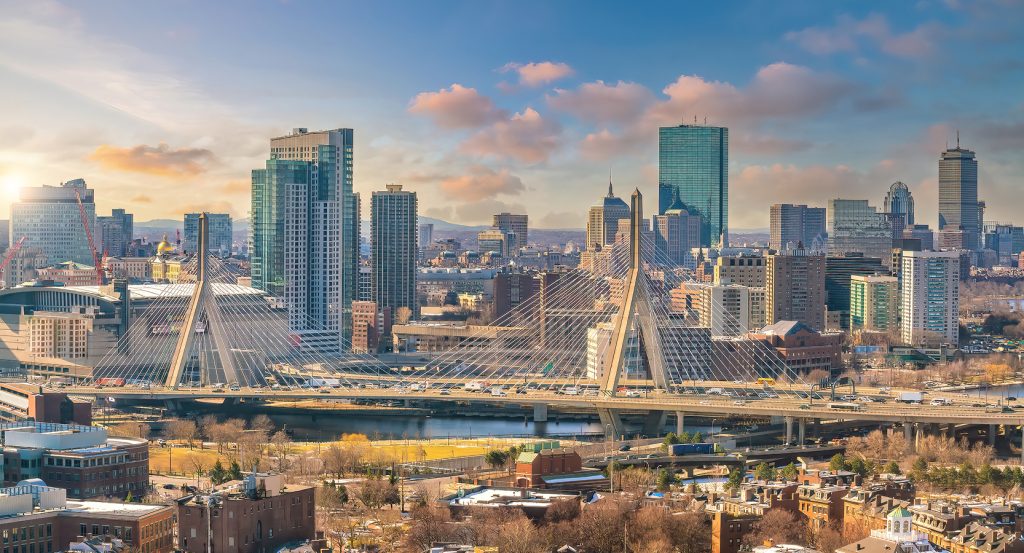
Why Albany Street matters.
Albany Street is an enterprising corridor where South End's industrial legacy, medical innovation, transportation history, and urban reinvention converge along one of Boston's most consequential thoroughfares.
Running through the South End between Chinatown and Newmarket, the corridor links historic industrial buildings, biomedical campuses, brick commercial blocks, and evolving innovation districts that reveal successive chapters of Boston's growth. Each successive block unfolds through masonry warehouses, research facilities, broad sidewalks, granite detailing, and active streetscapes that reflect the corridor's transition from manufacturing and freight movement to healthcare and scientific discovery. The defining moment arrives as Albany Street demonstrates how generations of infrastructure, industry, and research have continually reshaped the same urban spine. The result is an experience defined by reinvention, architectural continuity, and one of Boston's most fascinating corridors.
What defines Albany Street.
Albany Street is best known for developing as a principal industrial and transportation corridor during Boston's nineteenth-century expansion, following the 1841 opening of the Boston and Worcester Railroad and the subsequent concentration of rail yards, freight houses, wholesale markets, and manufacturing districts south of Downtown. Expansion accelerated after the South End was created through extensive tidal land reclamation during the 1830s through 1860s, providing new land for warehouses, machine shops, food distributors, and industrial enterprises that depended upon direct railroad access. Construction between the late nineteenth and early twentieth centuries introduced durable Romanesque Revival, Italianate, and utilitarian brick commercial buildings distinguished by heavy timber framing, granite foundations, corbelled masonry, cast-iron storefronts, loading bays, and expansive warehouse floorplates that continue defining the corridor's architectural character. Albany Street later evolved into a defining edge of the Boston Medical Center campus, reinforcing its role as a major institutional corridor while preserving substantial remnants of its industrial streetscape. Original granite curbing, brick masonry, steel lintels, and historically scaled commercial façades continue expressing the craftsmanship established during Boston's principal era of industrial expansion. Collectively, the corridor's railroad history, landmaking, industrial architecture, institutional evolution, and enduring material character established Albany Street as one of Boston's defining historic corridors.
Boston Medical Center, formed through the 1996 merger of Boston University Medical Center Hospital and Boston City Hospital, reshaped Albany Street into one of New England's leading healthcare corridors while maintaining a direct relationship with the street's historic urban fabric. The Boston Public Health Commission, headquartered along the corridor, reinforces Albany Street's longstanding association with public health, medical research, emergency preparedness, and citywide health initiatives that extend well beyond the surrounding neighborhood. Original granite retaining walls, steel bridge structures, historic railroad alignments, and surviving industrial loading platforms continue revealing physical evidence of the corridor's freight-handling past beneath its contemporary institutional landscape. Together, these healthcare institutions, public health organizations, and surviving transportation infrastructure demonstrate how Albany Street evolved from a railroad-driven industrial corridor into one of Boston's most significant centers of medical innovation without losing the physical imprint of its nineteenth-century origins.
How Albany Street fits.
Albany Street works as an exploration of the South End's industrial legacy and contemporary innovation.
Begin at SoWa Art + Design District, where galleries, artist studios, and adaptive warehouse spaces establish the creative energy that now occupies the South End's former industrial landscape before naturally leading toward the corridor's institutional heart. Continue to Cathedral of the Holy Cross, where the expansive Gothic Revival church deepens appreciation for the neighborhood's nineteenth-century development and cultural history before guiding the experience toward Boston's scientific future. Conclude at the Boston Center for the Arts, where restored industrial buildings housing contemporary performance and visual arts provide the cultural payoff that completes Albany Street's story of continual urban reinvention. The progression moves naturally from creative redevelopment to historic community character before culminating in the cultural institutions that embody the South End's enduring capacity for renewal.
Where your story begins.
Foresyte Travel reveals places that feel extraordinary long before you arrive.
Enjoy editorial crafted for luxury travelers.
Foresyte may earn a commission when you book.







































































































