
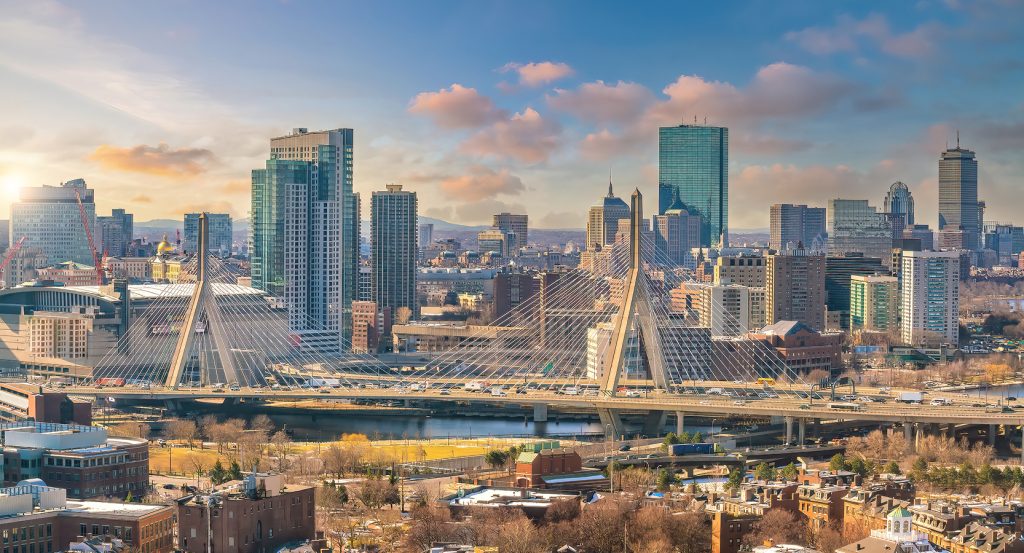
Why you should experience Black Falcon Avenue in Boston, Massachusetts.
Black Falcon Avenue is a landmark Seaport District corridor where maritime commerce, international trade, and waterfront revitalization converge along one of Boston's most important harborfront streets.
Running through the Seaport District between Drydock Avenue, Tide Street, Design Center Place, and Flynn Cruiseport Boston, this distinguished waterfront corridor connects active marine terminals, landmark cruise facilities, architecturally significant industrial buildings, thriving innovation campuses, welcoming Harborwalk spaces, and enduring port infrastructure that collectively showcase Boston's extraordinary evolution from a working seaport to a globally connected waterfront district. Historic maritime architecture, thoughtfully adapted industrial spaces, energetic commercial activity, celebrated waterfront destinations, modern transportation facilities, and enduring shipping traditions create an urban landscape where generations of longshoremen, mariners, entrepreneurs, cruise passengers, residents, and visitors have shaped one of New England's defining harbor corridors. Black Falcon Avenue continues to anchor Boston's working waterfront while embracing the Seaport's transformation into one of the city's most dynamic neighborhoods. The result is a corridor defined by maritime significance, commercial vitality, and lasting international importance.
What you should know about Black Falcon Avenue.
Black Falcon Avenue is best known for housing Flynn Cruiseport Boston, New England's principal cruise terminal, which welcomes more than 400,000 cruise passengers annually while serving as the region's primary gateway for transatlantic voyages and cruises to Canada, New England, Bermuda, and the Caribbean.
Originally developed as part of Boston's active cargo port, the terminal evolved into one of the East Coast's leading cruise facilities as passenger travel expanded during the late twentieth and early twenty-first centuries. Its strategic location on Boston Harbor has strengthened the city's position within the global cruise industry while contributing significantly to the regional tourism economy. Today, the terminal accommodates some of the world's largest cruise ships, reinforcing Boston's historic role as an international maritime gateway while supporting continued investment in the revitalized Seaport District. That extraordinary maritime role has established Black Falcon Avenue as one of New England's most significant waterfront corridors.
How to fold Black Falcon Avenue into your trip.
Black Falcon Avenue works as an exploration of Boston's waterfront, maritime heritage, and contemporary Seaport District.
Begin along Black Falcon Avenue, where the active harborfront immediately establishes the corridor's defining identity. Continue toward Flynn Cruiseport Boston, where New England's premier cruise terminal provides broader perspective on the avenue's extraordinary maritime legacy. From there, make your way to the Institute of Contemporary Art, where one of America's leading contemporary art museums provides a memorable conclusion while celebrating the Seaport District's enduring blend of global commerce, architecture, and culture. Along the way, you'll encounter architecturally significant waterfront buildings, welcoming Harborwalk promenades, thriving maritime facilities, beautifully revitalized public spaces, celebrated cultural destinations, and energetic gathering places that reveal the Seaport District's exceptional depth. The progression moves naturally from a historic working waterfront to New England's principal cruise terminal to a world-renowned contemporary art museum, demonstrating how Black Falcon Avenue connects international commerce, community life, and urban discovery.
Where your story begins.
Foresyte Travel reveals places that feel extraordinary long before you arrive.
Experience premium editorial crafted for luxury travelers.







































































































