
Why Sultanahmet Square matters.
Sultanahmet Square, or Hippodrome Square, is the open-air heart of Istanbul's imperial memory.
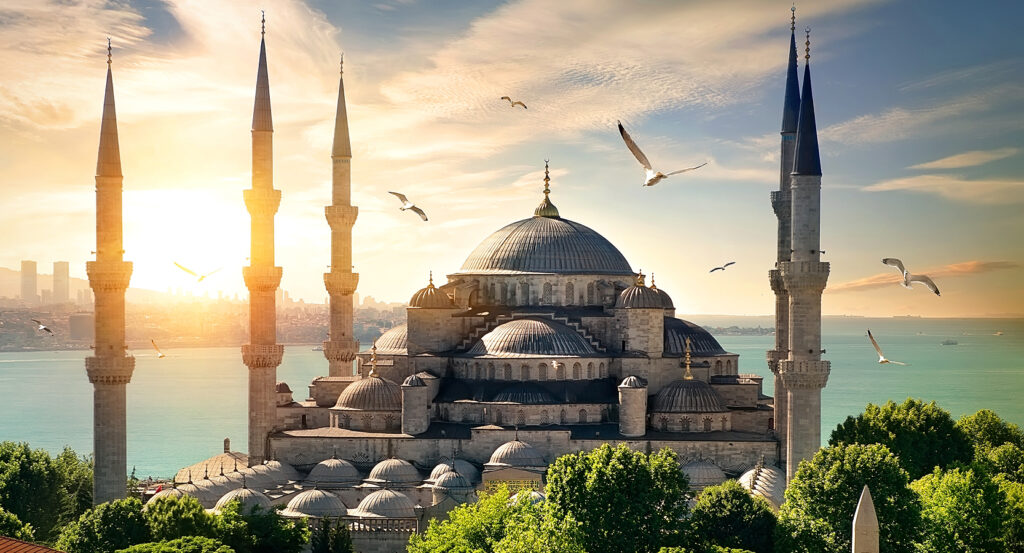
Once the roaring centerpiece of Byzantine Constantinople, it's where chariots raced, emperors presided, and the city's passions spilled into history. Stand here today and you still feel the weight of those centuries pressing against the breeze, the same axis that once divided glory from revolt. Lined with monuments that survived both empire and faith, the square is more than a public space; it's a living archive of human drama. The Blue Mosque rises to one side, Hagia Sophia to the other, framing the Hippodrome like parentheses around eternity. To walk here is to move through the echoes of the world's crossroads, where every stone once vibrated with thunder, triumph, and prayer.
What defines Sultanahmet Square.
The Hippodrome of Constantinople was built in the 3rd century by Emperor Septimius Severus and expanded by Constantine the Great in the 4th, an arena that could hold more than 100,000 spectators.
Its marble stands once stretched nearly half a kilometer, lined with statues, columns, and obelisks brought from across the empire. The great chariot races were not mere sport; they were politics, religion, and performance intertwined. Rival factions, the Blues and the Greens, controlled public opinion and occasionally the fate of emperors. It was here, in 532 AD, that the Nika Revolt erupted, a week of chaos that nearly destroyed the city before Justinian crushed it, leaving 30,000 dead. Of the original Hippodrome, three relics remain: the Egyptian Obelisk of Theodosius, carved 1,500 years before Christ and shipped from Luxor; the Serpent Column, brought from Delphi; and the Walled Obelisk, once gilded in bronze plates later looted by crusaders. Ottoman sultans later used the square for parades and celebrations, renaming it the At Meydanı, or “Horse Square,” yet leaving the bones of Byzantium intact beneath their own. Today, beneath the paving stones, archaeologists still find fragments of marble seats and mosaics, silent witnesses to fifteen centuries of performance.
How Sultanahmet Square fits.
Sultanahmet Square is best explored slowly, not as a single site, but as a sequence of moments.
Begin near the Egyptian Obelisk at sunrise, when the stone glows pink and gold, and the call to prayer from the Blue Mosque echoes over the square. Walk south toward the Serpent Column, imagining the roar of ancient crowds that once filled the space between the monuments. Visit the German Fountain at the northern end, a 19th-century gift from Kaiser Wilhelm II, and admire how its green dome reflects both Ottoman craft and European diplomacy. Come again at dusk, when the crowds thin and the domes of Hagia Sophia and the Blue Mosque burn orange in the setting sun. Sit on one of the benches at the square's center, where East meets West, empire meets faith, and time folds into stillness. Hippodrome Square isn't just a relic, it's the living pulse of Istanbul, a place where every era still takes a turn around the track.
Where your story begins.
Foresyte Travel reveals places that feel extraordinary long before you arrive.
Enjoy editorial crafted for luxury travelers.
Foresyte may earn a commission when you book.





































































































