
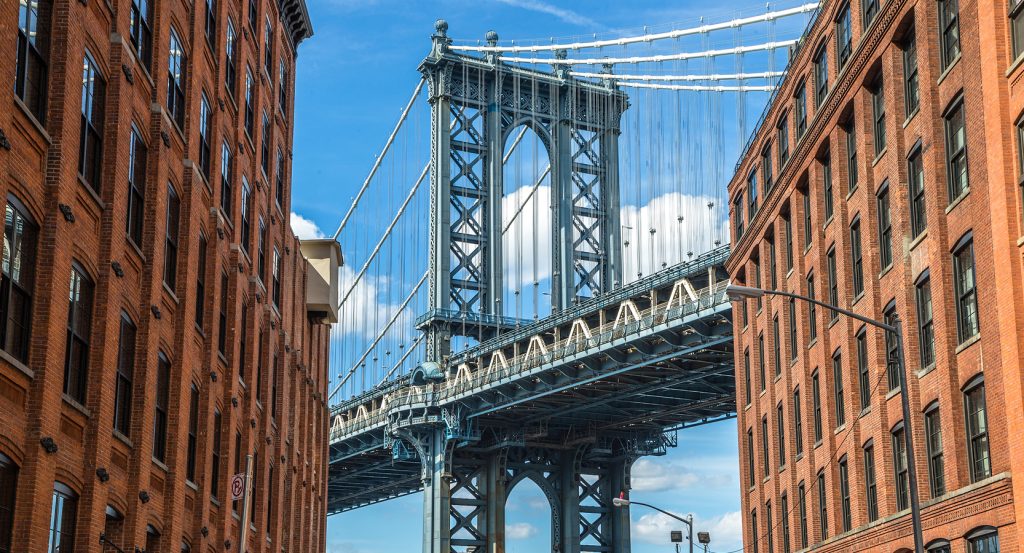
Why you should experience Bogart Street in New York, NY.
Bogart Street is a historic Bushwick corridor where industrial heritage, contemporary creativity, and entrepreneurial energy converge along one of Brooklyn's most influential streets.
Running through Bushwick between East Williamsburg and Ridgewood, this character-rich corridor connects landmark warehouse buildings, renowned art spaces, neighborhood businesses, creative studios, converted industrial lofts, and energetic commercial streets that collectively showcase Brooklyn's remarkable industrial transformation. Monumental brick factories, adaptive reuse manufacturing buildings, architecturally significant warehouse complexes, locally owned cafés, thriving design studios, and welcoming public spaces create an urban landscape where generations of manufacturers, artists, entrepreneurs, and makers continue to redefine the neighborhood. Bogart Street developed during Bushwick's nineteenth-century manufacturing boom, serving breweries, textile mills, and industrial workshops before evolving into one of New York City's leading centers for creative production and innovation. The result is a corridor defined by industrial character, artistic leadership, and enduring neighborhood vitality.
What you should know about Bogart Street.
Bogart Street is best known for being home to the BogArt building, among Bushwick's pioneering adaptive reuse warehouse complexes that helped establish the neighborhood as an internationally recognized creative district.
Originally constructed as an industrial manufacturing facility, the massive warehouse was transformed into a thriving hub for artists, designers, galleries, photographers, creative agencies, and small businesses during Bushwick's cultural renaissance. Its successful conversion demonstrated how Brooklyn's historic industrial architecture could support a new generation of creative industries while preserving the neighborhood's manufacturing heritage. The building became a catalyst for Bushwick's emergence as one of New York City's most influential arts communities, attracting innovators from around the world. Today, it remains one of the neighborhood's defining creative landmarks and a symbol of Brooklyn's adaptive reuse movement.
How to fold Bogart Street into your trip.
Bogart Street works as an exploration of Bushwick's industrial heritage, contemporary art, and creative culture.
Begin at the BogArt building, where one of Bushwick's most influential adaptive reuse projects immediately establishes the street's defining creative legacy. Continue toward the Bushwick Collective, whose internationally acclaimed murals provide broader perspective on the neighborhood's transformation into one of the world's foremost open-air art destinations. From there, make your way to Maria Hernandez Park, where lively green spaces, neighborhood events, and recreational amenities provide a memorable conclusion while highlighting the community that continues to fuel Bushwick's creative spirit. Along the route, you'll encounter converted warehouse buildings, independent galleries, neighborhood cafés, architecturally significant industrial structures, thriving local businesses, and energetic public art that reveal the corridor's exceptional depth. The progression moves naturally from landmark creative warehouse to world-renowned mural district to beloved neighborhood park, demonstrating how Bogart Street connects industrial preservation, artistic innovation, and community life within one of Brooklyn's most dynamic neighborhoods. Bogart Street remains one of the borough's most rewarding streets, preserving a distinctive balance between historical significance, creative excellence, and industrial character.
Where your story begins.
Foresyte Travel reveals places that feel extraordinary long before you arrive.
Experience premium editorial crafted for luxury travelers.







































































































