
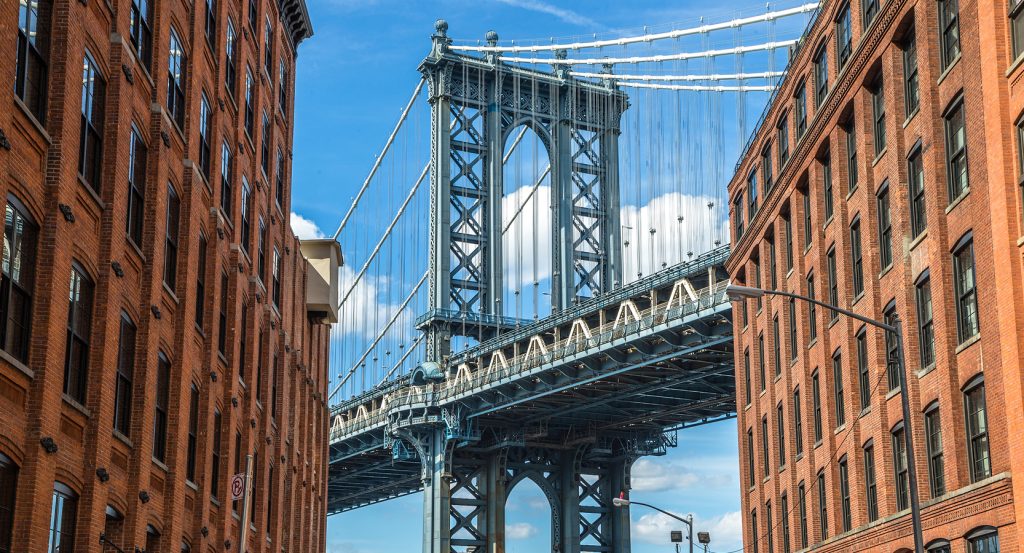
Why Carroll Street matters.
Carroll Street is a historic South Brooklyn corridor where architectural elegance, canal-side industry, and neighborhood charm converge along one of the borough's most distinguished streets.
Running through Carroll Gardens, Gowanus, and Park Slope between Cobble Hill and Prospect Park, this scenic corridor connects landmark brownstone blocks, historic industrial buildings, neighborhood businesses, celebrated restaurants, community institutions, and tree-lined residential streets that collectively showcase Brooklyn's remarkable urban evolution. Ornate Italianate rowhouses, Neo-Grec brownstones, architecturally significant civic buildings, adaptive reuse warehouses, locally owned cafés, and inviting public spaces create a streetscape where generations of artisans, merchants, entrepreneurs, and families have shaped one of Brooklyn's most beloved neighborhoods. Carroll Street developed during Brooklyn's nineteenth-century residential expansion while bridging the thriving industrial economy surrounding the Gowanus Canal, creating a distinctive blend of residential elegance and commercial vitality. The result is a corridor defined by architectural distinction, historical significance, and enduring neighborhood character.
What defines Carroll Street.
Carroll Street is best known for being home to the Carroll Street Bridge, completed in 1889 as one of only four remaining retractile bridges in the United States.
Designed by engineer William DeLemos, the bridge introduced an innovative retractable mechanism that allowed its entire roadway to slide horizontally on rails, creating unobstructed passage for ships navigating the busy Gowanus Canal. The ingenious engineering solution supported Brooklyn's booming maritime industries while preserving an important east-west connection between surrounding neighborhoods. Designated a New York City Landmark, the bridge remains one of the rarest surviving movable bridges in the nation and continues to operate using its original nineteenth-century mechanical design. Today, it stands as one of Brooklyn's most remarkable engineering landmarks and an enduring symbol of the borough's industrial heritage.
How Carroll Street fits.
Carroll Street works as an exploration of Brooklyn's architectural heritage, industrial history, and neighborhood culture.
Begin at the Carroll Street Bridge, where one of America's rarest movable bridges immediately establishes the street's defining engineering legacy. Continue along the Gowanus Canal, whose historic waterfront and ongoing environmental restoration provide broader perspective on the industrial forces that shaped the surrounding neighborhoods. From there, make your way to Carroll Park, where Brooklyn's third-oldest public park offers a memorable conclusion while highlighting the longstanding civic traditions of Carroll Gardens. Along the route, you'll encounter beautifully preserved brownstones, neighborhood cafés, architecturally significant industrial buildings, welcoming public spaces, thriving local businesses, and historic residential streets that reveal the corridor's exceptional depth. The progression moves naturally from nationally significant engineering landmark to historic industrial waterway to beloved neighborhood park, demonstrating how Carroll Street connects architectural beauty, industrial innovation, and community life within one of Brooklyn's most distinctive corridors. Carroll Street remains one of the borough's most rewarding streets, preserving a distinctive balance between historical significance, neighborhood charm, and engineering achievement.
Where your story begins.
Foresyte Travel reveals places that feel extraordinary long before you arrive.
Enjoy editorial crafted for luxury travelers.
Foresyte may earn a commission when you book.







































































































