
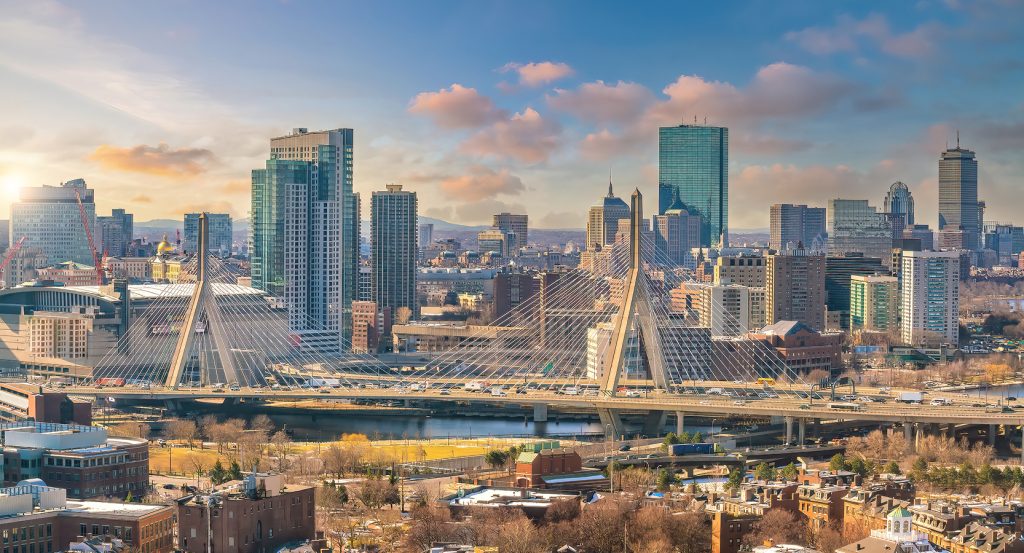
Why Concord Street matters.
Concord Street is a refined corridor where South Boston's waterfront legacy, industrial heritage, residential evolution, and maritime character converge into one of the neighborhood's most distinctive streets.
Running through South Boston between Fort Point and the Seaport District, the corridor links historic brick blocks, converted warehouse buildings, longstanding residential streets, and working waterfront landscapes that reveal the neighborhood's remarkable evolution beside Boston Harbor. Each successive block heightens the experience as granite curbs, heavy timber industrial buildings, restored masonry façades, harbor views, and broad streetscapes demonstrate the craftsmanship and commercial ambition that shaped the district for generations. The defining moment arrives as the corridor's preserved industrial architecture and waterfront setting reveal how South Boston successfully retains its maritime character while embracing contemporary urban life. The result is an experience defined by historical depth, architectural character, and one of South Boston's most engaging corridors.
What defines Concord Street.
Concord Street is best known for developing alongside the expansion of South Boston's waterfront after the creation of the South Boston Flats, among Boston's largest nineteenth-century landmaking projects, which transformed tidal flats into an extensive maritime and industrial district. Commercial growth accelerated between the 1880s and the early twentieth century as warehouses, freight houses, manufacturing buildings, and maritime businesses introduced substantial Romanesque Revival, Renaissance Revival, and utilitarian brick industrial architecture distinguished by heavy timber framing, granite foundations, segmental-arched windows, corbelled brickwork, and robust masonry construction. The corridor matured within a district defined by shipping, warehousing, food distribution, and maritime commerce, where proximity to Boston Harbor supported generations of importers, exporters, manufacturers, and wholesale merchants serving regional and international markets. Its remarkably intact collection of industrial buildings continues expressing the scale, material quality, and engineering confidence that characterized South Boston's emergence as one of New England's foremost working waterfronts. Collectively, the district's harbor expansion, industrial architecture, maritime commerce, commercial enterprise, and enduring masonry craftsmanship established Concord Street as one of South Boston's defining historic corridors.
Industrial innovation became the defining thread shaping the corridor as the Boston Wharf Company, incorporated in 1836, assembled an extensive network of wharves, freight facilities, and warehouse properties whose coordinated waterfront operations influenced the commercial character surrounding Concord Street for generations. That maritime economy fostered a concentration of grain merchants, produce importers, cold-storage operators, and shipping firms whose specialized brick warehouses reflected the corridor's longstanding role within Boston's wholesale distribution network. Skilled brick masons, heavy timber specialists, granite conservators, and ironworkers continue preserving original loading bays, corbelled masonry, cast-iron hardware, and timber structural systems that distinguish Concord Street's surviving industrial buildings. Together, these commercial enterprises, specialized building traditions, and enduring preservation craftsmanship demonstrate how Concord Street continues expressing the authentic working-waterfront character that shaped South Boston's economic rise.
How Concord Street fits.
Concord Street works as an exploration of South Boston's maritime heritage and evolving waterfront.
Begin at the Boston Children's Museum, where the restored industrial setting introduces the neighborhood's warehouse heritage before naturally leading toward Concord Street. Continue to the Boston Tea Party Ships & Museum, where immersive exhibits deepen appreciation for Boston's enduring relationship with its working harbor and maritime commerce. Conclude at the Fan Pier Harborwalk, where panoramic skyline views, active shipping channels, and expansive waterfront promenades provide the defining experiential payoff while revealing the harbor landscape that gave Concord Street its historic purpose. The progression moves naturally from preserved industrial architecture to maritime history before culminating beside Boston Harbor, where the corridor's commercial origins become fully apparent.
Where your story begins.
Foresyte Travel reveals places that feel extraordinary long before you arrive.
Enjoy editorial crafted for luxury travelers.
Foresyte may earn a commission when you book.







































































































