
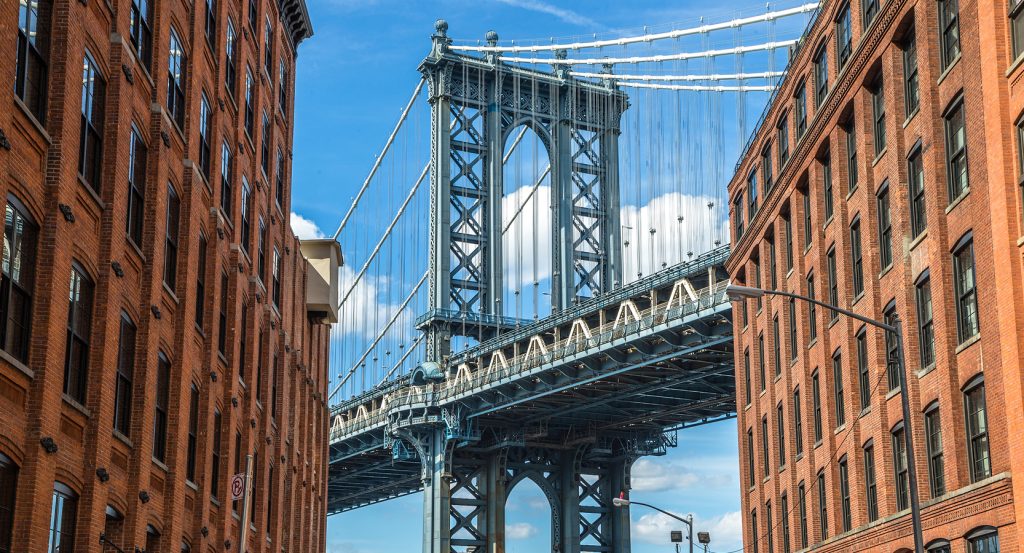
Why Conover Street matters.
Conover Street is a historic Red Hook corridor where maritime commerce, industrial heritage, and waterfront revival converge along one of Brooklyn's most authentic harborfront streets.
Running through Red Hook between Carroll Gardens and the Upper New York Bay, this historic corridor connects working piers, restored warehouses, neighborhood businesses, maritime facilities, historic brick buildings, and scenic waterfront spaces that collectively reflect Brooklyn's remarkable seafaring legacy. Cobblestone streets, nineteenth-century warehouses, active shipping terminals, adaptive reuse industrial buildings, locally owned businesses, and sweeping harbor views create a landscape where generations of dockworkers, merchants, and shipbuilders helped shape one of America's busiest ports. Conover Street developed as a vital artery serving Red Hook's thriving waterfront economy, supporting international trade, warehousing, and maritime industries that established Brooklyn as a global commercial center. The result is a corridor defined by maritime heritage, industrial authenticity, and waterfront resilience.
What defines Conover Street.
Conover Street is best known for being home to the Waterfront Museum, housed aboard the Lehigh Valley Barge No. 79, the last surviving wooden railroad barge of its kind in New York Harbor.
Built in 1914, the historic vessel once transported railroad freight cars across New York Harbor as part of the region's vast marine rail network, an essential transportation system that powered the port's extraordinary commercial activity before the widespread use of container shipping. Carefully restored and permanently moored along Conover Street, the barge now preserves a rare chapter of Brooklyn's maritime history through exhibitions, performances, and educational programming. Its continued operation as a floating museum offers visitors an immersive connection to the working waterfront while safeguarding one of the harbor's last surviving examples of early twentieth-century railroad marine transportation. Today, it stands as one of Red Hook's most distinctive historic landmarks.
How Conover Street fits.
Conover Street works as an exploration of Red Hook's maritime heritage, industrial landmarks, and waterfront scenery.
Begin at the Waterfront Museum, where the last surviving wooden railroad barge immediately establishes the street's defining maritime legacy. Continue toward Louis Valentino Jr. Park and Pier, whose sweeping New York Harbor views provide broader perspective on Red Hook's enduring relationship with one of the world's great working waterfronts. From there, make your way to the Red Hook Container Terminal, where active port operations demonstrate how international maritime commerce continues to shape the neighborhood today. Along the route, you'll encounter historic warehouses, neighborhood cafés, architecturally significant industrial buildings, active maritime facilities, welcoming public spaces, and unforgettable harbor vistas that reveal the corridor's exceptional depth. The progression moves naturally from floating maritime museum to scenic waterfront park to working container terminal, demonstrating how Conover Street connects maritime history, industrial innovation, and contemporary waterfront life within one of Brooklyn's most distinctive neighborhoods. Conover Street remains one of the borough's most rewarding waterfront corridors, preserving a distinctive balance between historical significance, industrial character, and harbor vitality.
Where your story begins.
Foresyte Travel reveals places that feel extraordinary long before you arrive.
Enjoy editorial crafted for luxury travelers.
Foresyte may earn a commission when you book.







































































































