
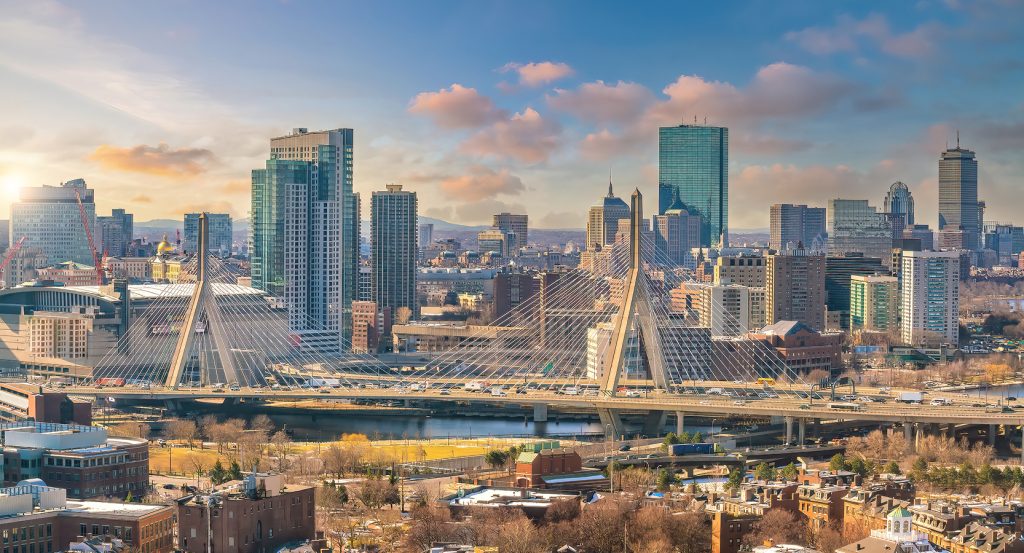
Why you should experience Fairfield Street in Boston, Massachusetts.
Fairfield Street is an elegant corridor where Back Bay's architectural refinement, cultural prestige, residential grandeur, and nineteenth-century planning vision converge into one of Boston's most distinguished streets.
Running through Back Bay between the Charles River and the South End, the corridor follows one of the neighborhood's stately north-south alignments, linking tree-lined blocks of brownstones, refined apartment houses, landmark civic architecture, and broad landscaped avenues that reflect Boston's most celebrated era of urban design. Each successive block heightens the experience as carved sandstone, slate mansard roofs, ornamental ironwork, polished granite, and meticulously preserved façades reveal the remarkable consistency of Back Bay's architectural craftsmanship. The defining moment arrives when the corridor's harmonious streetscape demonstrates how ambitious planning and exceptional design combined to create one of America's finest residential neighborhoods. The result is an experience defined by architectural continuity, historical depth, and one of Back Bay's most graceful corridors.
What you should know about Fairfield Street.
Fairfield Street is best known for developing as part of Back Bay, whose creation began after the Commonwealth of Massachusetts authorized the filling of the former Back Bay tidal basin in 1857, transforming extensive marshland into one of the nation's most ambitious planned residential districts. Residential construction accelerated between the 1860s and the 1890s, introducing distinguished Second Empire, Victorian Gothic, Queen Anne, and Romanesque Revival townhouses characterized by red brick masonry, brownstone façades, slate mansard roofs, carved lintels, projecting bay windows, granite foundations, and decorative wrought-iron railings. Planning led by Arthur Gilman, together with architect Gridley James Fox Bryant, established a disciplined street structure of generous setbacks, uniform building lines, and landscaped avenues that gave Fairfield Street its enduring architectural coherence. The corridor subsequently attracted prominent professionals, merchants, physicians, and cultural leaders whose residences reinforced Back Bay's reputation as Boston's premier nineteenth-century residential neighborhood. Collectively, the district's ambitious landmaking, coordinated planning, accomplished architecture, distinguished residents, and exceptional craftsmanship established Fairfield Street as one of Back Bay's defining historic corridors.
Architectural preservation became the defining force sustaining the corridor as the Neighborhood Association of the Back Bay, founded in 1955, championed the protection of historic streetscapes, original residential character, and architecturally significant buildings that continue defining Fairfield Street today. That stewardship is strengthened by the Back Bay Architectural Commission, established in 1966, whose design review has helped preserve original brownstone façades, slate roofs, ornamental ironwork, wooden windows, and masonry detailing that distinguish the corridor within one of America's most intact nineteenth-century neighborhoods. Skilled stone conservators, ornamental metalworkers, stained-glass artisans, and restoration masons continue maintaining decorative lintels, carved sandstone, historic brickwork, and handcrafted architectural ornament, ensuring Fairfield Street retains the visual richness established during Back Bay's formative decades. Together, these preservation organizations, enduring restoration traditions, and meticulously maintained architectural details demonstrate how Fairfield Street continues expressing the design excellence that has defined Back Bay for more than a century.
How to fold Fairfield Street into your trip.
Fairfield Street works as a walk through Back Bay's architectural elegance and cultural landscape.
Begin at Commonwealth Avenue Mall, where Frederick Law Olmsted's tree-lined boulevard introduces the planning philosophy and residential grandeur that naturally continue along Fairfield Street. Continue to Newbury Street, where beautifully preserved nineteenth-century townhouses now house independent boutiques, galleries, and cafés, revealing how historic architecture continues supporting one of Boston's most energetic pedestrian environments. Conclude at the Boston Public Garden, where sweeping lawns, ornamental bridges, and carefully composed landscapes provide the historical and aesthetic payoff while completing the story of Back Bay's extraordinary urban vision. The progression moves naturally from visionary boulevard planning to adaptive historic streets before culminating in Boston's most celebrated landscaped park, revealing why Fairfield Street occupies such a distinguished place within Back Bay.
Where your story begins.
Foresyte Travel reveals places that feel extraordinary long before you arrive.
Experience premium editorial crafted for luxury travelers.







































































































