
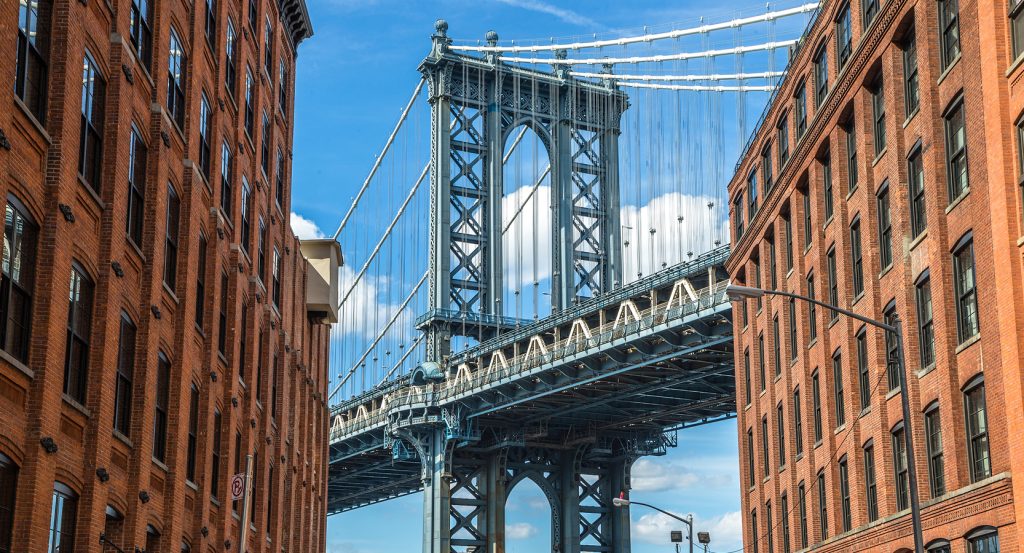
Why Flushing Avenue matters.
Flushing Avenue is a landmark Brooklyn corridor where naval history, industrial innovation, and creative reinvention converge along one of the borough's most historically significant thoroughfares.
Stretching from Downtown Brooklyn through Wallabout, Williamsburg, and Bushwick toward Queens, this expansive corridor connects the Brooklyn Navy Yard, historic factory buildings, active manufacturing districts, neighborhood businesses, educational institutions, and evolving creative campuses that collectively showcase Brooklyn's remarkable industrial evolution. Expansive brick warehouses, adaptive reuse industrial buildings, historic military facilities, artist workspaces, and architecturally significant manufacturing complexes create a streetscape where generations of innovation and production continue to shape the borough's identity. Flushing Avenue developed as one of Brooklyn's principal industrial arteries, supporting shipbuilding, manufacturing, transportation, and military operations that helped establish New York as one of the world's leading commercial cities. The result is a corridor defined by industrial heritage, economic innovation, and urban transformation.
What defines Flushing Avenue.
Flushing Avenue is best known for being home to the Brooklyn Navy Yard, established in 1801 as one of the United States Navy's most important shipbuilding facilities for more than 165 years.
From the War of 1812 through the Cold War, the Navy Yard constructed and repaired some of America's most significant naval vessels while employing tens of thousands of workers during periods of war and industrial expansion. Renowned ships including the USS Missouri, where Japan formally surrendered to end World War II, were built within the yard, cementing its place in American military and industrial history. Today, the transformed campus serves as one of New York City's leading centers for advanced manufacturing, design, and technology while preserving one of the nation's most important historic shipbuilding sites.
How Flushing Avenue fits.
Flushing Avenue works as an exploration of Brooklyn's industrial heritage, military history, and creative innovation.
Begin at the Brooklyn Navy Yard, where one of America's most influential shipbuilding complexes immediately establishes the avenue's defining historical legacy. Continue toward Building 92, whose engaging exhibits reveal the remarkable history of the Navy Yard and its role in shaping Brooklyn's industrial identity. From there, make your way to Domino Park, where preserved refinery machinery and thoughtfully designed waterfront spaces provide broader perspective on the manufacturing industries that transformed Brooklyn into an economic powerhouse. Along the route, you'll encounter historic warehouses, neighborhood cafés, architecturally significant industrial buildings, innovative manufacturing campuses, welcoming public spaces, and energetic commercial corridors that reveal the avenue's exceptional depth. The progression moves naturally from nationally significant naval shipyard to celebrated industrial museum to iconic waterfront park, demonstrating how Flushing Avenue connects military achievement, industrial innovation, and contemporary urban life within one of Brooklyn's most influential corridors. Flushing Avenue remains one of the borough's most rewarding thoroughfares, preserving a distinctive balance between historical significance, economic vitality, and architectural reinvention.
Where your story begins.
Foresyte Travel reveals places that feel extraordinary long before you arrive.
Enjoy editorial crafted for luxury travelers.
Foresyte may earn a commission when you book.







































































































