
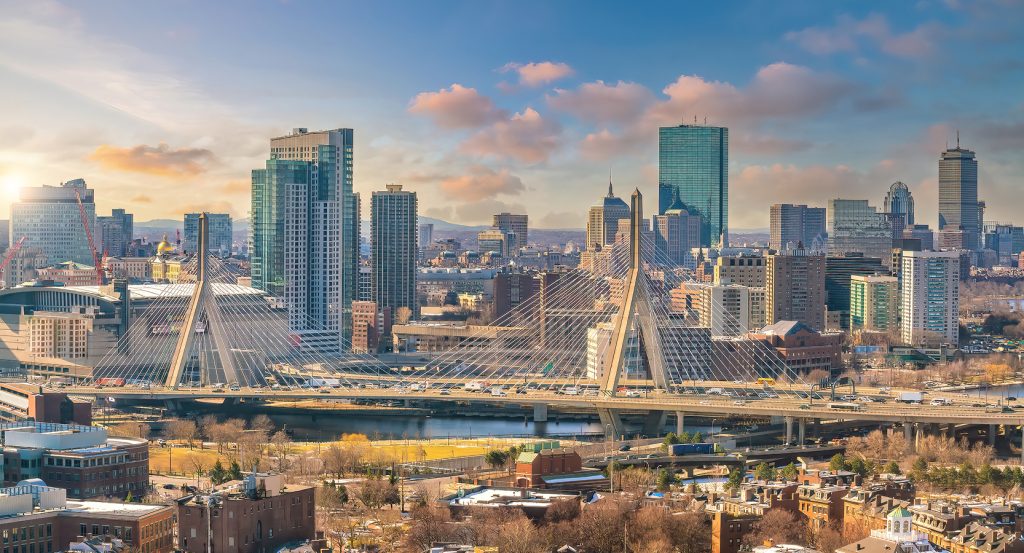
Why you should experience Freeport Street in Boston, Massachusetts.
Freeport Street is a spirited corridor where Dorchester's waterfront legacy, neighborhood pride, commercial vitality, and enduring cultural character come together along one of the area's defining thoroughfares.
Running through Dorchester between South Boston and Neponset, the corridor links longstanding residential blocks, neighborhood businesses, civic institutions, and nearby shoreline landscapes that reveal the district's evolution from an independent town into one of Boston's largest and most diverse communities. Each successive block heightens the experience as early twentieth-century commercial buildings, brick churches, mature street trees, and steadily unfolding neighborhood landmarks create a streetscape shaped by generations of local investment. The defining moment arrives as the corridor's blend of historic architecture, active businesses, and deeply rooted community institutions demonstrates how Dorchester has continually balanced change with continuity. The result is an experience defined by neighborhood character, historical depth, and one of Dorchester's most engaging corridors.
What you should know about Freeport Street.
Freeport Street is best known for connecting the historic commercial districts of Dorchester with its southern waterfront following the neighborhood's rapid expansion after Dorchester was annexed to Boston in 1870. Residential and commercial development accelerated between the 1880s and the 1930s, introducing substantial Colonial Revival, Classical Revival, Georgian Revival, and Art Deco buildings distinguished by red brick masonry, granite storefronts, limestone trim, decorative cornices, terra-cotta ornament, and broad display windows that continue defining the corridor's architectural character. Construction of the Old Colony Railroad, followed by expansion of the MBTA Red Line through nearby Dorchester stations, reinforced Freeport Street's importance by strengthening connections between neighborhood businesses, residential districts, and Boston's commercial core. Warehouses, neighborhood retailers, religious congregations, manufacturing firms, and family-owned businesses collectively established a corridor that reflected Dorchester's emergence as one of New England's most economically diverse urban communities. Collectively, the corridor's transportation history, commercial growth, architectural variety, neighborhood institutions, and longstanding business activity established Freeport Street as one of Dorchester's defining historic corridors.
Community enterprise became the defining thread shaping the corridor as Dorchester Bay Economic Development Corporation, founded in 1979, expanded opportunities for neighborhood investment, small-business support, and long-term economic stability that reinforced Freeport Street's role as a commercial destination. That tradition of local stewardship is reflected through the Dorchester Historical Society, whose collections, publications, and archival research preserve the stories of merchants, congregations, industries, and families whose lives have remained closely connected to the corridor across successive generations. Skilled brick masons, stone conservators, ornamental metalworkers, and preservation craftsmen continue maintaining historic storefronts, masonry façades, decorative cornices, and original architectural detailing that distinguish Freeport Street within Dorchester's evolving built environment. Together, these community institutions, historical resources, and enduring preservation traditions demonstrate how Freeport Street continues expressing the commercial resilience and neighborhood character that have defined the corridor for well over a century.
How to fold Freeport Street into your trip.
Freeport Street works as an introduction to Dorchester's waterfront heritage, neighborhood culture, and public landscapes.
Begin at Dorchester Brewing Company, where locally inspired brewing, neighborhood gathering spaces, and industrial character establish the area's contemporary creative energy before continuing along Freeport Street. Continue to Carson Beach, where expansive harbor views, sandy shoreline, and the evolving relationship between Dorchester and Boston Harbor deepen appreciation for the corridor's waterfront setting. Conclude at John F. Kennedy Presidential Library and Museum, where nationally significant exhibitions provide the historical payoff while placing Dorchester's neighborhood story within the broader narrative of twentieth-century American history. The progression moves naturally from contemporary neighborhood culture to the harbor landscape before culminating in one of Boston's defining civic institutions, revealing why Freeport Street occupies such an important place within Dorchester.
Where your story begins.
Foresyte Travel reveals places that feel extraordinary long before you arrive.
Experience premium editorial crafted for luxury travelers.







































































































