
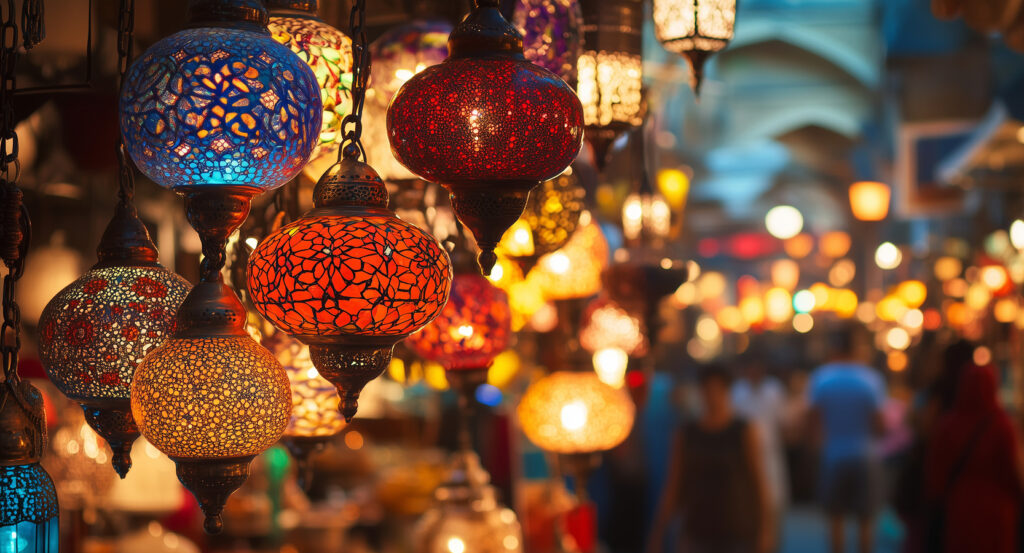
Why you should experience Sandal Bedesteni̇ in Istanbul, Türkiye.
Sandal Bedesteni̇, the “New Bedesten” of the Grand Bazaar, is the market's hidden cathedral, where time folds in on itself beneath a canopy of domes.
Step through its heavy stone doorway, and the roar of the bazaar softens into a reverent hush. The air smells faintly of cedar and old silk, and golden light seeps through the arched windows to reveal vaulted ceilings that seem to hover just above your head. Built for traders of fine textiles and brocades, Sandal Bedesteni̇ feels like the heartbeat of Istanbul's mercantile soul, a place where deals were whispered, reputations forged, and fortunes made. Each stall here seems to hum with memory: bolts of fabric stacked like landmark, antique jewelry glinting in the shadows, and merchants sipping tea as they weigh centuries of craftsmanship in every gesture. To walk through it is to glimpse the Grand Bazaar's original elegance, quieter, older, and infinitely more human.
What you should know about Sandal Bedesteni̇.
Sandal Bedesteni̇ was the Ottoman Empire's first luxury exchange, the beating economic heart of an empire that spanned three continents.
Commissioned by Sultan Suleiman the Grand in the mid-16th century, it was built to complement the older Cevahir Bedesteni, forming the twin core around which the Grand Bazaar grew. The word sandal doesn't refer to footwear, but to a prized type of silk woven with gold and silver threads imported from Bursa, a fabric so delicate it shimmered like sunlight on water. The merchants who worked here were members of an elite guild, sworn to honesty, discretion, and mastery of the textile arts. They traded in silks, velvets, and embroidered fabrics destined for Ottoman courts and foreign embassies, their goods so valuable that each stall could be locked by three keys, one held by the merchant, one by the guild, and one by the state. The Bedesten's architecture reflects this sense of sanctity: 15 lead-covered domes supported by massive piers, forming a rhythmic grid that diffuses sound and temperature alike. Fires, earthquakes, and restorations have touched it, but its essence remains unchanged. Even today, the air feels cool and still, preserved by the same engineering that once protected bolts of silk worth more than gold.
How to fold Sandal Bedesteni̇ into your trip.
Seek out Sandal Bedesteni̇ when you need a pause from the bazaar's chaos, it's the Grand Bazaar's moment of stillness.
Enter through the northern corridor near the Kalpakçılar Caddesi and step into the cool dimness beneath the domes. Let your eyes adjust to the half-light; you'll notice how sound changes, the chatter fades into an echo, replaced by the soft murmur of tea being poured. Wander slowly through its central aisles, where antique dealers and textile traders now occupy the same spaces once used by imperial merchants. Run your fingers lightly across a silk scarf or a woven carpet and imagine the caravans that brought its threads from Persia or India centuries ago. The merchants here are storytellers as much as traders, ask them about their craft, and they'll speak of lineage, not price. Visit around midday, when sunlight filters through the high windows and pools across the stone floor like gold leaf. Sandal Bedesteni̇ isn't the bazaar's loudest corner, but it's the one that still carries its original dignity, a sanctuary of trade where wealth was once measured not by abundance, but by beauty.
Where your story begins.
Foresyte Travel reveals places that feel extraordinary long before you arrive.
Experience premium editorial crafted for luxury travelers.





































































































