
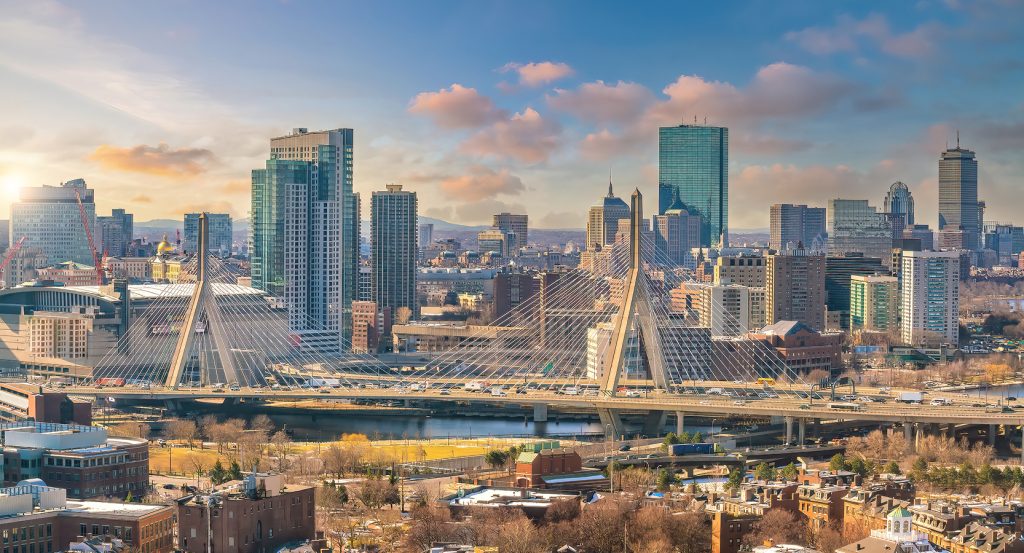
Why you should experience Hereford Street in Boston, Massachusetts.
Hereford Street is an elegant corridor where Back Bay's architectural grandeur, cultural sophistication, residential prestige, and nineteenth-century planning converge into one of Boston's most distinguished urban streets.
Running through Back Bay between the Charles River and the South End, the corridor follows one of the neighborhood's stately north-south alignments, connecting rows of richly detailed brownstones, leafy sidewalks, refined civic architecture, and broad boulevards that reflect the vision behind Boston's greatest residential expansion. Each successive block heightens the experience as carved sandstone ornament, slate mansard roofs, wrought-iron railings, decorative bay windows, and meticulously preserved façades reveal the extraordinary craftsmanship invested throughout the district. The defining moment arrives where the corridor's architectural unity and carefully composed streetscape reveal why Back Bay remains one of America's finest examples of nineteenth-century urban planning. The result is an experience defined by architectural harmony, historical depth, and one of Back Bay's most graceful corridors.
What you should know about Hereford Street.
Hereford Street is best known for developing during the creation of Back Bay, among the largest nineteenth-century landmaking projects in the United States, after the Commonwealth of Massachusetts authorized the filling of the Back Bay tidal basin beginning in 1857. Residential construction accelerated between the 1860s and the 1890s, introducing substantial Victorian Gothic, Second Empire, Queen Anne, and Romanesque Revival townhouses distinguished by brownstone façades, red brick masonry, slate mansard roofs, carved sandstone lintels, projecting bay windows, ornamental ironwork, and granite foundations. Civil engineer Arthur Gilman, together with architect Gridley James Fox Bryant, helped establish the disciplined street structure and uniform residential composition that became hallmarks of Back Bay's development, while carefully regulated building setbacks and landscaped avenues reinforced its reputation as Boston's premier residential quarter. Expansion of horse-drawn street railways, proximity to the Charles River Esplanade, and the neighborhood's concentration of distinguished civic and cultural institutions strengthened Hereford Street's importance within one of America's most influential planned urban districts. Collectively, the district's ambitious engineering, coordinated planning, accomplished architecture, transportation improvements, and enduring residential character established Hereford Street as one of Back Bay's defining historic corridors.
Literary culture became a defining influence along the corridor as the Boston Authors Club, founded in 1899, drew generations of writers, editors, publishers, and literary figures whose work reinforced Back Bay's reputation as one of New England's intellectual centers. That tradition matured alongside the nearby Gibson House Museum, preserved with its original Victorian interiors and collections documenting the domestic life of Boston's upper-middle-class families, providing an unusually complete record of the social environment that shaped streets such as Hereford Street. Skilled stone carvers, ornamental ironworkers, stained-glass artisans, and restoration masons have preserved original brownstone façades, slate roofing, decorative iron fences, and carved architectural ornament, ensuring the corridor continues expressing the craftsmanship envisioned during Back Bay's formative decades. Together, these literary institutions, preserved domestic traditions, and enduring artisan skills demonstrate how Hereford Street developed within a neighborhood whose architectural distinction has always been reinforced by equally rich cultural and intellectual life.
How to fold Hereford Street into your trip.
Hereford Street works as an exploration of Back Bay's architectural refinement, cultural heritage, and thoughtfully planned urban landscape.
Begin at Commonwealth Avenue Mall, where Frederick Law Olmsted's tree-lined boulevard establishes the planning philosophy and residential elegance that naturally continue along Hereford Street. Continue to Newbury Street, where beautifully preserved nineteenth-century townhouses now house independent boutiques, galleries, and cafés, revealing how historic architecture continues supporting one of Boston's most energetic pedestrian environments. Conclude at The First Church of Christ, Scientist Plaza, where grand reflecting pools, distinguished architecture, and expansive civic space provide the experiential payoff by demonstrating how Back Bay's residential grandeur seamlessly transitions into one of Boston's defining cultural landscapes. The progression moves naturally from visionary boulevard planning to adaptive urban vitality before culminating in a civic setting that reveals the full architectural ambition of Back Bay.
Where your story begins.
Foresyte Travel reveals places that feel extraordinary long before you arrive.
Experience premium editorial crafted for luxury travelers.







































































































