
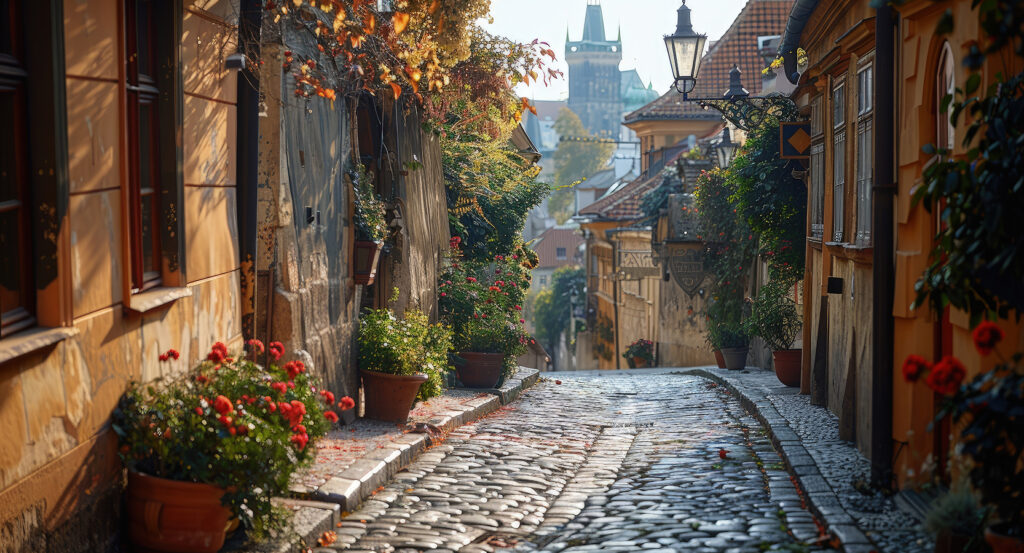
Why you should experience Hotel Bookquet in Prague, Czech Republic.
Hotel Bookquet is Prague lived from the inside out, a hotel that does not rely on thematic drama or overwritten design, but instead frames your time in the city with thoughtful calm, material intelligence, and a sense of continuity that quietly shapes your experience.
Located in the Žižkov district, among Prague's most interesting neighborhoods just east of the historic core, the hotel places you within reach of Old Town, the Žižkov Television Tower, and local markets while providing a setting that feels residential, considered, and surprisingly refreshing in a city often defined by tourists and heritage zones. Arrival here feels immediate. You step off a street where real life happens in parallel with exploration into a lobby that balances proportion and restraint: clean lines, warm materials, and lighting that welcomes. Public spaces use natural texture and calm geometry to absorb movement and energy rather than broadcast them, creating an atmosphere that feels quietly composed rather than performative. Guest rooms express the hotel's philosophy with coherence and quiet depth. They are not oversized, but they feel resolved: layouts prioritize clarity of use, placing rest, work, and pause. Beds are designed for restorative sleep after long walks through Prague's layers rather than decorative flourish, dressed in fabrics that feel honest and comfortable rather than ornamental. Windows frame the neighborhood, rooftops, and distant spires, turning Prague into a living backdrop. Furniture is purposeful and well scaled: desks that support real productivity, seating that invites discussion or reading, and generous storage that allows you to unpack and settle. Lighting is layered and adaptive, enabling smooth transitions from bright morning activity to evening calm. Bathrooms reflect the same logic of practical refinement: efficient circulation, quality fixtures, strong water flow, and finishes that feel tactile under use. Nothing in the rooms feels ornamental for its own sake; everything exists to support presence and comfort under repeated use. Dining and shared amenities at Hotel Bookquet reinforce the hotel's character as a place of lived experience. Breakfast is composed and well paced, served in an open space that feels social without cacophony, encouraging conversation, planning, and calm. Shared lounges and sitting areas function as extensions of your room, spaces where you can read, work, reflect, or reconnect. Service throughout the hotel is attentive, supportive, and situationally aware. Interactions feel genuinely human rather than procedural, reinforcing the sense that the hotel exists to support your experience of Prague rather than stage it. The hotel attracts travelers who value substance over surface: cultural explorers, long-stay visitors, couples seeking calm amid city rhythm, and repeat Prague guests who want a place that feels familiar. Hotel Bookquet does not attempt to overshadow Prague's energy or soften it into abstraction. It organizes it, offering a stay that feels contemporary, thoughtful, and deeply aligned with how real urban life folds into daily experience.
What you should know about Hotel Bookquet.
Hotel Bookquet was developed not as a statement of performance, but as an architectural response to Prague's layered, lived neighborhoods, particularly Žižkov, which has its own gritty, authentic energy distinct from the city's more polished historic zones.
Unlike properties that lean heavily into heritage nostalgia or overt thematic branding, this hotel's character emerges from spatial clarity and material coherence. Its location in Žižkov was chosen not only for proximity to the Old Town but also for the neighborhood's evolving cultural texture: cafés, markets, local life, and a sense of everyday movement that feels generative. The building's interior planning emphasizes proportion, circulation clarity, and spatial legibility, public spaces were laid out to absorb activity without congestion, using measured volumes and restrained finishes that prioritize psychological ease. Interiors avoid visual clutter, favoring surfaces that age well and materials that feel tactile under repeated use. Guest room layouts were informed by behavioral patterns rather than aesthetic impulses, with designers paying careful attention to how guests actually rest, work, transition, and inhabit these spaces over multiple nights. This results in environments that feel logically ordered rather than compartmentalized: adequate storage, workspaces that support real productivity, and lighting systems that manage visual load rather than amplify it. Dining areas were conceived as informal social infrastructure more than destination restaurants, supporting nourishment and conversation. Shared lounges and work zones were designed to function as daily anchors rather than staged escape rooms, enabling you to inhabit the hotel as an extension of your day rather than a pause between activities. Operational culture at Hotel Bookquet reinforces its spatial philosophy. Staff training prioritizes responsiveness, context awareness, and authentic engagement over scripted hospitality gestures. As a result, service feels capable and supportive. Over time, this intentional design and operational consistency has garnered appreciation from repeat guests who value coherence under varied conditions, from work travel to extended holiday stays. In Prague's hospitality landscape, where many properties chase theme or heritage performance, Hotel Bookquet stands apart by insisting on clarity of experience: spaces that function reliably, service that supports autonomy, and a character rooted in lived urban context.
How to fold Hotel Bookquet into your trip.
Hotel Bookquet works best when you treat it as a hub of lived exploration and calm orientation rather than merely a place to sleep between sightseeing slots.
Begin mornings with ease, using the hotel's calm interior spaces and thoughtful breakfast to orient yourself before stepping into Prague's layered streets. Walk to nearby cafés, bakeries, or markets without logistical friction, letting the neighborhood's tempo introduce you to local life rather than immediately pushing toward major landmarks. Use nearby transit, tram, metro, or on foot, to branch outward toward Old Town Square, Wenceslas Square, Žižkov Tower, or the river, returning midday to rest or plan. The hotel's lounges and sitting areas provide genuine reset points, allowing you to pause without detaching from the rhythm of the city. In the afternoon, explore adjacent cultural zones that reward pedestrian movement: street art, galleries, or historic courtyards that reveal themselves only through slow wandering. Evenings unfold with coherence: dine nearby, attend music events, or simply stroll through atmospheric lanes before returning to the quiet composure of the hotel. Late returns never feel abrupt because the interior absorbs the city's energy. Hotel Bookquet pairs especially well with extended stays, design-oriented exploration, slow travel, and trips where resonant clarity matters as much as location.
Where your story begins.
Foresyte Travel reveals places that feel extraordinary long before you arrive.
Experience premium editorial crafted for luxury travelers.





































































































