
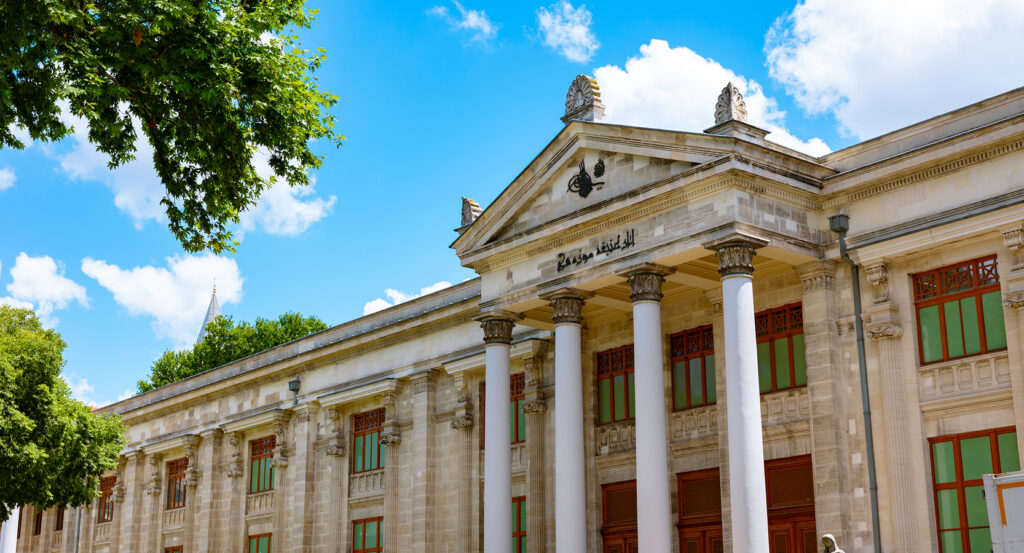
Why you should experience Alexander Sarcophagus at Istanbul Archaeological Museum in Istanbul, Türkiye.
Alexander Sarcophagus at Istanbul Archaeological Museum is the beating heart of Istanbul's archaeological legacy, a chamber where art, heroism, and immortality converge in marble.
Bathed in reverent half-light, the hall holds one of the most breathtaking masterpieces ever carved: the Alexander Sarcophagus, a relic so vivid it feels alive. Its sculpted reliefs capture Alexander the Great in the midst of battle and triumph, horses rearing, soldiers clashing, faces etched with determination and grace. The detail is staggering: muscles tense beneath draped cloth, spears pierce the air, and the faint traces of ancient pigment still whisper of color once blazing across the stone. Standing before it, time seems to dissolve; you're not merely in a museum, but inside the myth of a man who conquered worlds. The hall itself feels like a shrine, a cathedral of empire and eternity.
What you should know about Alexander Sarcophagus at Istanbul Archaeological Museum.
The sarcophagus was discovered in 1887 in Sidon (modern-day Lebanon) by Osman Hamdi Bey, the founder of the Istanbul Archaeological Museums, and it forever transformed the world's understanding of ancient sculpture.
Despite its name, the tomb was not actually Alexander's, but belonged to Abdalonymos, the Phoenician king appointed by Alexander himself after the conquest of Sidon. Crafted in the late 4th century BCE from Pentelic marble, its artistry represents the perfect fusion of Greek realism and Near Eastern grandeur. The friezes depict Alexander leading his troops into battle against the Persians on one side and engaging in a lion hunt on the other, scenes once painted in vivid blues, reds, and golds. The hall was designed specifically to honor this masterpiece: its controlled lighting preserves the stone's color, while the ceiling height and acoustics evoke the reverence of an ancient temple. Few visitors realize that the sarcophagus still bears traces of microscopic pigment, evidence that ancient sculpture was once brilliantly colored, not the white marble ideal imagined by later centuries.
How to fold Alexander Sarcophagus at Istanbul Archaeological Museum into your trip.
When visiting the Istanbul Archaeological Museums, make Alexander Sarcophagus your unhurried centerpoint, the experience around which the rest of your visit revolves.
Located on the ground floor of the main building, the hall is easy to find: follow the marble corridor past the grand entrance until you reach the softly lit chamber at its core. Take your time, circle the sarcophagus slowly, studying the play of shadow and light across the carvings. Notice Alexander's lion-headed helmet, the flaring nostrils of the horses, and the rhythm of movement frozen in stone. Visit in the morning for quieter viewing or near closing time when the crowds thin and the hall falls silent. For context, explore the nearby Sidon Sarcophagus Gallery, which houses other tombs from the same necropolis, each revealing different facets of ancient craftsmanship. Before you leave, pause at the center of the room, the light from above falls perfectly across Alexander's figure, illuminating the eternal moment between man and legend. Alexander Sarcophagus at Istanbul Archaeological Museum isn't just a gallery, it's a meeting place between myth and memory, carved forever into marble.
Where your story begins.
Foresyte Travel reveals places that feel extraordinary long before you arrive.
Experience premium editorial crafted for luxury travelers.





































































































