
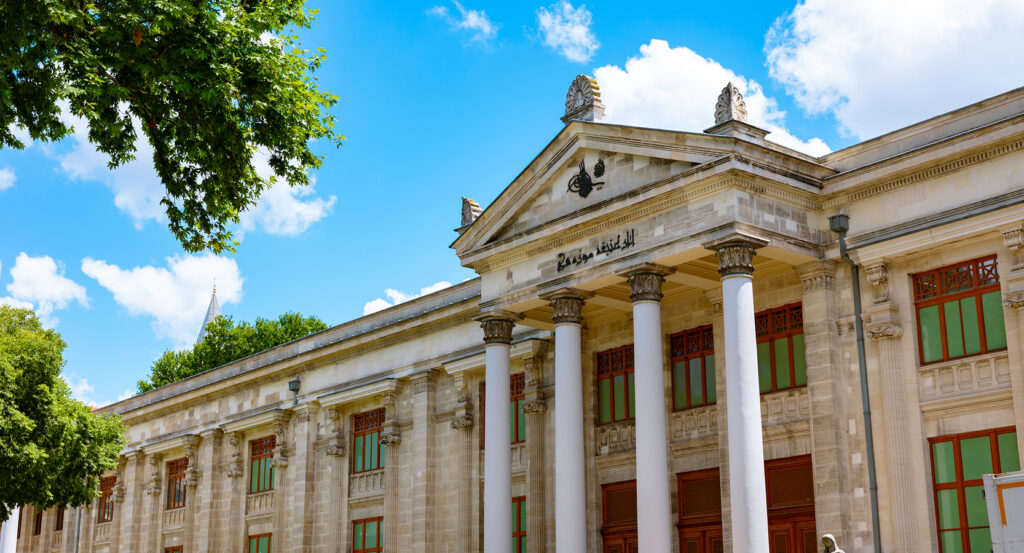
Why you should experience Tiled Pavilion Museum in Istanbul, Türkiye.
The Tiled Kiosk Pavilion, Çinili Köşk, is a hidden jewel in the heart of Istanbul, where Ottoman architecture and Persian artistry meet in perfect harmony.
Set within the gardens of the Istanbul Archaeological Museums, this 15th-century masterpiece feels like a time capsule of empire and elegance. Its turquoise tiles gleam under the sunlight, patterned with stars, blossoms, and geometric symphonies that seem almost alive. Inside, each room unfolds like a poem, domed ceilings painted in sapphire and gold, intricate calligraphy tracing the walls, and tile panels that shimmer with stories from Islamic art's golden age. Built by Sultan Mehmed II, the Conqueror himself, the pavilion was once a retreat of reflection and pleasure. Today, it's a living gallery of Ottoman tilework, bridging the ancient and the eternal, a quiet oasis that still holds the warmth of the empire's breath.
What you should know about Tiled Pavilion Museum.
Constructed in 1472, just two decades after the conquest of Constantinople, the Tiled Kiosk is among the oldest surviving examples of Ottoman secular architecture in the city.
It was commissioned by Sultan Mehmed II as part of his palace complex and served as both a guesthouse and a private summer pavilion. The building's design reflects Persian and Seljuk influences, an early tribute to Istanbul's role as a crossroads of artistic traditions. Its façade is covered in stunning blue-and-white faience tiles from İznik and Kütahya, arranged in symmetrical arabesques that were revolutionary for their time. The interior showcases some of the finest examples of early Ottoman tilework and woodcraft, including honeycomb muqarnas vaulting and marble inscriptions praising knowledge and beauty. The pavilion later became the first home of the Imperial Museum (Müze-i Hümayun) in 1881, predating the Archaeological Museum itself. In many ways, the Tiled Kiosk is where Istanbul's museum story truly began, a masterpiece that turned private artistry into public heritage.
How to fold Tiled Pavilion Museum into your trip.
To experience the Tiled Kiosk Pavilion properly, approach it as an escape.
Enter through the courtyard of the Istanbul Archaeological Museums and follow the tree-lined path leading toward the small domed building gleaming with blue tiles. Step inside and let your eyes adjust, the light filters softly through lattice windows, illuminating every curve and pattern. Move slowly from room to room, studying the shifting motifs: floral İznik panels in cobalt and emerald, marble floors echoing the geometry above, and inscriptions that seem to hum with divine rhythm. Visit in the late afternoon when sunlight strikes the façade and the tiles burn with color, it's the perfect moment for photos or quiet reflection. Afterward, sit in the garden with a coffee from the nearby museum café and look back at the pavilion glowing against the greenery. The Tiled Kiosk Pavilion isn't just an annex, it's the soul of Ottoman artistry, a timeless discussion between light, color, and faith.
Where your story begins.
Foresyte Travel reveals places that feel extraordinary long before you arrive.
Experience premium editorial crafted for luxury travelers.





































































































