
Why La Crescenta-Montrose matters.
La Crescenta-Montrose is a foothill enclave where the Crescenta Valley's mountain character meets early health-resort settlement, curving residential streets and neighborhoods pressed directly against the southern face of the San Gabriel Mountains.
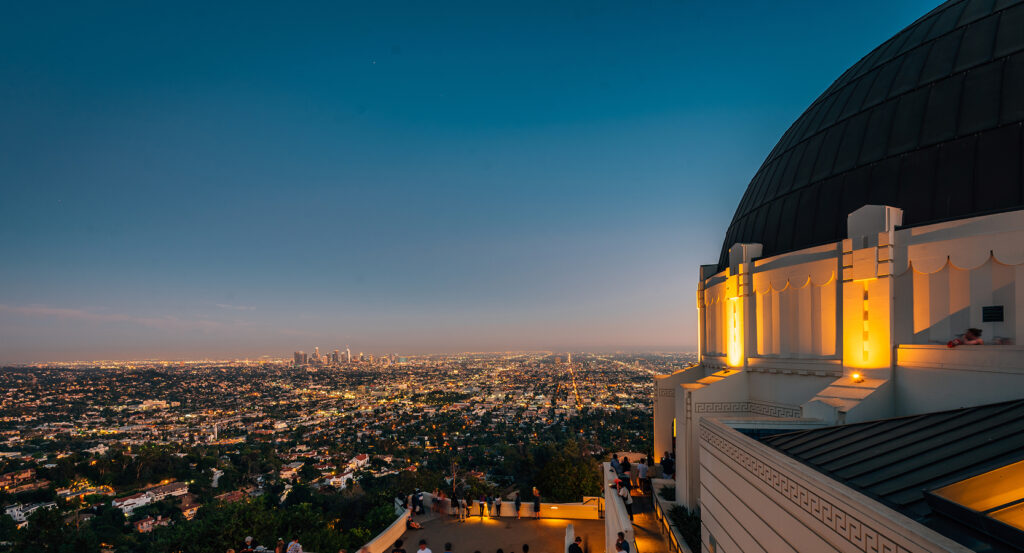
Positioned between La Cañada Flintridge, Sunland-Tujunga, and North Glendale, the neighborhood occupies an elevated foothill basin extending through Foothill Boulevard, La Crescenta Avenue and Honolulu Avenue between the San Gabriel and Verdugo ranges. Residential streets rise steadily toward the mountain front, shifting from compact bungalow blocks and postwar houses into irregular hillside parcels beneath steep canyon mouths and chaparral-covered slopes. Movement through La Crescenta-Montrose follows a diagonal street grid north of the Foothill Freeway before entering the curved roads of Montrose to the south, giving the adjoining communities visibly different patterns across a relatively narrow valley. Pickens, Dunsmore and neighboring washes descend through the settled ground from the mountains, inserting open drainage corridors between houses and exposing the direct physical relationship between the upper watershed and the neighborhoods below. The result is a neighborhood whose mountain walls, sloping residential terrain, contrasting street patterns and canyon drainage preserve the unusually close relationship between settlement and topography that has governed life in the Crescenta Valley for more than a century.
What defines La Crescenta-Montrose.
La Crescenta-Montrose is best known for developing from two separate foothill settlements whose growth converged as transportation and residential construction transformed the Crescenta Valley. Physician Benjamin B. Briggs arrived from Indiana in 1882 after searching for a dry climate suited to people suffering from lung ailments, then acquired large properties from the Williams and Lanterman families and pioneer Theodor Pickens. Briggs platted the Crescenta Cañada tract in 1884 as parallelogram-shaped ten-acre parcels and created a townsite around present-day La Crescenta Avenue, with the La Crescenta name entering use before the end of the decade. His intended health resort remained unrealized during his lifetime, yet physicians and health workers followed, establishing clinics and sanitariums as the foothills gained a reputation for their dry mountain air. Orchards and vineyards expanded alongside that medical economy during the 1910s and 1920s, giving the northern community an agricultural foundation as houses spread through the former acreage. A separate development began in 1910 when Robert A. Walton and J. Frank Walters acquired 250 acres from Briggs's daughter in the southeastern valley. Walton laid out curving streets across the property, the developers selected Montrose through a naming contest in December 1912 and a large barbecue on February 22, 1913 launched public lot sales. Walton and Walters also acquired the Eagle Rock Trolley, renamed it the Glendale and Montrose Railway and extended electric service through Montrose toward La Crescenta, giving the previously remote valley a direct transportation connection that accelerated residential growth through the following decade.
The commercial district created around Honolulu Avenue supplied Montrose with a center distinct from the older settlement farther north. Developers initially expected business activity to concentrate along Montrose Avenue, yet the first retail structure rose at Honolulu Avenue and Verdugo Road in 1913 and opened early the following year with T. O. Potts's general store. Montrose State Bank later occupied the same building, placing a financial institution inside the structure that had initiated the town's commercial development. Businesses multiplied westward along Honolulu Avenue during the 1920s, with a hardware store, pharmacy, clothing store, bank and cafe forming a compact shopping district by the middle of the decade. Houses had already been constructed along portions of Honolulu west of Ocean View Boulevard, leaving commercial expansion to absorb residential frontage as stores pushed farther along the avenue. Some owners sold their properties, others converted houses to commercial purposes and a small number of residences survived amid the expanding retail blocks. The business district continued its westward growth from the late 1920s through the 1940s, gradually giving Honolulu Avenue the role developers had originally expected Montrose Avenue to occupy. That shift left La Crescenta-Montrose with two complementary centers, one descended from Briggs's nineteenth-century foothill settlement and another from Walton and Walters's twentieth-century subdivision, joined geographically but still legible through separate street patterns and commercial histories.
How La Crescenta-Montrose fits.
La Crescenta-Montrose works as the anchor for a daytime outing connecting a pioneering women's mental-health institution, a reinforced-concrete family residence and an adobe associated with the final weeks of Mexican rule in California.
Begin at Rockhaven Sanitarium, founded in 1923 by nurse Agnes Richards after her work inside large psychiatric institutions convinced her that women needed smaller and more humane places of care. Richards opened the facility with a single two-story Craftsman residence known as the Rockhouse and gradually acquired neighboring properties as Rockhaven expanded. Craftsman and Spanish Colonial Revival buildings accumulated around gardens and mature oaks, preserving a domestic scale across a campus eventually spanning 3.3 acres. Richards remained closely associated with Rockhaven until her death in 1967, completing a forty-four-year period during which the institution developed into one of the country's early privately operated mental-health facilities created by a woman specifically for women. The National Park Service recognizes the surviving district as one of three remaining California women's mental-health facilities from its period, and the property entered the National Register of Historic Places in 2016. Continue to Lanterman House, completed in 1915 for physician Roy Lanterman and his wife Emily after architect Arthur Haley developed a U-shaped Mexican Colonial hacienda composition in reinforced concrete. Lanterman had operated an emergency hospital in San Francisco after the 1906 earthquake, where his exposure to fire strengthened his determination to build a concrete residence against the chaparral-covered foothills. Haley incorporated Arts and Crafts details, surrounding pergolas and a central fountain courtyard, and Roy added a second-floor ballroom as part of an elaborate effort to persuade Emily to leave her affluent Santa Monica surroundings for the comparatively isolated Crescenta-Cañada Valley. Their son Lloyd became a mechanical engineer associated with racing engines, and his brother Frank worked as a silent-film organist before entering the California State Assembly in 1950. Lloyd left the house with its original furnishings to La Cañada Flintridge in 1987, and it opened as a museum in 1993 after restoration. Conclude at Catalina Verdugo Adobe, among Glendale's oldest surviving buildings and a remnant of Rancho San Rafael. Teodoro Verdugo, grandson of rancho holder José María Verdugo, built the adobe and shared it with his aunt Catalina, whose association gave the dwelling its enduring name. A nearby oak entered California history in January 1847 when Jesús Pico, acting for Lieutenant Colonel John C. Frémont, met with his brother General Andrés Pico and discussed terms for ending armed conflict in Alta California. Frémont and Andrés Pico completed the agreement two days later at Cahuenga, bringing the fighting in California during the Mexican-American War to an end. The Verdugo property later passed through several owners before Glendale acquired the adobe in 1989, preserving a surviving structure from the rancho that once encompassed much of the surrounding region. The progression moves from Agnes Richards's women-centered approach to mental-health care through Roy Lanterman's fire-conscious concrete residence and culminates at the Verdugo family adobe, connecting twentieth-century social reform and domestic architecture with the Mexican-era history beneath the Crescenta Valley.
Where your story begins.
Foresyte Travel reveals places that feel extraordinary long before you arrive.
Enjoy editorial crafted for luxury travelers.
Foresyte may earn a commission when you book.





































































































