
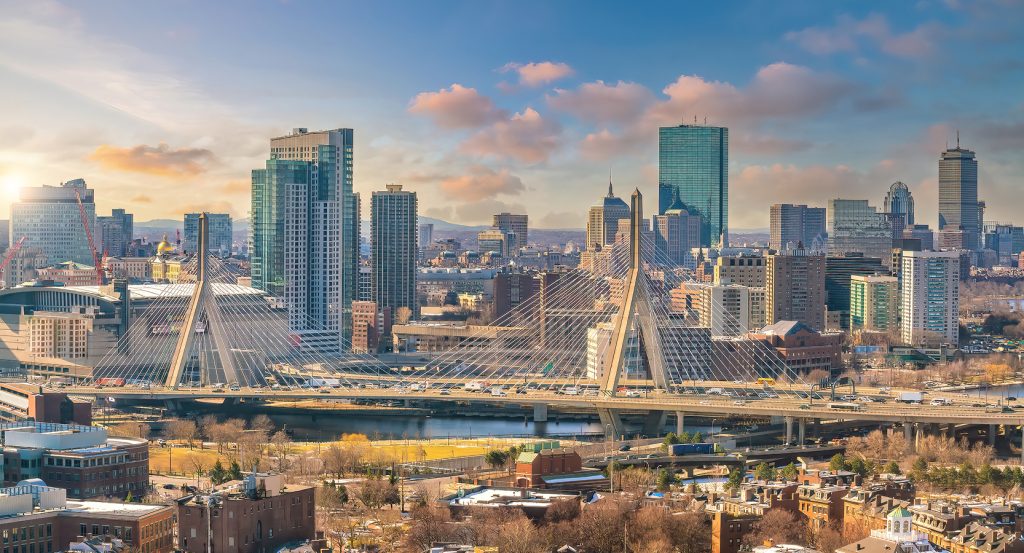
Why you should experience Maverick Street in Boston, Massachusetts.
Maverick Street is a lively corridor where East Boston's maritime heritage, immigrant traditions, commercial vitality, and neighborhood character create one of Boston's most engaging urban streets.
Running through East Boston between Jeffries Point and Eagle Hill, the corridor follows one of the neighborhood's longest-established thoroughfares, linking historic commercial blocks, brick residential buildings, neighborhood institutions, and elevated streets that reveal changing perspectives toward Boston Harbor. Each successive block heightens the experience as richly detailed masonry, family-owned storefronts, granite façades, historic church towers, and increasingly animated streetscapes reveal the generations of craftsmanship and community traditions that continue defining East Boston. The defining moment arrives as the corridor's enduring commercial life, preserved architecture, and harbor-oriented setting reveal how successive immigrant communities shaped one of Boston's most enduring neighborhood centers. The result is an experience defined by cultural continuity, architectural richness, and one of East Boston's most distinctive corridors.
What you should know about Maverick Street.
Maverick Street is best known for extending through East Boston following the establishment of the East Boston Company in 1833, when an ambitious program of landmaking united five harbor islands into one of the nation's earliest comprehensively planned urban communities. The corridor expanded alongside East Boston's shipyards, ferry terminals, and transatlantic passenger facilities as maritime commerce, manufacturing, and international immigration established the neighborhood as a principal gateway to Boston Harbor throughout the nineteenth century. Builders introduced substantial Italianate, Second Empire, Queen Anne, and Classical Revival commercial and residential buildings distinguished by brick masonry, granite storefronts, cast-iron columns, decorative cornices, and finely crafted window surrounds that continue defining Maverick Street's architectural identity. Opening of the East Boston Tunnel in 1904, North America's first underwater rapid-transit tunnel, strengthened the corridor's connection with Downtown while reinforcing its role within East Boston's commercial network. Collectively, the East Boston Company's planning vision, maritime commerce, transportation innovation, immigrant enterprise, and enduring architectural craftsmanship established Maverick Street as one of East Boston's defining historic corridors.
Religious and civic institutions became the defining thread shaping the corridor as Most Holy Redeemer Parish, established in 1844, provided worship, charitable assistance, language instruction, and community support that strengthened Maverick Street's role within East Boston's expanding immigrant population. That institutional foundation encouraged generations of family-owned bakeries, pharmacies, tailors, specialty grocers, and neighborhood merchants to establish closely connected businesses whose continuous storefronts reinforced the corridor's character as a longstanding commercial gathering place. Skilled brick masons, stained-glass artisans, ornamental metalworkers, and stone carvers enriched the surrounding streetscape through decorative lintels, carved granite details, pressed-metal cornices, and ecclesiastical craftsmanship that continues distinguishing buildings lining Maverick Street today. Together, these religious institutions, multigenerational businesses, and enduring artisan traditions demonstrate how Maverick Street developed into a corridor whose architectural and cultural character has been sustained through generations of community stewardship.
How to fold Maverick Street into your trip.
Maverick Street works as an exploration of East Boston's neighborhood heritage and waterfront history.
Begin at Maverick Square, where the neighborhood's historic commercial center establishes the setting before naturally leading along Maverick Street through East Boston's longstanding business district. Continue to East Boston Greenway, where landscaped pathways and public art deepen appreciation for the neighborhood's evolving urban character while extending the journey toward the waterfront. Conclude at Piers Park, where sweeping views across Boston Harbor provide the historical payoff by revealing the maritime setting that fostered the commerce, immigration, and neighborhood traditions defining Maverick Street for nearly two centuries. The progression moves naturally from the neighborhood's historic center to connected public spaces before concluding at the harbor that has shaped East Boston's character across generations.
Where your story begins.
Foresyte Travel reveals places that feel extraordinary long before you arrive.
Experience premium editorial crafted for luxury travelers.







































































































