
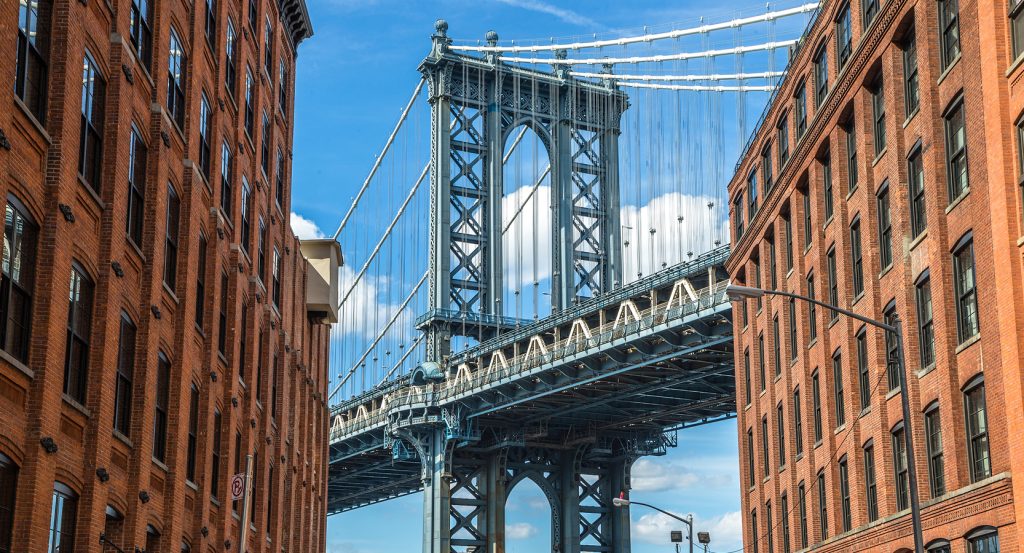
Why Metropolitan Avenue matters.
Metropolitan Avenue is a landmark North Brooklyn corridor where commercial vitality, industrial heritage, and neighborhood diversity converge along one of the borough's most important cross-borough thoroughfares.
Stretching through Williamsburg, East Williamsburg, Bushwick, and into Queens, this historic avenue connects landmark transit hubs, converted factory buildings, thriving commercial districts, neighborhood institutions, creative workspaces, and residential communities that demonstrate Brooklyn's remarkable urban evolution. Expansive brick warehouses, prewar apartment buildings, independent businesses, historic storefronts, and architecturally varied streetscapes create an avenue where manufacturing traditions and entrepreneurial energy continue to reinforce one another. Metropolitan Avenue developed into a principal transportation and commercial artery during Brooklyn's industrial expansion, carrying workers, merchants, and goods between factories, neighborhoods, and markets while helping shape the economic character of North Brooklyn. Eastward, the corridor continues seamlessly into Queens, underscoring its enduring role as one of New York City's most significant neighborhood connectors. The result is a corridor defined by commercial importance, industrial legacy, and metropolitan continuity.
What defines Metropolitan Avenue.
Metropolitan Avenue is best known for following the route of the Metropolitan Avenue Bridge, completed in 1931, which carries one of Brooklyn and Queens' principal east-west thoroughfares across Newtown Creek while maintaining a transportation corridor that has linked the two boroughs since the nineteenth century.
The bridge replaced earlier crossings that served Brooklyn's industrial waterfront, improving the movement of workers, freight, and commerce between manufacturing districts on both sides of Newtown Creek. Its construction reinforced Metropolitan Avenue's role as a critical connector within New York City's expanding transportation network during the early twentieth century. Today, the corridor continues to serve as one of the city's busiest neighborhood avenues, reflecting more than a century of commercial, industrial, and civic importance.
How Metropolitan Avenue fits.
Metropolitan Avenue works as an exploration of North Brooklyn's industrial heritage, creative culture, and neighborhood evolution.
Begin at Domino Park, where preserved refinery structures immediately establish the corridor's connection to Brooklyn's manufacturing past. Continue toward The City Reliquary, whose thoughtfully curated collections illuminate the neighborhoods, industries, and communities that transformed Brooklyn into one of America's great urban centers. From there, make your way to McCarren Park, where expansive lawns, athletic facilities, and energetic public life provide broader perspective on the communities connected by Metropolitan Avenue. Along the route, you'll encounter converted warehouses, independent galleries, neighborhood cafés, architecturally significant industrial buildings, thriving commercial streets, and creative businesses that reveal the avenue's exceptional breadth. The progression moves naturally from landmark industrial waterfront to neighborhood history museum to celebrated public park, demonstrating how Metropolitan Avenue connects manufacturing heritage, cultural innovation, and community life across one of Brooklyn's defining corridors. Metropolitan Avenue remains one of the borough's most influential avenues, preserving a distinctive balance between industrial authenticity, commercial vitality, and neighborhood character.
Where your story begins.
Foresyte Travel reveals places that feel extraordinary long before you arrive.
Enjoy editorial crafted for luxury travelers.
Foresyte may earn a commission when you book.







































































































