
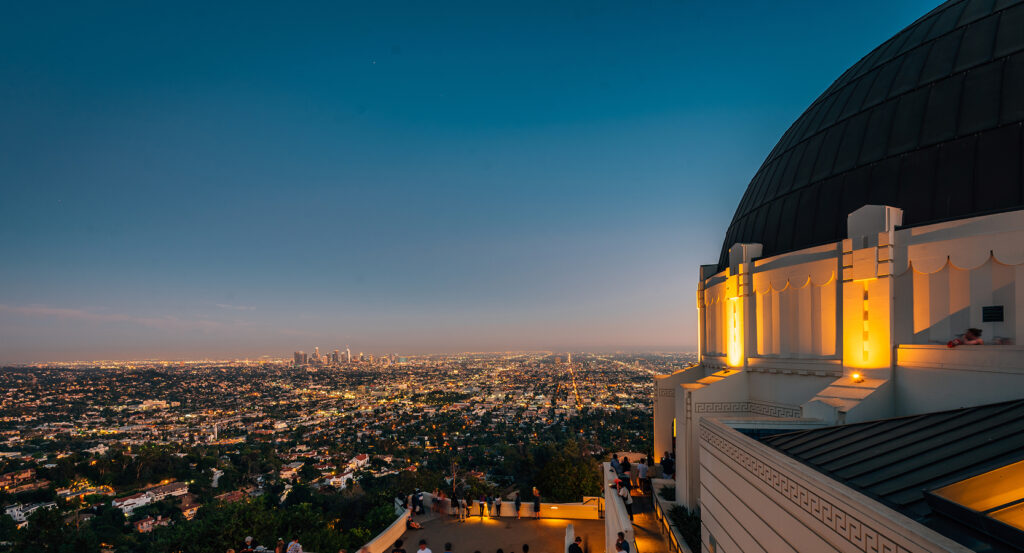
Why Moorpark Street matters.
Moorpark Street is a dynamic corridor where Studio City's entertainment legacy, neighborhood character, creative industries, and San Fernando Valley history define one of Los Angeles' most recognizable east-west streets.
Running through Studio City between Sherman Oaks and Toluca Lake, the corridor connects neighborhood businesses, production facilities, schools, public parks, restaurants, and residential districts that collectively reflect the continuing evolution of one of Los Angeles' premier entertainment communities. Mature shade trees, landscaped sidewalks, locally owned businesses, pedestrian-friendly intersections, and well-established residential blocks preserve a corridor shaped by thoughtful planning, creative enterprise, and sustained community investment. Municipal agencies, neighborhood organizations, educational institutions, entertainment professionals, and residents continue reinforcing Moorpark Street's importance while supporting commerce, recreation, education, and community life throughout Studio City. The result is an experience defined by creative energy, neighborhood continuity, and the enduring character of Studio City.
What defines Moorpark Street.
Moorpark Street is best known for traversing the heart of Studio City, a community occupying land formerly included within the 116,858-acre Rancho Ex-Mission San Fernando, patented in 1846 to Eulogio de Celis, before subdivision during the late nineteenth and early twentieth centuries transformed the eastern San Fernando Valley into one of Southern California's fastest-growing suburban districts. The corridor developed alongside the establishment of Mack Sennett's motion picture studio in 1927, an investment that inspired the community's name and accelerated residential and commercial growth centered around the entertainment industry. Expansion of nearby CBS Studio Center, originally opened in 1928 as Republic Studios, together with continued television and film production throughout the twentieth century, reinforced Moorpark Street's role within one of Los Angeles' most significant production districts. Continued investment by the City of Los Angeles, neighborhood revitalization initiatives, transportation improvements, and preservation of the area's residential character have reinforced Moorpark Street's importance as a corridor linking creative industries, schools, public amenities, and neighborhood businesses.
CBS Studio Center, operating on a site continuously associated with motion picture and television production since 1928, has hosted generations of nationally recognized film and television productions while remaining a defining institution near Moorpark Street. The Studio City Recreation Center, developed by the City of Los Angeles Department of Recreation and Parks, provides athletic facilities, playgrounds, community programs, and public open space serving neighborhoods directly connected to the corridor. The Los Angeles River, flowing immediately south of Studio City, continues shaping regional flood control, environmental restoration, and recreation through projects coordinated by the City of Los Angeles and the Army Corps of Engineers that influence the landscape surrounding Moorpark Street. The Campo de Cahuenga Historic Memorial, preserving the 1847 Treaty of Cahuenga site, documents the conclusion of military conflict in California during the Mexican-American War while providing historical context for the communities surrounding the corridor.
How Moorpark Street fits.
Moorpark Street works as an exploration of Studio City's entertainment heritage, neighborhood parks, and historic landmarks.
Begin at CBS Studio Center, where decades of television and motion picture production introduce the creative character surrounding Moorpark Street before continuing through Studio City. Continue to Studio City Recreation Center, where athletic facilities, shaded green spaces, and community gathering areas provide insight into the neighborhood life that defines the corridor. Conclude at Campo de Cahuenga Historic Memorial, where preserved historic grounds, interpretive exhibits, and California history provide a memorable finale celebrating the events that shaped the San Fernando Valley long before modern Los Angeles emerged. The progression moves naturally from entertainment history to neighborhood recreation before concluding with early California history, revealing why Moorpark Street continues expressing the enduring character of Studio City.
Where your story begins.
Foresyte Travel reveals places that feel extraordinary long before you arrive.
Enjoy editorial crafted for luxury travelers.
Foresyte may earn a commission when you book.





































































































