
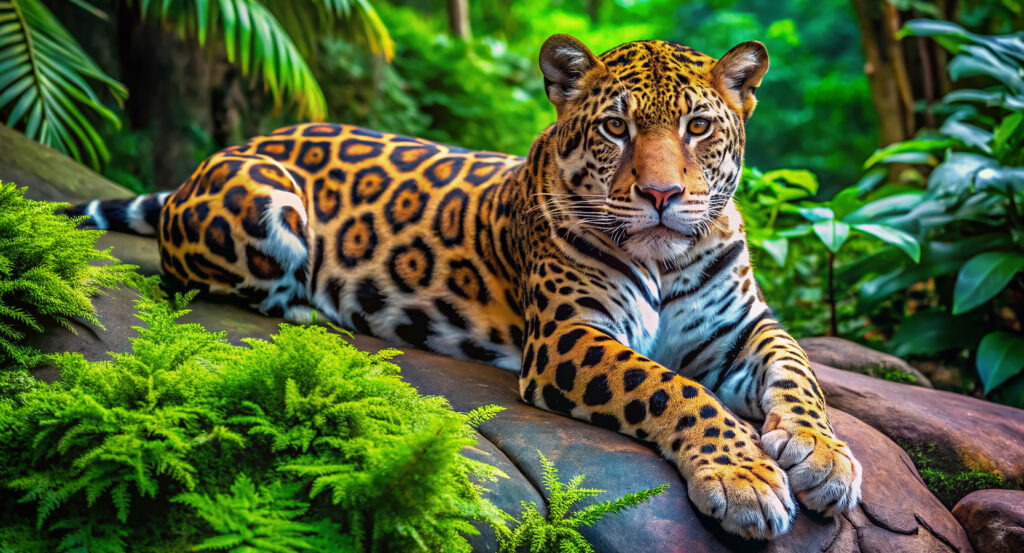
Why you should experience Great Cats Exhibit/Lion and Tiger Hill in Washington, D.C.
Great Cats Exhibit/Lion and Tiger Hill at Smithsonian National Zoological Park in Washington, D.C. brings raw power and primal grace into sharp focus, a living reminder that we share the planet with creatures as fierce as they are fragile.
Here, lions lounge across sun-drenched rock ledges, their golden eyes scanning the horizon of their expansive habitat. Nearby, tigers stalk the grass with a quiet precision that stops you mid-step. It's one of the zoo's most captivating spaces, immersive and humbling, where visitors are drawn close enough to feel the breath of the wild just beyond the glass. The sounds of rumbling roars echo through the valley, carrying an energy that stirs something ancient in every onlooker. More than a display of strength, the exhibit tells a story of resilience and balance, of apex predators now dependent on human protection to survive. Every encounter here is electric, a pulse of life that connects D.C. to the far reaches of the African savanna and Asian jungles these cats once freely roamed.
What you should know about Great Cats Exhibit/Lion and Tiger Hill.
Great Cats Exhibit is one of Smithsonian National Zoological Park's most historic and continuously evolving habitats, designed not as a performance but as a sanctuary.
Home to African lions and Sumatran tigers, it showcases the zoo's leadership in conservation science and captive breeding. Each cat is part of a carefully managed global program that ensures genetic diversity and population stability for species teetering on the edge of extinction. Behind the scenes, zookeepers and researchers monitor behavior, health, and enrichment with near-military precision, tracking daily routines and introducing new scents or challenges to stimulate the cats' instincts. The rocky cliffs and lush vegetation aren't just for aesthetics; they mimic the terrain of natural ranges while offering privacy and choice. The exhibit's educational panels weave these scientific efforts into a broader narrative, that even the most powerful species are now vulnerable to habitat loss and human conflict. Few realize how much of the zoo's pioneering fieldwork on big-cat welfare began right here, shaping global standards for care and conservation.
How to fold Great Cats Exhibit/Lion and Tiger Hill into your trip.
Great Cats Exhibit sits along the lower stretch of Smithsonian National Zoological Park, best approached as a midpoint stop during your visit.
Enter from the Connecticut Avenue gate and follow Olmsted Walk, where the faint roar of lions often greets you before the exhibit comes into view. Early mornings and late afternoons are the best times to visit, that's when the cats are most active, patrolling their territory or calling to one another in low, thunderous tones. Bring binoculars for detailed views and patience for those quiet, cinematic moments when a lion's gaze meets your own through the glass. Families can pair this stop with the nearby Elephant Trails or American Trail exhibits for a full loop of the zoo's most dynamic habitats. Before leaving, pause at the overlook above the lions' den and feel the rumble of their roars reverberate through your chest, a visceral reminder of nature's enduring strength. Great Cats Exhibit isn't just about watching predators; it's about understanding the delicate line between awe and stewardship that defines our relationship with the wild.
Where your story begins.
Foresyte Travel reveals places that feel extraordinary long before you arrive.
Experience premium editorial crafted for luxury travelers.







































































































