
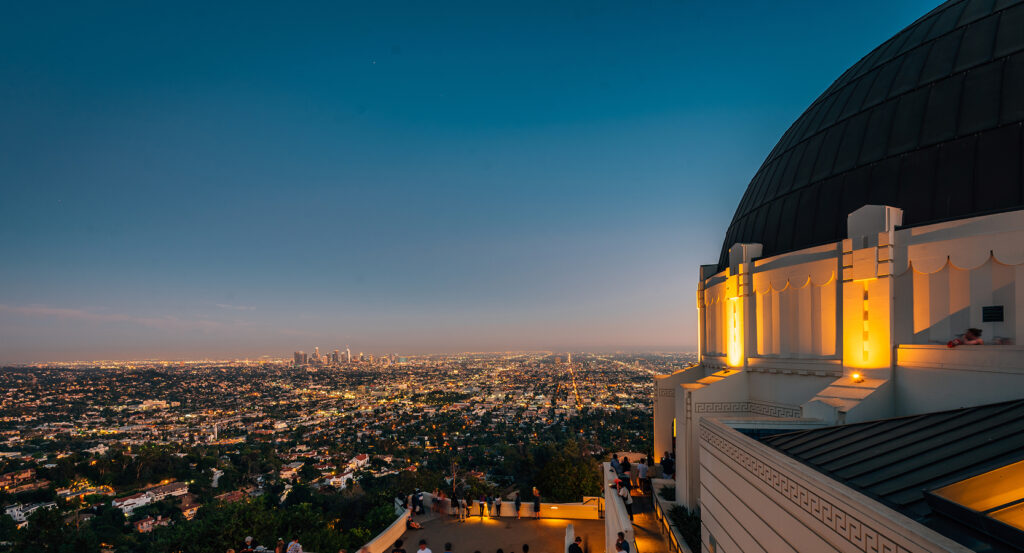
Why Palos Verdes Peninsula matters.
Palos Verdes Peninsula is a dramatic enclave where the South Bay's coastal character meets high marine terraces, deeply cut canyons and residential communities arranged across an isolated headland rising above the Pacific.
Positioned between Redondo Beach, Torrance, and San Pedro, the area occupies the southwestern edge of Los Angeles County extending through Palos Verdes Drive West, Palos Verdes Drive South and Hawthorne Boulevard from the northern slopes above the coastal plain around an elevated peninsula projecting into Santa Monica Bay and San Pedro Bay. Residential streets curve across successive ridges and canyon heads, with houses dispersed among eucalyptus groves, coastal scrub and open hillsides before the ground terminates in steep ocean bluffs. Movement across Palos Verdes Peninsula repeatedly climbs from surrounding lowlands toward a rolling interior plateau, then descends along roads revealing broad sections of coastline and offshore water between headlands. The western and southern margins acquire a markedly exposed scale as coves, sea cliffs and rocky promontories replace the sheltered residential topography farther inland. The result is a greater area whose elevated plateau, winding roads, deep canyons and abrupt coastal escarpments create one of the South Bay's most physically self-contained landscapes.
What defines Palos Verdes Peninsula.
Palos Verdes Peninsula is best known for the extraordinary residential project that began after Frank A. Vanderlip and fellow investors acquired the peninsula in 1913 and commissioned the Olmsted Brothers to shape an immense coastal property into a new community. Their purchase encompassed 25,000 acres, giving the designers an unusually large canvas of hills, canyons and coastline with few existing urban constraints. Frederick Law Olmsted Jr. became the central design figure after World War I interrupted the initial work, ultimately directing one of the Olmsted firm's largest and most complex undertakings. Charles H. Cheney joined the enterprise in 1921 and worked with Olmsted on the street system, civic centers, school sites, parks and continuous open spaces that structured the emerging community. Mediterranean precedents guided much of the architectural and landscape character, adapting houses and commercial centers to a coastal climate and topography that discouraged conventional rectilinear subdivision. A real-estate rally held beside the future Malaga Cove School site on June 17, 1923 drew more than 32,000 people and launched the principal sales campaign for the first subdivision. Malaga Cove subsequently developed as an early center, with the Gardner Building completed in 1925, Malaga Cove School opening with 35 students in 1926 and architects including Weber, Staunton and Spaulding, Allison & Allison, Walter Swindell Davis and Sumner Spaulding contributing to its built character. Palos Verdes Estates incorporated in 1939, carrying the original project into municipal form after more than two decades of work had established the peninsula's distinctive combination of curving roads, architecture and preserved open ground.
Japanese agriculture created a separate peninsula history whose scale and sophistication predated much of that residential construction. Japanese immigrant farmers began cultivating Palos Verdes ground during the early 1900s and eventually worked 2,000 coastal acres stretching from Malaga Cove toward Western Avenue. Farmers adapted dry-farming techniques to the foggy maritime climate, producing vegetables for California markets and garbanzo beans shipped internationally from terrain previously dominated by cattle and sheep. Kumekichi Ishibashi arrived 1906 and became associated with the introduction of dry farming on the peninsula, beginning a family agricultural presence that endured across generations. Approximately forty first-generation Japanese families gathered on November 24, 1923 to celebrate completion of a community building used for meetings, Japanese-language instruction, judo and social gatherings. The peninsula's agricultural communities continued producing beans, peas, tomatoes and flowers into the 1930s as residential construction expanded across other sections of the hills. World War II severed that continuity when Japanese American families were forcibly removed from the coast and confined inland, with the Ishibashis sent to the Poston camp in Arizona. The family returned after the war and resumed cultivation, becoming one of the few original Japanese farming families to reestablish agricultural work on the peninsula. Their history survives most visibly in the southern hills, where remaining cultivated ground preserves a direct physical connection to the immigrant farmers who made intensive agriculture one of Palos Verdes Peninsula's most consequential early twentieth-century industries.
How Palos Verdes Peninsula fits.
Palos Verdes Peninsula works as the anchor for a daytime outing connecting a lighthouse built for a dangerous Pacific headland, a Korean bronze bell created for the American bicentennial and a botanical garden grown across the site of an open-pit mine and former landfill.
Begin at Point Vicente Lighthouse, completed and placed into service in 1926 after ship captains had pressed for a navigational beacon along the hazardous peninsula coastline. Its reinforced-concrete tower rises 67 feet, placing the principal beam 185 feet above the ocean. A five-foot Fresnel view ground by Parisian craftsmen in 1886 had already served for four decades in Alaska before installation at Point Vicente, where its beam reached more than twenty miles offshore. The Coast Guard assumed responsibility when the Lighthouse Service transferred in 1939 and added a radio station and radio-navigation beacon. World War II brought a temporary reduction from the normal 1,000-watt light to a 25-watt bulb, limiting its usefulness to enemy vessels approaching the defended Southern California coast. Automation ended permanent staffing in 1971, closing nearly half a century of continuous keeper service at the headland. Continue to Korean Bell of Friendship, presented by the Republic of Korea to the American people on October 3, 1976 in commemoration of the United States bicentennial. The immense bronze bell occupies a stone, wood and tile pavilion at Angels Gate Park on the former grounds of a military installation overlooking the Pacific. Its placement joined Korean artistic traditions with a site commanding Catalina Island and the outer approaches to Los Angeles Harbor. The bell remains ceremonially sounded on six occasions during the year, including Korean American Day, Independence Day and Korean Liberation Day, maintaining the diplomatic purpose for which the gift was created. Conclude at South Coast Botanic Garden, whose 87-acre setting began with extraction of diatomaceous earth during the early twentieth century. Open-pit mining intensified in 1929, Great Lakes Carbon Company acquired the operation in 1944 and Los Angeles County purchased the exhausted property in 1956 before using it for refuse disposal. Frances Young led private citizens who persuaded the county to convert the former landfill into a botanical garden in 1961. More than 40,000 donated trees, shrubs and other plants entered the ground during the first major planting that April, beginning an horticultural collection that later exceeded 200,000 plants. The unusual conversion became one of the world's earliest botanical gardens developed over a sanitary landfill and attracted international attention as an experiment in reclaiming heavily altered land. The progression moves from a beacon engineered for Pacific navigation through a grand diplomatic gift overlooking the harbor approaches and culminates in the conversion of industrially exhausted ground into a major botanical collection, revealing three radically different uses of the peninsula's commanding geography.
Where your story begins.
Foresyte Travel reveals places that feel extraordinary long before you arrive.
Enjoy editorial crafted for luxury travelers.
Foresyte may earn a commission when you book.





































































































