
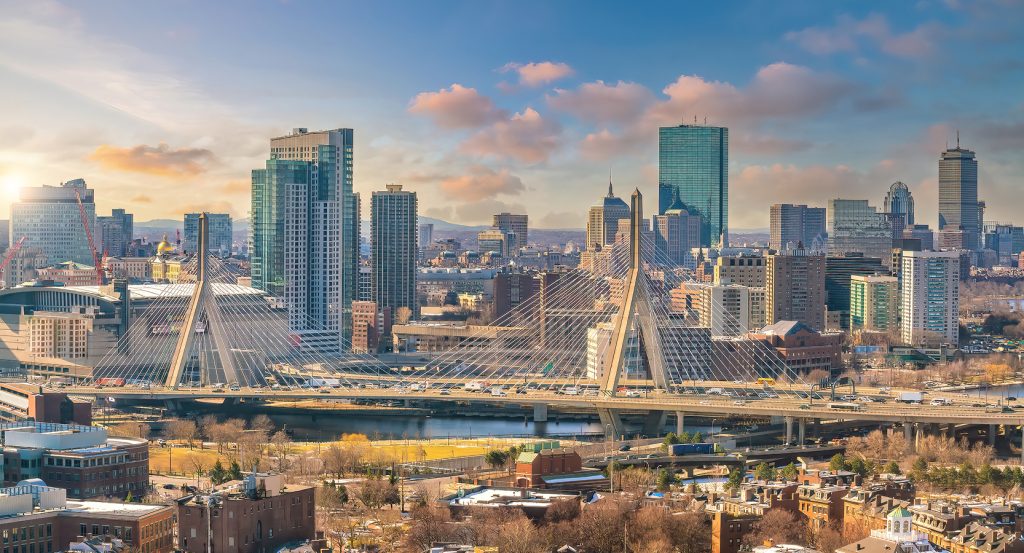
Why Porter Street matters.
Porter Street is a lively corridor where East Boston's waterfront heritage, immigrant traditions, maritime legacy, and neighborhood vitality create one of Boston's most engaging urban streets.
Running through East Boston between Jeffries Point and Eagle Hill, the corridor connects historic brick buildings, neighborhood businesses, harbor-facing streets, and longstanding residential blocks that reflect one of Boston's most culturally distinctive communities. Each successive block heightens the experience as historic masonry, sweeping harbor glimpses, locally owned storefronts, and increasingly intimate streetscapes reveal the enduring relationship between East Boston's maritime past and its energetic neighborhood life. The corridor reaches its defining moment where waterfront history, architectural continuity, and generations of community tradition converge into an unmistakably Boston experience. The result is an experience defined by maritime heritage, cultural richness, and one of East Boston's most distinctive corridors.
What defines Porter Street.
Porter Street is best known for extending through East Boston, a neighborhood established in 1833 by the East Boston Company, whose ambitious landmaking projects transformed five harbor islands into one of the nation's earliest comprehensively planned urban communities. The corridor developed alongside Boston Harbor during the nineteenth century as shipbuilding, maritime commerce, immigration, and industrial enterprise established East Boston as a principal gateway for transatlantic trade and passenger arrivals. Residential and commercial construction between the 1840s and the 1920s introduced enduring collections of Italianate, Queen Anne, Colonial Revival, and Classical Revival buildings executed in brick, brownstone, granite, and wood, reflecting successive phases of neighborhood growth. Expansion of nearby transportation facilities, including the East Boston Tunnel, which opened in 1904 as North America's first underwater rapid-transit tunnel, strengthened regional connectivity while reinforcing Porter Street's role within East Boston's evolving commercial core. Collectively, the East Boston Company's planned development, maritime commerce, distinguished architectural traditions, and transportation innovation established Porter Street as one of East Boston's defining corridors.
Immigration remained the defining force shaping the corridor as Irish, Italian, Jewish, and later Latin American communities established churches, mutual-aid societies, neighborhood businesses, and cultural institutions that broadened East Boston's character across successive generations. Commercial buildings along Porter Street preserve ornamental brick corbelling, cast-iron storefront columns, granite lintels, decorative pressed-metal cornices, and deeply recessed shopfronts that continue expressing the craftsmanship of late nineteenth-century neighborhood architecture. Original granite curbstones, mature street trees, narrow development parcels, and continuously occupied mixed commercial frontages reinforce the intimate pedestrian character that has distinguished the corridor for well over a century. Together, these immigrant traditions, architecturally significant commercial buildings, and remarkably preserved streetscape elements demonstrate how Porter Street matured into one of East Boston's most historically complete neighborhood corridors.
How Porter Street fits.
Porter Street works as an exploration of East Boston's waterfront heritage, neighborhood culture, and harbor history.
Begin at Piers Park, where panoramic views across Boston Harbor establish the maritime setting before naturally leading toward Porter Street and the surrounding neighborhood. Continue to ICA Watershed, where contemporary exhibitions inside a restored industrial building deepen appreciation for East Boston's evolving relationship with its working waterfront while expanding the cultural experience. Conclude at LoPresti Park, where sweeping harbor vistas and views toward the downtown skyline provide the historical payoff by reconnecting the corridor with the waterfront that shaped East Boston's growth from the nineteenth century onward. The progression moves naturally from harbor landscapes to contemporary cultural expression before concluding with the waterfront panorama that defines East Boston's enduring identity.
Where your story begins.
Foresyte Travel reveals places that feel extraordinary long before you arrive.
Enjoy editorial crafted for luxury travelers.
Foresyte may earn a commission when you book.







































































































