
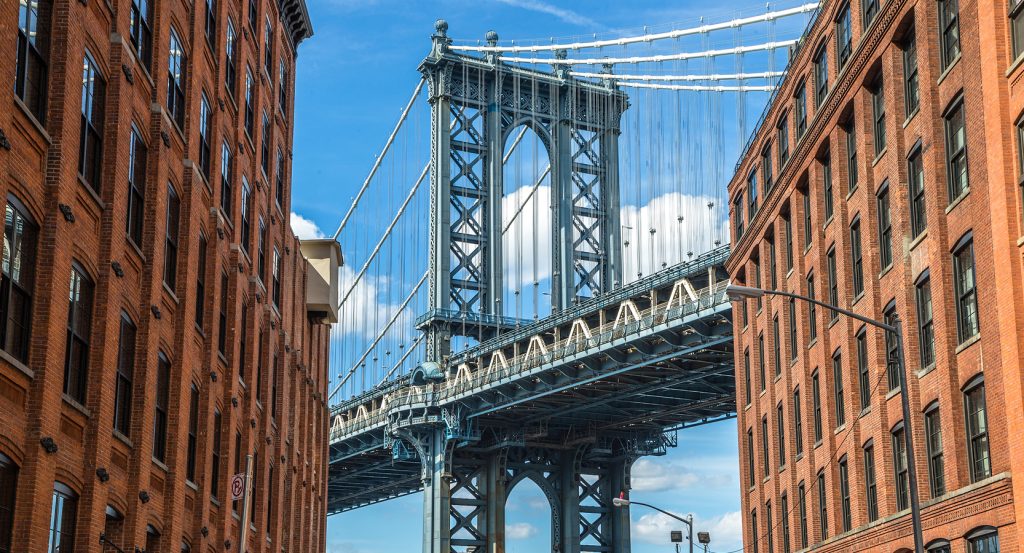
Why you should experience Rodney Street in New York, NY.
Rodney Street is a historic Williamsburg corridor where immigrant heritage, industrial legacy, and neighborhood reinvention converge along one of North Brooklyn's enduring residential streets.
Running through Williamsburg between South Williamsburg and East Williamsburg, this historic corridor connects converted factory buildings, neighborhood businesses, historic rowhouses, community institutions, and residential blocks that have shaped local life for generations. Brick industrial buildings, classic tenements, adaptive reuse projects, and independently owned storefronts create a streetscape defined by architectural continuity and entrepreneurial energy. Rodney Street developed during Williamsburg's rapid industrial expansion in the late nineteenth century, supporting generations of manufacturers, dockworkers, merchants, and immigrant families whose labor established the neighborhood as one of Brooklyn's principal centers of production. To the east, East Williamsburg extends naturally from Rodney Street through a network of historic industrial buildings, neighborhood institutions, and commercial corridors that reinforce the street's enduring significance. The result is a corridor defined by industrial heritage, cultural continuity, and neighborhood vitality.
What you should know about Rodney Street.
Rodney Street is best known for bordering the Williamsburg Houses, completed in 1938 as New York City's first federally funded public housing development, establishing a national model for modern urban housing.
Designed by architects William Lescaze and Richmond Shreve under the Public Works Administration, the development introduced landscaped superblocks, modern apartment layouts, and improved living conditions that influenced public housing design across the United States. The project marked a pivotal moment in American urban planning by replacing overcrowded tenements with thoughtfully planned residential communities emphasizing light, open space, and recreation. Rodney Street remains closely connected to this landmark achievement, reflecting Williamsburg's important role in the evolution of twentieth-century housing policy and neighborhood development.
How to fold Rodney Street into your trip.
Rodney Street works as an exploration of Williamsburg's industrial heritage, architectural evolution, and neighborhood culture.
Begin at the Williamsburg Houses, where the street's defining relationship with modern urban planning and residential history immediately comes into focus. Continue toward Domino Park, whose preserved refinery structures and award-winning waterfront landscape reveal the industrial forces that shaped Williamsburg for generations. From there, make your way to The City Reliquary, where thoughtfully curated exhibits celebrating New York City's local history provide broader perspective on the people and traditions that transformed the neighborhood over time. Along the route, you'll encounter converted warehouses, neighborhood cafés, historic residential blocks, independent boutiques, creative studios, and architecturally significant streetscapes that showcase the corridor's remarkable depth. The progression moves naturally from pioneering public housing to revitalized industrial waterfront to neighborhood museum, revealing how Rodney Street connects social history, manufacturing heritage, and contemporary creativity within one of Brooklyn's most dynamic neighborhoods. Rodney Street remains one of the borough's most rewarding corridors, preserving a distinctive balance between historic innovation, neighborhood character, and cultural vitality.
Where your story begins.
Foresyte Travel reveals places that feel extraordinary long before you arrive.
Experience premium editorial crafted for luxury travelers.







































































































