
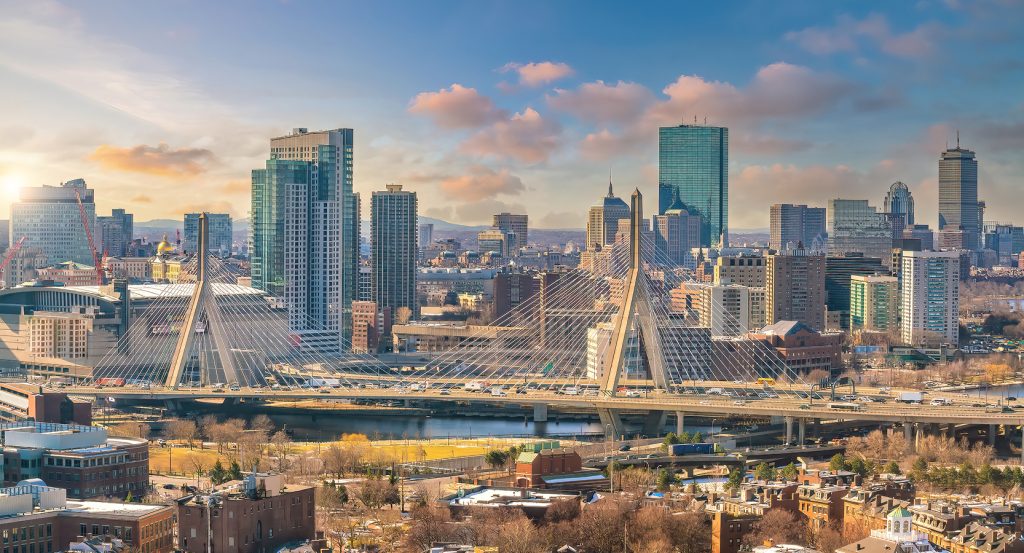
Why Roxbury matters.
Roxbury is a historic Boston neighborhood where African American heritage, revolutionary history, and cultural resilience converge across one of the city's most influential communities.
Positioned between the South End, Jamaica Plain, Dorchester, and Mission Hill, this expansive neighborhood combines nationally significant historic sites with energetic commercial districts, landmark churches, celebrated cultural institutions, neighborhood parks, and enduring residential streets that collectively showcase Boston's remarkable legacy of social activism, artistic achievement, and community leadership. Historic brownstones, architecturally significant civic buildings, beautifully preserved churches, thriving local businesses, welcoming public spaces, and energetic cultural destinations create an environment where generations of abolitionists, civil rights leaders, artists, educators, entrepreneurs, and residents have shaped one of New England's defining urban neighborhoods. Roxbury has continually reinvented itself while preserving its extraordinary historical character and enduring role in Boston's civic and cultural life. The result is a neighborhood defined by historical significance, cultural leadership, and lasting community pride.
What defines Roxbury.
Roxbury is best known for housing the Dillaway-Thomas House, the 1750 Georgian residence that served as General John Thomas' headquarters during the Siege of Boston before helping direct the fortification of nearby Dorchester Heights, a pivotal turning point in the American Revolution.
Constructed during the colonial era, the house became a strategic command center as Continental forces prepared the campaign that forced the British evacuation of Boston in March 1776. Its remarkable survival preserves one of the few remaining firsthand connections to the military planning that reshaped the course of the Revolutionary War while anchoring Roxbury's colonial legacy within modern Boston. Today, the landmark continues to interpret both Revolutionary history and Roxbury's broader community story through public education and preservation efforts. That extraordinary Revolutionary legacy has established Roxbury as one of Boston's most historically significant neighborhoods.
How Roxbury fits.
Roxbury works as an exploration of Boston's Revolutionary history, African American heritage, and cultural institutions.
Begin in Roxbury, where historic neighborhoods immediately establish the community's defining identity. Continue toward the Dillaway-Thomas House, where one of Boston's most significant Revolutionary War landmarks provides broader perspective on the neighborhood's extraordinary colonial legacy. From there, make your way to the Museum of the National Center of Afro-American Artists, where one of New England's foremost institutions dedicated to African American art and culture provides a memorable conclusion while celebrating Roxbury's enduring cultural influence. Along the way, you'll encounter architecturally significant historic buildings, welcoming public spaces, thriving neighborhood businesses, beautifully preserved civic landmarks, celebrated cultural destinations, and energetic gathering places that reveal Roxbury's exceptional depth. The progression moves naturally from one of Boston's most historic neighborhoods to a Revolutionary headquarters to a nationally significant cultural institution, demonstrating how Roxbury connects American history, community life, and artistic achievement.
Where your story begins.
Foresyte Travel reveals places that feel extraordinary long before you arrive.
Enjoy editorial crafted for luxury travelers.
Foresyte may earn a commission when you book.







































































































