
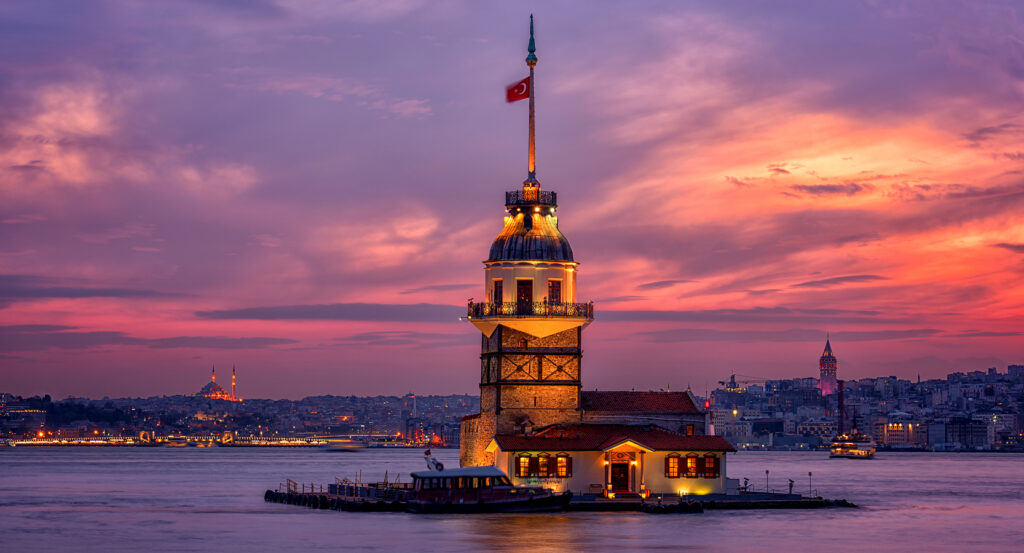
Why you should experience Sumahan on the Water in Istanbul, Türkiye.
Sumahan on the Water is Istanbul experienced through elemental intimacy, craft-driven heritage, and a rare sense of being held by the Bosphorus.
This is not a hotel that announces itself through scale or performance. It introduces itself through proximity, water close enough to hear, light close enough to feel, history close enough to touch. Set directly on the Bosphorus, in a restored industrial structure that once produced spirits rather than impressions, Sumahan on the Water offers an Istanbul that feels deeply personal and quietly profound. Arrival is immediate and tactile. You step from the street and the city recedes, replaced by the sound of water moving just beyond the threshold. The transition is not dramatic; it is elemental. Check-in unfolds with calm assurance, framed by an atmosphere that feels considered. There is a sense of continuity here, as though the building has simply adapted to welcome you rather than been transformed to impress you. Public spaces feel intimate and honest. Stone, wood, and glass carry their own presence. The Bosphorus is never staged as a view; it is a constant companion, shaping the room's temperature, light, and mood throughout the day. Seating areas invite quiet attention rather than social display, places to read, reflect, or simply listen to the water mark time. The pace here is unforced. Nothing demands urgency. Guest rooms deepen this relationship with remarkable restraint. Rooms feel like sanctuaries shaped around the water. Beds are positioned to draw the eye outward, encouraging mornings that begin with light moving across the surface of the Bosphorus. Furnishings are minimal but warm, chosen for texture and comfort. Lighting is soft and deliberate, allowing the room to remain calm at night and gently responsive during the day. Windows open directly onto the water's edge, dissolving the boundary between inside and outside in a way that feels almost monastic in its focus. Sound behaves differently here. The city's movement becomes distant and abstract, while the water remains present and grounding. Dining at Sumahan on the Water feels aligned with the hotel's philosophy of closeness and care. Meals are thoughtful and unpretentious, rooted in seasonal rhythm. Breakfast unfolds slowly, accompanied by the quiet choreography of boats passing by, creating a sense of morning ritual. Evening dining feels reflective rather than indulgent, encouraging conversation and presence instead of stimulation. Service throughout the hotel is deeply attentive. Interactions feel human and measured, guided by awareness. There is an ease to the way needs are anticipated and met, as though the space itself encourages attentiveness. Wellness at Sumahan on the Water is not defined by amenities alone. Restoration emerges through atmosphere, water, and the permission to slow down.
What you should know about Sumahan on the Water.
Sumahan on the Water is rooted in a philosophy of adaptive heritage, where a building's past is not erased or aestheticized, but allowed to continue informing its present life.
The structure's industrial origins remain legible in its materials and proportions, creating a sense of honesty that permeates the experience. Rather than masking its history, the hotel integrates it, allowing stone walls, timber elements, and structural simplicity to speak quietly of continuity. Public areas are intentionally restrained, designed to keep attention oriented toward water, light, and movement. Guest rooms are shaped around the physical experience of place, emphasizing acoustic calm, natural light, and spatial clarity. Materials are chosen for how they age and feel. The Bosphorus itself functions as a central design element, regulating mood and rhythm in ways no decorative feature could. Service culture mirrors this integrity. Hospitality here is grounded, attentive, and deeply respectful of boundaries. Staff engagement feels intuitive rather than scripted, shaped by an understanding that guests come seeking connection and calm rather than performance. The result is an experience that feels rare in contemporary hospitality: a hotel that trusts the intelligence of its setting and the sensitivity of its guests. People return because Sumahan on the Water does not try to reinvent Istanbul; it allows you to experience it through one of its most essential elements.
How to fold Sumahan on the Water into your trip.
Sumahan on the Water works best when you treat it as your tide line, the place that sets your rhythm.
Begin your stay by surrendering to the water. After arrival, resist the urge to plan. Sit, listen, and let the Bosphorus establish the pace. Use mornings for gentle exploration, ferry crossings, nearby neighborhoods, or quiet walks that follow the shoreline rather than cutting through the city's interior. Midday returns to the hotel feel natural and restorative, offering a pause that resets attention. Afternoons can unfold into deeper excursions across Istanbul, confident that your base remains calm, intimate, and grounding. Evenings are best approached selectively. Choose one experience, one neighborhood, one meal, then return to let the day dissolve into water and light. On your final morning, departure feels contemplative rather than abrupt, marked by the sense of leaving a rhythm rather than a room. Sumahan on the Water transforms Istanbul from a city that can overwhelm into one that feels intimate and deeply resonant, because you stayed somewhere that understands how water shapes memory, how restraint amplifies presence, and how true luxury often lies in listening.
Where your story begins.
Foresyte Travel reveals places that feel extraordinary long before you arrive.
Experience premium editorial crafted for luxury travelers.





































































































