
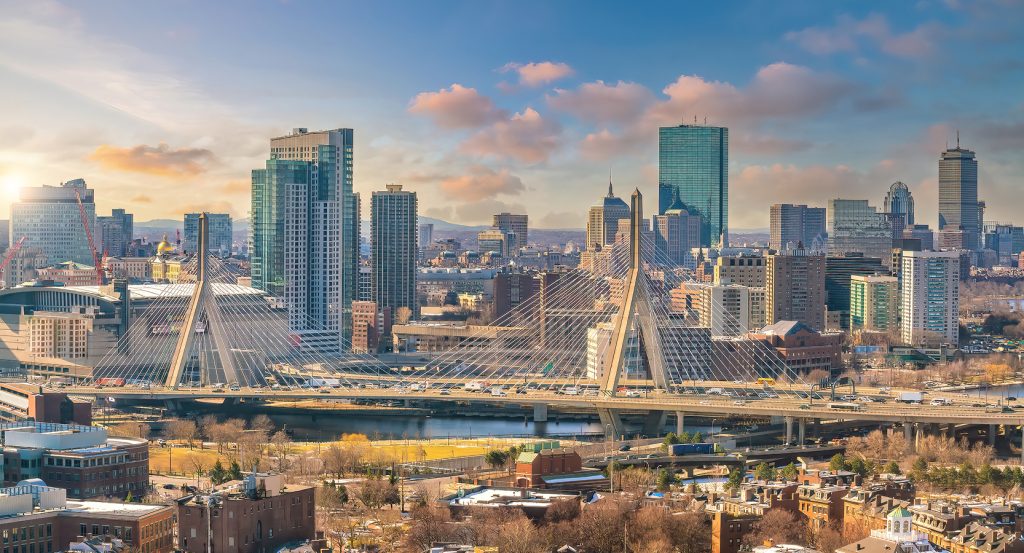
Why Union Park Street matters.
Union Park Street is an elegant corridor where South End's Victorian heritage, architectural grandeur, artistic spirit, and residential character define one of Boston's most distinguished streets.
Running through the South End between Back Bay and Lower Roxbury, the corridor connects historic brownstone rows, intimate garden spaces, celebrated civic landscapes, and one of Boston's finest collections of nineteenth-century residential architecture. Each successive block heightens the experience as ornamental cast-iron fencing, bow-front townhouses, mature tree canopies, and meticulously preserved brick façades reveal the remarkable craftsmanship that transformed the South End into an enduring architectural landmark. The corridor reaches its defining moment where Victorian design, landscaped public space, and neighborhood life merge into an unmistakably Boston experience shaped by more than a century and a half of preservation. The result is an experience defined by architectural elegance, historic continuity, and one of the South End's most remarkable residential corridors.
What defines Union Park Street.
Union Park Street is best known for extending through the Union Park Historic District, among the architectural centerpieces of Boston's South End, whose development accelerated during the 1850s and 1860s as the neighborhood expanded across newly filled land in the Back Bay basin. Residential construction introduced an exceptional concentration of Victorian Italianate, French Second Empire, and High Victorian Gothic rowhouses distinguished by red brick masonry, brownstone trim, bowed façades, slate mansard roofs, ornamental ironwork, and richly detailed entrance surrounds. The corridor developed around Union Park, among the earliest and most ambitious residential squares created by the Boston Water Power Company, whose carefully planned streets established the South End as one of nineteenth-century Boston's premier residential neighborhoods. Designation of the surrounding South End Historic District by the Boston Landmarks Commission in 1983, together with its earlier recognition on the National Register of Historic Places in 1973, affirmed the exceptional architectural integrity preserved throughout the corridor. Collectively, the South End's nineteenth-century expansion, Union Park's planned residential landscape, distinguished Victorian architecture, and historic district protections established Union Park Street as one of Boston's defining residential corridors.
Along the corridor, Union United Methodist Church, completed in 1885 to designs by Allen & Kenway, contributes a distinguished example of Richardsonian Romanesque ecclesiastical architecture whose rugged masonry and commanding tower reinforce the street's rich architectural composition. Nearby, the Harriet Tubman House, established by United South End Settlements, reflects the neighborhood's longstanding commitment to community leadership and social service while preserving an important chapter of the South End's twentieth-century cultural history. Throughout Union Park Street, original granite curbstones, decorative cast-iron fencing, mature London plane trees, and continuous rows of bow-front townhouses preserve an unusually cohesive nineteenth-century streetscape rarely matched elsewhere in Boston. Together, these architecturally significant buildings, enduring civic institutions, and exceptionally intact streetscape features demonstrate how Union Park Street evolved within one of America's finest Victorian residential neighborhoods.
How Union Park Street fits.
Union Park Street works as an exploration of Boston's architectural, artistic, and neighborhood heritage.
Begin at SoWa Open Market, where local artists, designers, and makers introduce the creative culture that distinguishes the South End before naturally leading toward Union Park Street. Continue to Cathedral of the Holy Cross, where expansive Gothic Revival architecture deepens appreciation for the neighborhood's nineteenth-century development while extending the experience through one of Boston's most significant ecclesiastical landmarks. Conclude at Blackstone Square, where beautifully landscaped green space provides a fitting finale celebrating the residential elegance and carefully planned public landscapes that define the South End. The progression moves naturally from contemporary creativity to historic architecture before concluding with one of the neighborhood's signature green spaces, revealing why Union Park Street remains central to the South End's enduring identity.
Where your story begins.
Foresyte Travel reveals places that feel extraordinary long before you arrive.
Enjoy editorial crafted for luxury travelers.
Foresyte may earn a commission when you book.







































































































