
Why Victory Boulevard matters.
Victory Boulevard is a storied corridor where Van Nuys's Valley character meets a World War I commemorative name, postwar suburban expansion and an immense east-west alignment spanning nearly the full breadth of the San Fernando Valley.
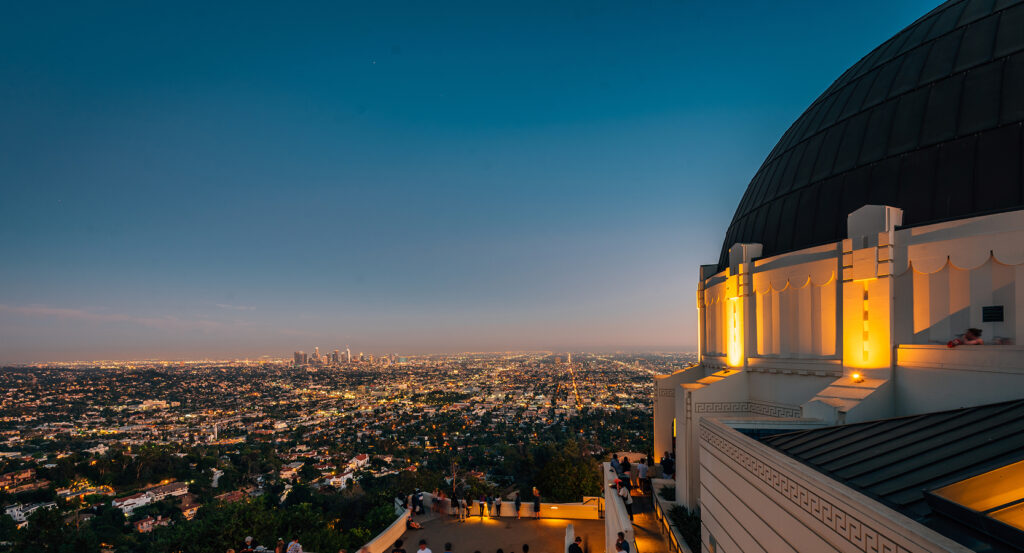
Running through Van Nuys between North Hollywood and Reseda, the valley corridor follows a long east-west line across Laurel Canyon Boulevard, Coldwater Canyon Avenue, Woodman Avenue, Van Nuys Boulevard, Sepulveda Boulevard and Balboa Boulevard before continuing through the western Valley toward the foothills. Eastern stretches cross a dense field of low commercial buildings, apartment districts and closely spaced residential blocks before the roadway enters the broader central basin. Traveling west carries the street across the Tujunga Wash and successive north-south arterials, with the Santa Monica Mountains forming a distant southern edge and the Santa Susana Mountains increasingly visible across the northern horizon. Larger parcels, broad intersections and longer residential stretches become more prominent around the Sepulveda Basin before the corridor continues through Reseda, Winnetka and the western Valley. The result is a corridor whose exceptional length, immense basin views, repeated commercial nodes and passage across successive generations of Valley development make metropolitan Los Angeles legible at the scale of an entire suburban plain.
What defines Victory Boulevard.
Victory Boulevard is best known for carrying a World War I commemorative name across a route that developed alongside the transformation of the San Fernando Valley from agricultural land into a metropolitan district. When Van Nuys was plotted in 1911, the future boulevard appeared as 7th Avenue within the new townsite created by the Los Angeles Suburban Homes Company. The road became Leesdale Avenue 1916, shortly after Los Angeles annexed most of the Valley and three years after Owens Valley water began flowing through the Los Angeles Aqueduct. During the mid-1920s, the Leesdale Improvement Association advanced an 80-foot-wide east-west boulevard across the Valley, giving the former local road a far more ambitious regional purpose. Los Angeles renamed it Victory Boulevard in 1924 to honor San Fernando Valley veterans of World War I, fixing the memory of the conflict into one of the district's principal streets. Pavement initially extended west only as far as Balboa Boulevard, leaving the western Valley beyond the developed corridor. The boulevard became a familiar cross-Valley automobile route during the following decades, carrying traffic through Van Nuys, North Hollywood and agricultural districts that were rapidly filling with housing. Its western extension beyond Balboa opened in 1955, completing another stage in a route whose physical expansion closely tracked the Valley's outward urban growth.
Postwar retail construction turned Victory Boulevard into a major stage for the automobile-centered commercial form that spread across the San Fernando Valley during the 1950s. Developer Bob Symonds began assembling Valley Plaza around Laurel Canyon Boulevard after recognizing that postwar households and expanding freeway access were changing the geography of shopping. A two-story Sears containing 210,000 square feet became the principal anchor in 1951, surrounded by extensive surface parking and a growing collection of supermarkets, drugstores and specialty retailers. Valley Plaza expanded along Victory and Laurel Canyon between 1951 and 1965 until the commercial district covered 100 acres and contained more than one million square feet of retail space. By 1956 it ranked among the largest shopping centers in the United States and generated close to $100 million in annual sales. Architect Stiles O. Clements designed the Occidental Savings Bank branch that opened on Victory in 1954, extending a career that had already produced major Los Angeles retail buildings along Wilshire Boulevard. Douglas Honnold and John Rex added the Los Angeles Federal Savings and Loan Tower in 1960, a 165-foot Corporate International building that became the tallest structure in the San Fernando Valley at the time. Victory Boulevard had become a commercial address shaped around motorists, vast parking fields and regional shopping, marking a decisive departure from the compact town centers that preceded the Valley's postwar expansion.
How Victory Boulevard fits.
Victory Boulevard works as the anchor for a San Fernando Valley sequence connecting a community college created during the postwar population surge with a grand work of public art inside the Tujunga Wash and a surviving aviation collection preserving the machines and artifacts of Southern California transportation history.
Begin at Los Angeles Valley College, founded in 1949 as population growth placed extraordinary pressure on educational institutions across the San Fernando Valley. The Los Angeles Board of Education chartered the college that June, and classes began September 12 on the Van Nuys High School campus with 439 students, 23 faculty members, five bungalows and a library containing 150 volumes. Enrollment growth quickly forced expansion. The institution moved in 1951 to a permanent 105-acre property on Fulton Avenue, where 33 temporary bungalows formed the first campus and the fall student body exceeded 2,300 by 1952. Faculty created the Athenaeum in 1954, bringing the Los Angeles Philharmonic and speakers including Eleanor Roosevelt, Clement Attlee, Margaret Mead and Louis Leakey to the college. Permanent construction advanced through successive phases from 1959 into the 1970s, converting the bungalow campus into one of the major public educational institutions of the eastern Valley. Continue to Great Wall of Los Angeles, the immense mural conceived by artist Judy Baca and developed inside the concrete channel of the Tujunga Wash. Work began in 1976 through the Social and Public Art Resource Center, with Baca directing teams of young people and artists in a project devoted to California history through communities frequently absent from conventional historical imagery. Hundreds of participants contributed during successive summers as the mural extended along the wash, eventually reaching more than half a mile. Its painted chronology moves through Indigenous history, colonization, immigration, labor, wartime incarceration, civil rights struggles and other episodes spanning centuries of California development. The physical setting gives the work unusual scale: a flood-control channel became the surface for a continuous historical composition produced through collective artistic labor. Conclude at Valley Relics Museum, founded by Tommy Gelinas around a collection devoted to the San Fernando Valley's disappearing commercial, transportation and entertainment culture. Neon signs, automobiles, bicycles, restaurant artifacts, amusement memorabilia and objects associated with Valley businesses preserve physical remnants of institutions erased by redevelopment or closure. The collection includes substantial transportation history tied to the region's automobile culture and the industries that accompanied suburban growth. Its preservation of roadside signs is especially consequential in a Valley where postwar commercial districts communicated through enormous illuminated graphics designed for motorists moving along streets such as Victory. The progression moves from postwar educational expansion through Judy Baca's transformation of flood-control infrastructure into a grand California history and culminates in the preservation of objects from the Valley's automobile-age commercial culture, connecting institution building, public art and metropolitan memory across the basin.
Where your story begins.
Foresyte Travel reveals places that feel extraordinary long before you arrive.
Enjoy editorial crafted for luxury travelers.
Foresyte may earn a commission when you book.





































































































