
Why West End matters.
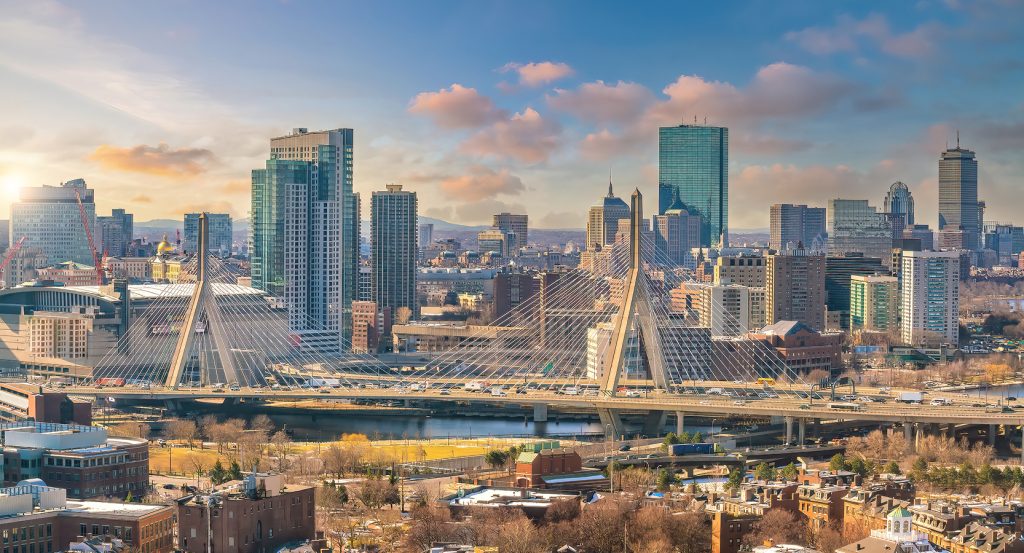
West End is a neighborhood of reinvention, where modern residential towers, major civic institutions, and one of the most dramatic urban transformations in American history converge just steps from Boston's historic core.
Positioned between Beacon Hill, North Station, and the Charles River, the district unfolds through a landscape of high-rise buildings, landscaped plazas, healthcare campuses, and thriving pedestrian corridors that contrast sharply with the narrow colonial-era streets found elsewhere in Boston. Commuters stream through transit hubs beneath the shadow of office and residential towers, patients and medical professionals move between world-renowned healthcare facilities, and residents gather in pocket parks carved into the urban fabric. The neighborhood's contemporary appearance stands in constant discussion with the history beneath it, creating a district where Boston's evolution is visible block by block. Few places in the city better demonstrate the tension between preservation, progress, and urban change.
What defines West End.
West End is best known for undergoing one of the most influential urban renewal projects in American history, a redevelopment effort that transformed an entire neighborhood during the 1950s.
Once a densely populated immigrant community filled with narrow streets, small businesses, and generations of family life, much of the historic neighborhood was demolished as part of a federally supported urban renewal initiative. The project became one of the most studied examples of large-scale redevelopment in the United States, influencing decades of debate surrounding city planning, displacement, and preservation. Today's West End contains modern residential developments, healthcare institutions, and commercial spaces, while its story continues to be examined by historians, planners, and community advocates. The neighborhood's significance extends far beyond its physical appearance, offering an important view through which to understand the evolution of modern American cities.
How West End fits.
West End is an ideal stop within a day spent exploring the layers of history, architecture, and civic life that define Central Boston.
Begin the morning wandering through Beacon Hill's brick sidewalks and historic streets before making your way toward the Charles River Esplanade, where waterfront pathways provide some of the city's most scenic views. From there, continue into West End to experience a dramatically different chapter of the city's story, exploring the neighborhood's modern landscape and reflecting on its role in shaping urban planning history. Later in the afternoon, head toward TD Garden and the surrounding North Station district before continuing into the North End for dinner among some of Boston's most celebrated restaurants. Beacon Hill, the Charles River Esplanade, and TD Garden create a natural progression through the landmarks that frame the neighborhood. West End fits naturally into that journey, serving as a compelling reminder that understanding a city often means understanding both what remains and what has been lost.
Where your story begins.
Foresyte Travel reveals places that feel extraordinary long before you arrive.
Enjoy editorial crafted for luxury travelers.
Foresyte may earn a commission when you book.







































































































