
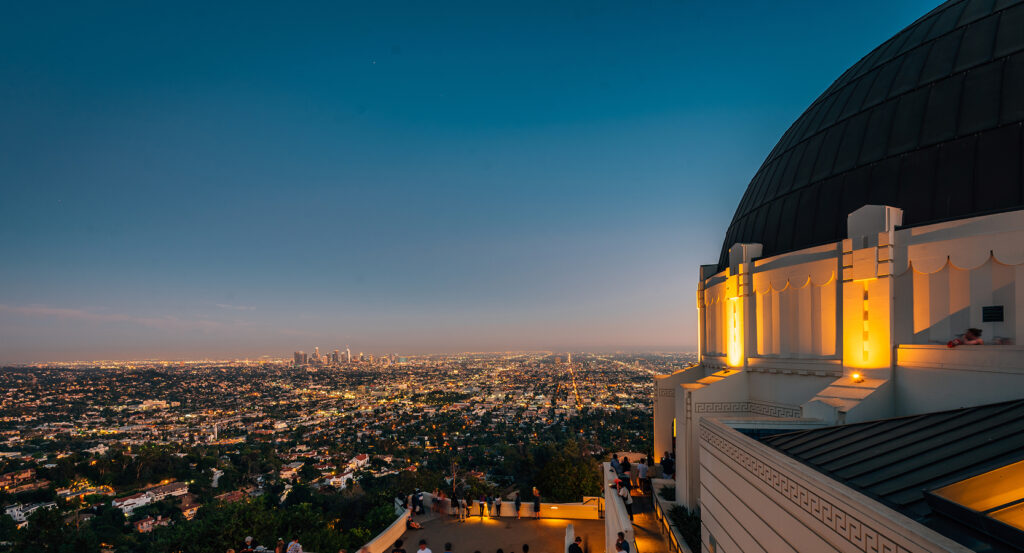
Why you should experience Wrigley Mansion in Los Angeles, California.
Wrigley Mansion is a preserved echo of American ambition, where architecture, history, and quiet grandeur come together in a way that feels both distant and remarkably present.
Located at 391 South Orange Grove Boulevard along Pasadena's historic Millionaire's Row, just minutes from the Tournament of Roses route, this early 20th-century estate stands as one of the city's most recognizable landmarks, anchoring a stretch once defined by wealth, influence, and legacy. The moment you arrive, the scale speaks first, manicured grounds, white façade, symmetry that feels deliberate and enduring. There's a stillness to it, not empty, but composed, as if the building itself understands its place in time. You don't rush through a place like this. You move through it with a kind of awareness, noticing details, woodwork, light, the way rooms open into one another with quiet confidence. Wrigley Mansion doesn't try to impress in the modern sense, it reminds you of a time when impression was built into the foundation.
What you should know about Wrigley Mansion.
Wrigley Mansion was built in 1906-1914 by chewing gum magnate William Wrigley Jr. as a winter residence, later gifted to the City of Pasadena and now serving as the headquarters of the Tournament of Roses Association.
What makes the mansion distinct is not just its origin, but its continuity. The architecture reflects a blend of Italian Renaissance and Colonial Revival influences, expressed through grand staircases, intricate wood detailing, and rooms designed for both formality and flow. Over time, the estate transitioned from private residence to civic landmark, hosting Rose Parade operations and events that continue to shape Pasadena's character each year. Inside, the preservation is intentional, furnishings, layouts, and materials maintained to reflect the home's original character. What often goes unnoticed is how seamlessly the mansion bridges past and present. It's not frozen in time, it's actively used, its rooms still filled with purpose, its grounds still part of the city's living rhythm. The result is a space that feels both historical and functional, a rarity in a city that often rebuilds.
How to fold Wrigley Mansion into your trip.
Wrigley Mansion works as a deliberate visit, something you step into with time rather than pass by on the way to something else.
Plan the visit around a guided tour or public access hours, giving yourself the opportunity to move through the interior rather than only viewing it from the grounds. Arrive in the morning or late afternoon, when the light settles across the façade and the surrounding boulevard carries a quieter, more reflective energy. Walk the perimeter first, take in the scale, then step inside and let the pace naturally slow. This is not a place for rushing or multitasking. It rewards attention. If you're exploring Old Pasadena or nearby cultural sites, it fits as a grounding contrast, less commercial, more reflective, more rooted in the city's deeper identity. When you leave, take a moment on Orange Grove Boulevard before moving on. Wrigley Mansion doesn't overwhelm you, it lingers, leaving behind a sense of history that feels steady, composed, and quietly intact.
Where your story begins.
Foresyte Travel reveals places that feel extraordinary long before you arrive.
Experience premium editorial crafted for luxury travelers.





































































































