
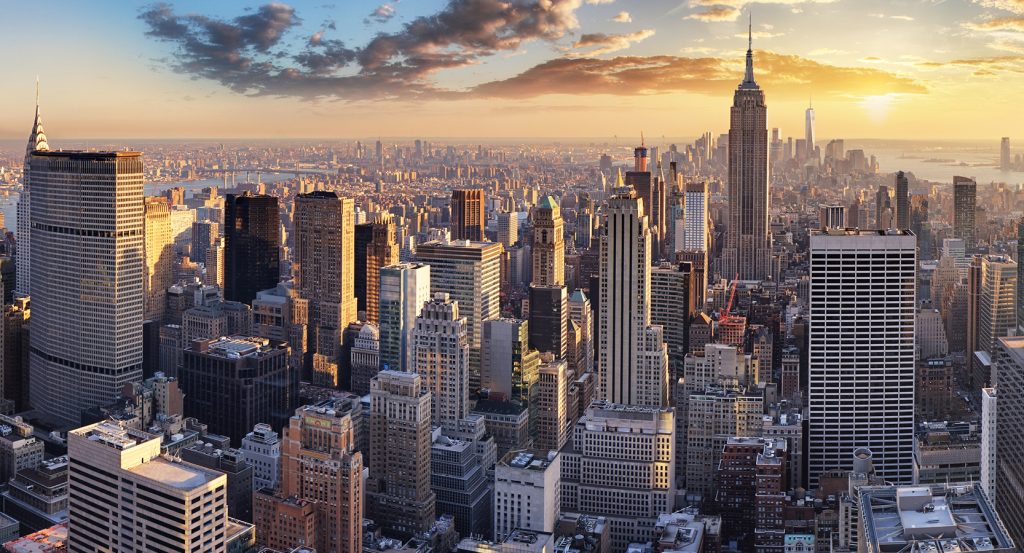
Why 167th Street matters.
167th Street is a distinguished corridor where Washington Heights' elevated landscape, northern Manhattan's architectural heritage, and generations of transportation-driven growth continue defining one of the city's most enduring urban neighborhoods.
Running through Washington Heights between Fort Washington Avenue and Amsterdam Avenue, the street traverses elevated ridgelines, substantial apartment buildings, neighborhood institutions, and established residential blocks that reflect more than a century of coordinated urban development. The corridor preserves successive layers of Neo-Renaissance, Beaux-Arts, Art Deco, and early Modern architecture while illustrating how engineering transformed Manhattan's rugged northern terrain into a cohesive residential district. Walking along 167th Street reveals a streetscape where topography, architecture, and neighborhood history remain closely interconnected. The result is a corridor where Washington Heights continues expressing one of Manhattan's most recognizable residential identities.
What you should know 167th Street.
167th Street is best known for developing across the elevated Manhattan schist formation that shaped Washington Heights' expansion, where extensive rock excavation, retaining walls, and engineered street grading converted steep natural terrain into an interconnected residential street network during the late nineteenth and early twentieth centuries. Residential construction accelerated after the Interborough Rapid Transit Broadway-Seventh Avenue Line reached northern Manhattan in 1906, encouraging speculative developers to construct substantial Neo-Renaissance, Beaux-Arts, Art Deco, and early Modern apartment houses that established the corridor's enduring architectural character. Completion of the George Washington Bridge in 1931 strengthened regional accessibility between Upper Manhattan and northern New Jersey, reinforcing long-term residential investment while integrating Washington Heights more closely into the metropolitan transportation network. Continued façade rehabilitation, adaptive reuse, historic preservation, and sustained private investment have preserved 167th Street as an architectural record of the neighborhood's principal era of development.
Between 1906 and the early 1930s, architects including George F. Pelham, M. W. Del Gaudio, and Schwartz & Gross designed numerous elevator apartment buildings throughout Washington Heights whose Neo-Renaissance, Beaux-Arts, and Art Deco compositions established the neighborhood's cohesive residential character extending along 167th Street. Improvements in fireproof steel-frame construction, reinforced concrete structural systems, passenger elevator technology, and increasingly sophisticated apartment planning enabled larger residential buildings while adapting successfully to northern Manhattan's dramatic topography. Extensive restoration campaigns during the late twentieth and early twenty-first centuries preserved ornamental terra-cotta, limestone entrances, decorative brickwork, and original architectural detailing throughout the corridor, ensuring its early twentieth-century craftsmanship remains one of Washington Heights' defining characteristics. Together, these engineering achievements, architectural innovations, transportation investments, and preservation efforts demonstrate how 167th Street evolved into one of Washington Heights' defining residential corridors.
How 167th Street fits.
167th Street is best experienced through an afternoon exploring Washington Heights' artistic heritage, architectural landmarks, and Revolutionary history.
Begin at Hispanic Society Museum & Library, where internationally acclaimed collections of Spanish, Portuguese, and Latin American art introduce the cultural traditions that continue shaping Upper Manhattan before exploring the surrounding neighborhood. Continue to United Palace, whose lavish atmospheric architecture, restored interiors, and year-round cultural programming showcase one of New York City's most remarkable historic theaters. Conclude at Morris-Jumel Mansion, where Manhattan's oldest surviving residence preserves Revolutionary War history, eighteenth-century architecture, and centuries of civic heritage, providing a memorable historical finale overlooking northern Manhattan. The progression moves naturally from internationally significant cultural collections to one of New York City's grand theatrical landmarks before concluding at Manhattan's oldest surviving residence, revealing how 167th Street connects Washington Heights' artistic character with its enduring historical legacy.
Where your story begins.
Foresyte Travel reveals places that feel extraordinary long before you arrive.
Enjoy editorial crafted for luxury travelers.
Foresyte may earn a commission when you book.







































































































