Why 45th Street matters.
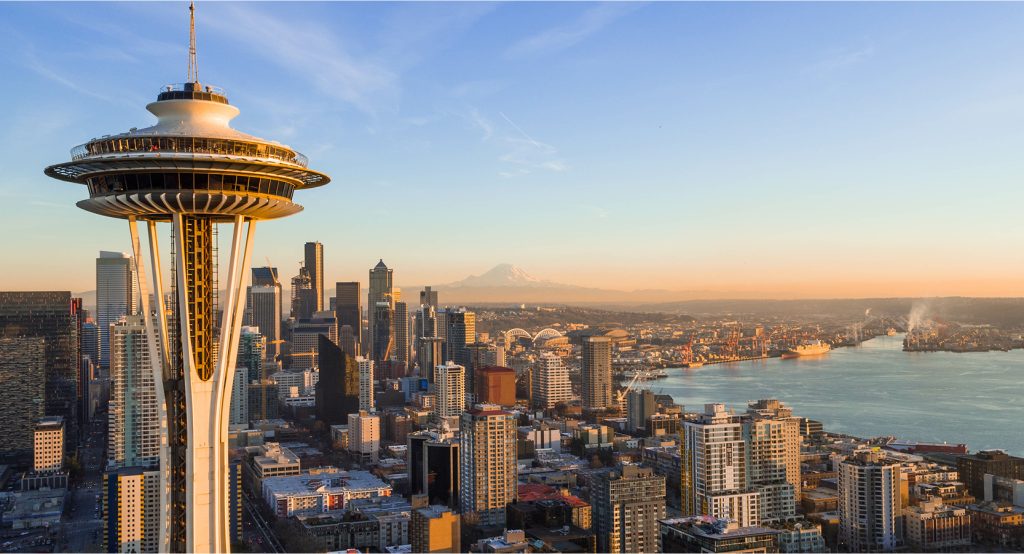
45th Street is a animated corridor where the University District's academic energy, commercial heritage, neighborhood diversity, and cultural life create one of Seattle's most recognizable urban streets.
Running through the University District between Wallingford and Ravenna, the corridor connects collegiate buildings, neighborhood businesses, historic commercial blocks, research facilities, theaters, and established residential districts that collectively reflect more than a century of educational and urban development. Collegiate Gothic architecture, early brick storefronts, reinforced-concrete commercial buildings, Art Deco façades, Douglas firs, Pacific dogwoods, ornamental cherries, and mature street trees establish a streetscape where scholarship and neighborhood enterprise remain naturally intertwined. Throughout the corridor, generations of educators, students, researchers, merchants, architects, and entrepreneurs have cultivated an atmosphere defined by curiosity, craftsmanship, and enduring intellectual vitality. The result is an experience distinguished by architectural richness, commercial character, and one of the University District's defining corridors.
What you should know 45th Street.
45th Street is best known for forming the principal east, west spine of the University District, whose transformation accelerated after the University of Washington relocated from Downtown to its present campus in 1895, establishing the surrounding neighborhood as Washington's foremost center for higher education, scientific research, and academic life. Construction expanded throughout the 1900s, 1910s, and 1920s, producing Collegiate Gothic academic buildings, neighborhood commercial blocks, apartment houses, theaters, and institutional structures distinguished by brick masonry, cast stone, reinforced-concrete framing, decorative terra cotta, slate roofing, structural steel, and finely crafted timber detailing. The corridor matured alongside bookstores, publishers, cafés, scientific organizations, professional offices, neighborhood retailers, and independent businesses whose continued investment reinforced the district's enduring knowledge-based economy. Anna's hummingbirds, black-capped chickadees, Douglas firs, western red cedars, vine maples, Pacific dogwoods, and native understory vegetation continue contributing to the mature urban ecology surrounding the corridor. Together, these educational milestones, commercial traditions, architectural practices, construction methods, and ecological systems establish 45th Street as one of the University District's defining historic corridors.
Architect Carl F. Gould established the architectural character of the surrounding district through the University of Washington's original Collegiate Gothic campus plan, introducing disciplined masonry compositions and formal planning principles that influenced development extending along 45th Street. His vision was complemented by the landscape planning of the Olmsted Brothers, whose integration of native vegetation, carefully organized circulation, and expansive vistas strengthened the relationship between the academic campus and the surrounding neighborhood. Brick façades, cast-stone tracery, slate rooflines, ornamental buttresses, leaded-glass windows, and finely detailed masonry continue preserving the architectural style established during the district's formative decades. Together, Gould's campus vision, the Olmsted Brothers' landscape philosophy, and the corridor's enduring architectural fabric explain why 45th Street remains inseparable from the University District's academic identity.
How 45th Street fits.
45th Street works as an exploration of Seattle's academic heritage, cultural life, and architectural legacy.
Begin at Burke Museum of Natural History and Culture, where internationally significant archaeological collections, Northwest Indigenous history, and scientific research establish an engaging introduction to the intellectual traditions surrounding the corridor. Continue to Henry Art Gallery, whose innovative exhibitions and longstanding commitment to contemporary art deepen appreciation for the University's cultural influence before naturally guiding the experience toward its concluding destination. Conclude at The Quad at the University of Washington, where Collegiate Gothic architecture, formal landscaping, and celebrated cherry trees provide the historical payoff by revealing the academic setting that has defined the enduring character of 45th Street for more than a century. The progression moves naturally from scientific discovery through artistic expression before concluding within the campus landscape that best expresses the lasting significance of 45th Street.
Where your story begins.
Foresyte Travel reveals places that feel extraordinary long before you arrive.
Enjoy editorial crafted for luxury travelers.
Foresyte may earn a commission when you book.