Why 4th Avenue matters.
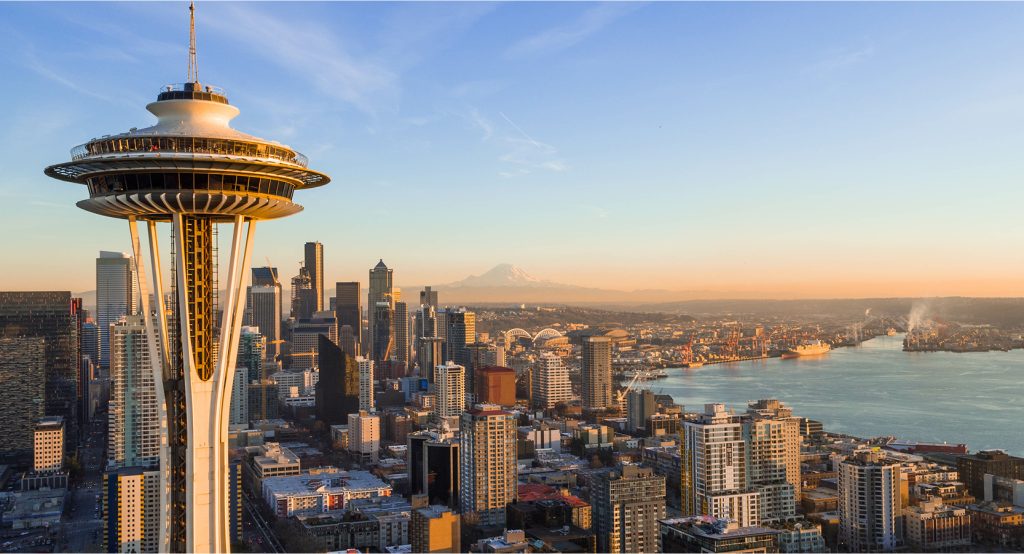
4th Avenue is a commanding corridor where Downtown's commercial ambition, transportation legacy, architectural achievement, and civic character converge to create one of the city's defining urban streets.
Running through Downtown between Belltown and Pioneer Square, the corridor connects landmark office towers, historic commercial buildings, transportation hubs, civic institutions, hotels, and longstanding retail districts that collectively trace more than a century of Seattle's metropolitan evolution. Richardsonian Romanesque masonry, Beaux-Arts civic architecture, Art Deco towers, International Style skyscrapers, structural steel, granite sidewalks, London plane trees, and carefully restored historic façades establish a streetscape where architectural innovation and commercial history remain inseparable. Throughout the corridor, generations of merchants, railroad executives, architects, financiers, civic leaders, and entrepreneurs have cultivated an atmosphere defined by enterprise, craftsmanship, and enduring metropolitan significance. The result is an experience distinguished by architectural depth, commercial heritage, and one of Seattle's most influential corridors.
What you should know 4th Avenue.
4th Avenue is best known for serving as one of Downtown's principal north, south arteries, whose transformation accelerated after the Great Seattle Fire of 1889 prompted an unprecedented rebuilding campaign that replaced much of the city's commercial core with fire-resistant masonry architecture and modern infrastructure. Construction intensified throughout the 1890s, 1900s, and 1910s, producing department stores, financial institutions, office towers, hotels, railway facilities, and commercial buildings distinguished by brick masonry, Tenino sandstone, structural steel, ornamental terra cotta, cast-iron storefront systems, granite foundations, and reinforced-concrete engineering. The corridor matured alongside banks, insurance companies, railroad corporations, wholesale merchants, shipping firms, and professional offices whose sustained investment established 4th Avenue as one of the Pacific Northwest's foremost commercial addresses. Peregrine falcons, glaucous-winged gulls, American crows, London plane trees, ornamental maples, vine maples, and native landscape plantings continue contributing to the urban ecology surrounding the corridor. Together, these commercial milestones, transportation traditions, architectural practices, construction methods, and ecological systems establish 4th Avenue as one of Seattle's defining historic corridors.
Completion of the 4th Avenue Regrade between 1903 and 1908 fundamentally reshaped the corridor by lowering steep grades, improving circulation, and enabling larger commercial buildings that permanently altered Downtown's urban form. That engineering achievement encouraged architects and developers to introduce increasingly ambitious steel-frame construction, allowing taller office buildings and broader commercial blocks to define successive generations of development along the avenue. Original granite retaining elements, ornamental terra-cotta panels, riveted steel framing, brick pilasters, decorative cornices, and finely crafted masonry continue preserving the physical evidence of this transformative period of urban engineering. Together, the 4th Avenue Regrade, advances in structural engineering, and the corridor's enduring architectural fabric explain why 4th Avenue remains the backbone of Downtown's historic commercial landscape.
How 4th Avenue fits.
4th Avenue works as an exploration of Seattle's commercial heritage, architectural achievement, and urban evolution.
Begin at Seattle Art Museum, where internationally recognized collections and contemporary exhibitions establish a thoughtful introduction to the city's longstanding commitment to culture within its commercial core. Continue to Benaroya Hall, whose acclaimed acoustics, distinguished architecture, and energetic performing arts programming deepen appreciation for Downtown's civic character before naturally guiding the experience toward its concluding destination. Conclude at Pioneer Square, where Richardsonian Romanesque architecture, restored masonry streetscapes, and richly layered history provide the historical payoff by revealing the commercial foundations upon which modern Seattle was built. The progression moves naturally from artistic expression through civic performance before concluding in the historic district that best expresses the enduring significance of 4th Avenue.
Where your story begins.
Foresyte Travel reveals places that feel extraordinary long before you arrive.
Enjoy editorial crafted for luxury travelers.
Foresyte may earn a commission when you book.