Why you should experience 7th Avenue North in Seattle, Washington.
7th Avenue North is a enterprising corridor where South Lake Union's culture of invention, commercial ambition, scientific achievement, and architectural evolution define one of Seattle's most influential urban streets.
Running through South Lake Union between Denny Triangle and Eastlake, the corridor connects research campuses, technology workplaces, contemporary residential buildings, neighborhood businesses, and established commercial blocks that collectively reflect more than a century of continuous economic evolution. Reinforced-concrete industrial buildings, early brick commercial structures, contemporary laboratory architecture, curtain-wall office buildings, Douglas firs, Pacific dogwoods, vine maples, and native landscape plantings establish a streetscape where Seattle's industrial legacy has matured into a globally recognized center of innovation. Throughout the corridor, generations of engineers, researchers, entrepreneurs, and designers have cultivated an atmosphere defined by curiosity, ingenuity, and enduring economic vitality. The result is an experience distinguished by architectural sophistication, scientific significance, and one of South Lake Union's defining corridors.
What you should know about 7th Avenue North.
7th Avenue North is best known for extending through South Lake Union, where the opening of the Lake Washington Ship Canal in 1917 permanently connected Lake Union with Puget Sound, strengthening maritime commerce while accelerating industrial development throughout the surrounding district. Construction expanded during the 1910s, 1920s, and 1930s, producing machine shops, marine equipment manufacturers, warehouses, fabrication plants, commercial buildings, and industrial facilities distinguished by reinforced-concrete structural frames, riveted steel members, heavy timber roof systems, brick masonry, industrial steel sash windows, and overhead crane assemblies engineered for manufacturing. The corridor evolved alongside shipbuilding firms, precision manufacturers, biomedical enterprises, technology companies, engineering consultancies, and scientific laboratories that collectively established South Lake Union as one of the Pacific Northwest's foremost centers of research and enterprise. Great blue herons, osprey, bald eagles, Chinook salmon, Douglas firs, western red cedars, Pacific madrones, and native shoreline vegetation continue reflecting the ecological character surrounding nearby Lake Union. Together, these engineering milestones, industrial enterprises, construction traditions, scientific institutions, and ecological systems establish 7th Avenue North as a defining expression of South Lake Union's historical evolution.
Architect NBBJ, founded in 1943 in Seattle, contributed influential research, healthcare, and commercial architecture that helped define the district's contemporary built environment through designs emphasizing flexibility, daylight, and collaboration. Biomedical pioneer Lee Hartwell received the 2001 Nobel Prize in Physiology or Medicine for discoveries involving cell-cycle regulation, reinforcing the scientific reputation associated with South Lake Union's research community. Buildings lining 7th Avenue North continue displaying exposed structural steel, reinforced-concrete framing, high-performance glazing, aluminum sun-control systems, precision-fabricated metal panels, and carefully detailed masonry that demonstrate the corridor's evolution from industrial production to scientific enterprise. Together, these architectural contributions, scientific accomplishments, and enduring construction traditions demonstrate how 7th Avenue North became one of Seattle's foremost corridors of innovation.
How to fold 7th Avenue North into your trip.
7th Avenue North works as an exploration of South Lake Union's scientific achievement, design excellence, and waterfront character.
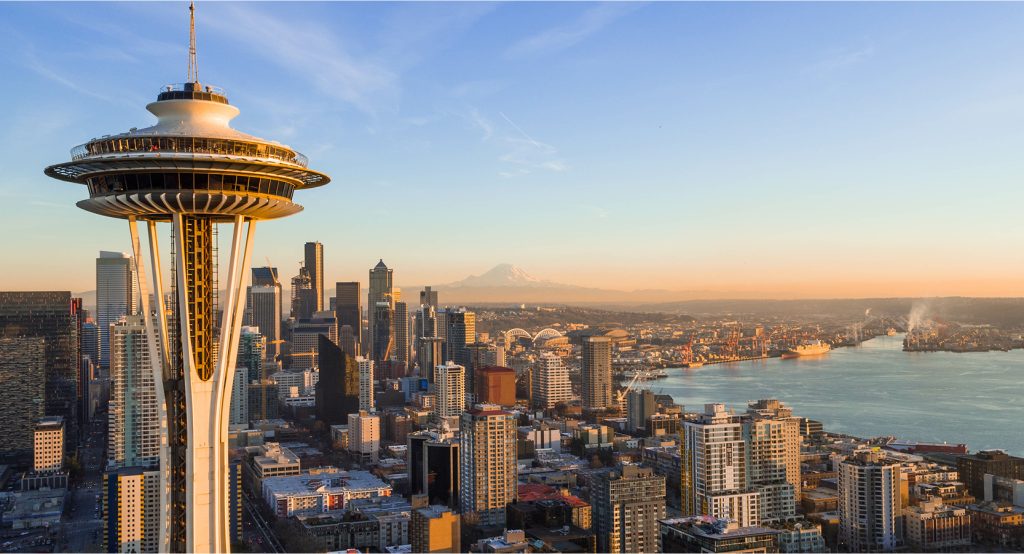
Begin at Seattle Center, where internationally recognized performance venues, public sculpture, landscaped plazas, and enduring civic architecture introduce Seattle's creative ambition while establishing a compelling foundation for the experience ahead. Continue to Center for Wooden Boats, whose meticulously restored historic vessels, skilled maritime craftspeople, and hands-on exhibits deepen appreciation for Lake Union's enduring relationship with craftsmanship before naturally leading toward the outing's final destination. Conclude at Lake Union Park, where restored shoreline habitat, historic water access, and expansive lake views provide the reflective payoff by revealing the landscape that continues connecting South Lake Union's industrial origins with its culture of discovery. The progression moves naturally from artistic expression through maritime craftsmanship before concluding beside the shoreline that best explains the enduring character of 7th Avenue North.
Where your story begins.
Foresyte Travel reveals places that feel extraordinary long before you arrive.
Experience premium editorial crafted for luxury travelers.