Why 7th Avenue matters.
7th Avenue is a metropolitan corridor where Belltown's creative energy, commercial legacy, architectural diversity, and waterfront proximity define one of Downtown's most compelling urban streets.
Running through Belltown between Denny Triangle and Pioneer Square, the corridor threads together early commercial blocks, contemporary office towers, residential high-rises, neighborhood businesses, and cultural venues that collectively reflect Seattle's evolution from a port city into a global center of commerce. Brick warehouse buildings, terra-cotta façades, reinforced-concrete structures, curtain-wall towers, Douglas firs, vine maples, ornamental cherries, and landscaped streetscapes establish an environment where historic craftsmanship and contemporary architecture coexist with remarkable continuity. Throughout the corridor, generations of merchants, publishers, engineers, entrepreneurs, and artists have cultivated an atmosphere defined by confidence, creativity, and enduring urban vitality. The result is an experience distinguished by architectural richness, commercial significance, and one of Downtown's defining corridors.
What you should know 7th Avenue.
7th Avenue is best known for crossing Belltown, a district whose modern character emerged after the Great Seattle Fire of 1889 accelerated commercial rebuilding north of the original downtown while expanding Seattle's role as the Pacific Northwest's principal mercantile center. Construction surrounding the corridor intensified throughout the 1890s, 1900s, and 1910s, producing brick warehouses, wholesale houses, commercial loft buildings, printing facilities, office blocks, and manufacturing premises distinguished by reinforced-concrete structural frames, heavy timber post-and-beam construction, decorative terra-cotta ornamentation, common-bond brick masonry, cast-iron storefront systems, and ornamental sheet-metal cornices. The corridor matured alongside shipping firms, publishing companies, machinery distributors, produce wholesalers, maritime suppliers, and financial enterprises that strengthened Seattle's commercial economy during the early twentieth century. Peregrine falcons, glaucous-winged gulls, American crows, Douglas firs, Pacific dogwoods, vine maples, western red cedars, and native pollinating insects continue contributing to the ecological character of the surrounding urban landscape. Together, these commercial milestones, architectural traditions, construction methods, industrial enterprises, and ecological influences establish 7th Avenue as a defining expression of Belltown's historical evolution.
Architect Elmer H. Fisher helped shape Seattle's post-fire rebuilding through influential masonry commercial buildings whose durable construction established the architectural style that spread throughout the expanding downtown district. Advances in reinforced-concrete engineering during the early twentieth century enabled larger warehouse floorplates, improved fire resistance, and more flexible commercial interiors that supported the district's rapidly growing wholesale economy. Buildings lining 7th Avenue continue displaying brick corbelling, granite bases, timber columns, riveted steel members, cast-stone lintels, and multi-light industrial sash windows that demonstrate the craftsmanship associated with Seattle's principal era of commercial construction. Together, these architectural achievements, engineering innovations, and enduring building traditions demonstrate how 7th Avenue evolved within one of Seattle's most influential business districts.
How 7th Avenue fits.
7th Avenue works as an exploration of Downtown's architectural heritage, creative culture, and waterfront setting.
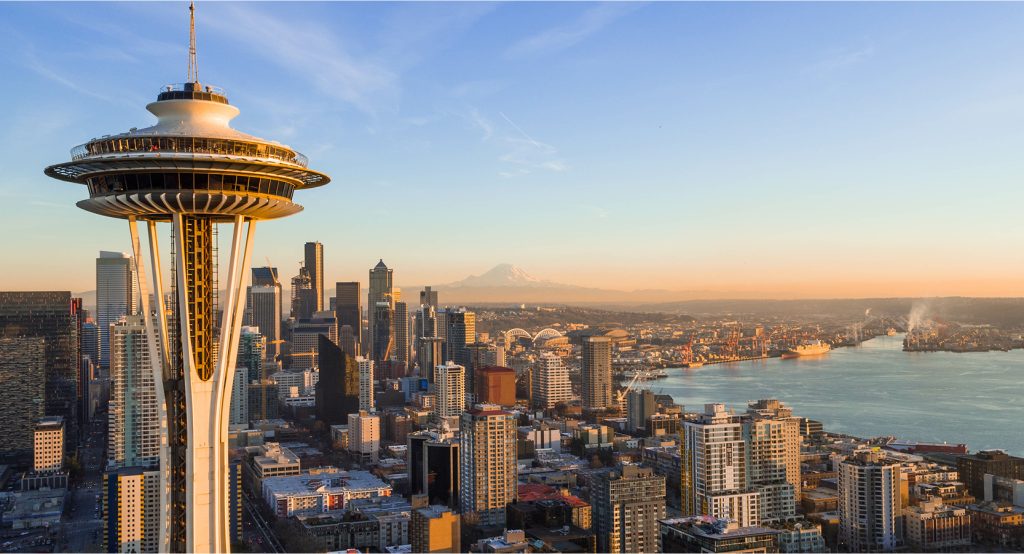
Begin at The Spheres, where innovative structural engineering, lush botanical collections, and thoughtfully designed public spaces introduce the spirit of experimentation that continues shaping Seattle's contemporary urba character while establishing an engaging beginning to the outing. Continue to Seattle Art Museum, whose Northwest collections, international exhibitions, and celebrated public artworks broaden the experience through artistic perspectives before naturally guiding the journey toward its concluding destination. Conclude at Waterfront Park, where Elliott Bay vistas, ferry traffic, sea air, and views across Puget Sound provide the reflective payoff by revealing the maritime landscape that has sustained Downtown's growth for generations. The progression moves naturally from contemporary innovation through artistic expression before concluding beside the shoreline that best explains the enduring character of 7th Avenue.
Where your story begins.
Foresyte Travel reveals places that feel extraordinary long before you arrive.
Enjoy editorial crafted for luxury travelers.
Foresyte may earn a commission when you book.