Why you should experience 8th Avenue in Seattle, Washington.
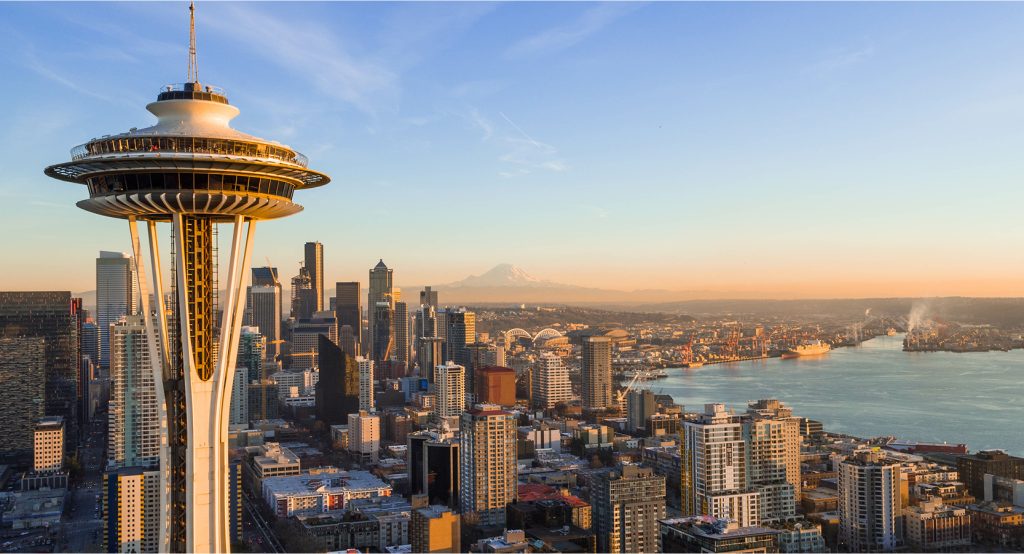
8th Avenue is a cultivated corridor where Denny Triangle's metropolitan ambition, architectural refinement, commercial energy, and evolving skyline define one of Downtown's most compelling streets.
Running through Denny Triangle between Belltown and Capitol Hill, the corridor links early commercial buildings, contemporary office towers, residential high-rises, neighborhood businesses, and tree-lined sidewalks that collectively reflect more than a century of continuous urban evolution. Brick commercial architecture, reinforced-concrete structures, curtain-wall towers, granite detailing, London plane trees, vine maples, Pacific dogwoods, and thoughtfully integrated landscape plantings establish a streetscape where Seattle's historic fabric and modern skyline coexist with remarkable harmony. Throughout the corridor, generations of commerce, entrepreneurship, architecture, and private investment have cultivated an atmosphere defined by confidence and enduring metropolitan character. The result is an experience distinguished by architectural contrast, urban sophistication, and one of Downtown's most engaging corridors.
What you should know about 8th Avenue.
8th Avenue is best known for traversing Denny Triangle, whose modern form emerged after the Denny Regrade between 1897 and 1931 transformed one of Seattle's steepest hills into a district capable of supporting large-scale commercial development. Construction surrounding the corridor accelerated throughout the 1910s, 1920s, and 1930s, producing brick mercantile buildings, reinforced-concrete commercial blocks, automobile showrooms, office buildings, wholesale warehouses, and manufacturing facilities distinguished by riveted structural steel, heavy timber framing, decorative terra-cotta ornamentation, multi-light steel sash windows, granite foundations, and ornamental brick corbelling. The corridor matured alongside automobile distributors, publishing firms, machinery suppliers, regional wholesalers, insurance companies, and professional offices that established Denny Triangle as a major commercial extension of Seattle's downtown business district. American crows, Anna's hummingbirds, Douglas firs, vine maples, Pacific dogwoods, western red cedars, red-tailed hawks, and native pollinating insects continue contributing to the district's urban ecology. Together, these engineering achievements, commercial enterprises, architectural traditions, construction methods, and ecological influences establish 8th Avenue as a defining expression of Denny Triangle's historical evolution.
Architect John Graham Sr. helped shape Seattle's commercial architecture during the early twentieth century through influential office buildings, department stores, and financial institutions that reflected the city's growing economic prominence. Advances in structural steel framing and reinforced-concrete engineering during the interwar decades allowed progressively taller commercial buildings to emerge throughout the district while maintaining expansive interior floorplates suited to evolving business needs. Buildings lining 8th Avenue continue displaying decorative terra-cotta panels, polished granite bases, ornamental metal spandrels, brick pilasters, bronze storefront systems, and finely detailed cornices that demonstrate the craftsmanship associated with Seattle's principal era of commercial construction. Together, these architectural contributions, engineering innovations, and preserved construction traditions demonstrate how 8th Avenue evolved within one of Seattle's most significant business districts.
How to fold 8th Avenue into your trip.
8th Avenue works as a walk through Seattle's architectural ambition, urban culture, and downtown vitality.
Begin at The Spheres, where immersive botanical collections, innovative structural engineering, and publicly accessible gathering spaces introduce the spirit of experimentation that characterizes Denny Triangle while establishing a memorable beginning to the experience. Continue to Westlake Center, whose concentration of shopping, transit connections, and constant pedestrian activity expands the outing from architectural appreciation into the rhythm of Seattle's commercial core before naturally guiding the journey onward. Conclude at McGraw Square, where historic monuments, mature landscaping, and surrounding skyline views provide the resonant payoff by revealing the civic heart that connects Denny Triangle with the broader story of Downtown. The progression moves naturally from innovation through metropolitan commerce before concluding in a public square that reflects Seattle's enduring urban identity.
Where your story begins.
Foresyte Travel reveals places that feel extraordinary long before you arrive.
Experience premium editorial crafted for luxury travelers.