Why you should experience W San Francisco in San Francisco, California.
W San Francisco is San Francisco experienced through design-forward confidence and urban theater, a stay where architecture, energy, and unapologetic modernity sharpen the city into something bold, cinematic, and fully awake.
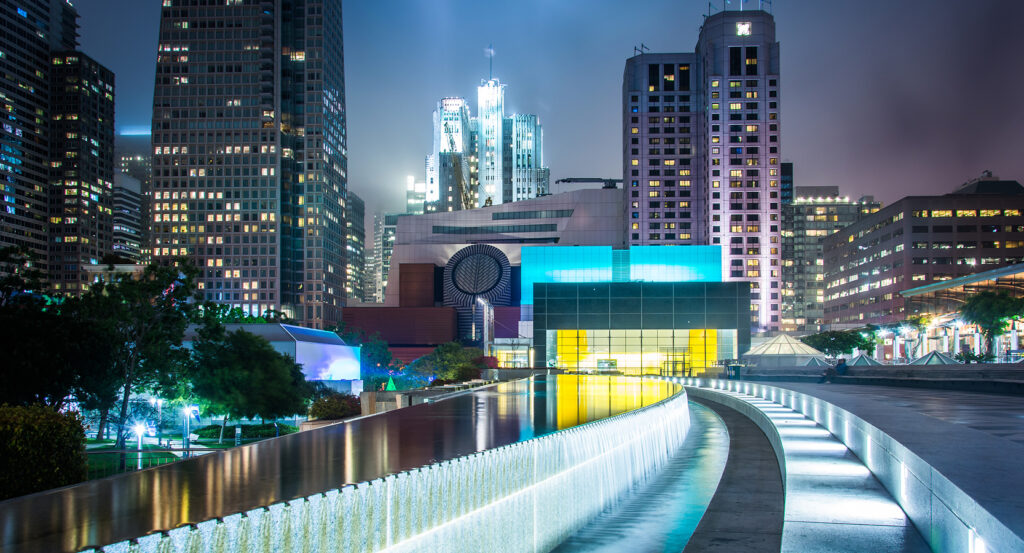
San Francisco is a city of contrasts, historic restraint colliding with disruptive innovation, and W San Francisco thrives precisely in that tension. Located in the SoMa district, near the waterfront and the city's financial core, the hotel does not attempt to soften the city's edges. Instead, it leans into them. Arrival feels intentional and charged. You don't drift into W San Francisco; you enter it. The building announces itself through scale and geometry, a vertical presence that feels contemporary. Check-in unfolds with polish and momentum, signaling immediately that this is a hotel designed for people who move decisively through cities. The atmosphere is curated but not precious, confident. Public spaces are theatrical by design. The lobby is less a waiting area and more a stage, dark tones, dramatic lighting, sculptural forms, and a sense that something is always about to happen. Energy flows through the space. Conversations overlap, movement feels purposeful, and the environment rewards presence. This is not a hotel built for retreat; it's built for engagement. The design language is unmistakably W, bold materials, intentional contrast, and a refusal to blend into the background. Yet within that drama, there's control. Nothing feels chaotic. Everything feels directed. Guest rooms continue this blend between intensity and precision. Rooms are sleek, modern, and emotionally charged. Beds are expansive and deeply comfortable, designed to deliver real rest after long days and late nights. Lighting is dynamic and adaptable, allowing you to shape the mood of the room depending on how the day unfolds. Furnishings are streamlined and deliberate, reinforcing clarity and confidence. Floor-to-ceiling windows in many rooms frame San Francisco as a living backdrop, city lights, water, skyline, turning the view into part of the experience. Sound is well managed, allowing the room to function as a reset zone despite the hotel's social pulse. Dining and nightlife are central to the W San Francisco identity. Food and beverage spaces are not secondary amenities; they are extensions of the hotel's personality. These are places designed for gathering, momentum, and shared experience. Drinks feel like punctuation marks at the end of a day, meals feel like preludes to the night. The atmosphere encourages connection without obligation, you can engage fully or observe from the edges without friction. Leisure here is defined by proximity and access. You're steps from the waterfront, close to downtown, and well positioned to move between business, culture, and nightlife. Midday returns to the hotel feel purposeful, reset, recalibrate, move again.
What you should know about W San Francisco.
W San Francisco is guided by a philosophy of urban expression, intentionally designed to mirror the city's forward motion.
The hotel was conceived as a modern counterpoint to San Francisco's historic hospitality landscape, emphasizing architecture and atmosphere over tradition. Design choices prioritize contrast, light and shadow, openness and enclosure, movement and stillness, creating spaces that feel cinematic. Guest rooms were planned to balance stimulation with control, allowing guests to engage fully with the city and then retreat. Public areas were curated to function as social engines rather than transitional spaces, reinforcing the hotel's role as a place where people meet, connect, and move. Its SoMa location is critical to its identity, situating the hotel within a district defined by innovation, industry, and constant reinvention. Service culture reflects this orientation closely. Hospitality here is confident, responsive, and forward-moving, shaped by an understanding that guests often arrive with intent and expectations of efficiency. Interactions feel polished and capable. Staff engagement emphasizes anticipation and clarity, supporting guests. People return because the experience feels aligned with modern urban life, dynamic, precise, and unapologetically contemporary.
How to fold W San Francisco into your trip.
W San Francisco works best when you treat it as your city amplifier, the place that sharpens San Francisco's edge.
Begin your stay by embracing the hotel's momentum. After arrival, spend time in the public spaces. Observe the energy, let the environment set your pace, and decide how you want to engage. Use mornings for efficiency, waterfront walks, downtown meetings, early explorations, returning easily to reset before the next phase of the day. Midday pauses at the hotel feel strategic rather than restful: a chance to recalibrate, change gears, and move again with intention. Afternoons can stretch into cultural exploration, business commitments, or spontaneous plans that build. Evenings are where W San Francisco truly comes alive. Start close, drinks, conversation, atmosphere, then let the night decide where it goes. The hotel's location makes transitions effortless, and returning late feels like stepping back into a current that's still humming. On your final morning, take a moment to notice how different the city feels when your base has matched its intensity. W San Francisco transforms the city from something you manage into something you inhabit fully, confident, energized, and unmistakably modern, because you stayed somewhere that understood San Francisco not as a place to soften, but as a place to engage head-on.
Where your story begins.
Foresyte Travel reveals places that feel extraordinary long before you arrive.
Experience premium editorial crafted for luxury travelers.