
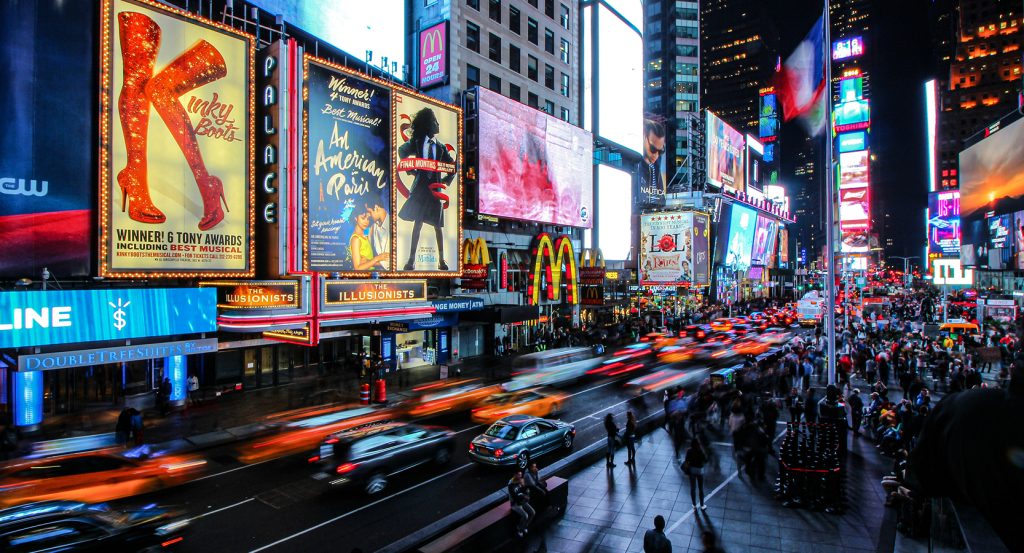
Why you should experience Shubert Theatre in New York, NY.
Shubert Theatre is a celebrated Broadway theater where the Theater District's performing arts tradition, architectural elegance, theatrical innovation, and enduring stagecraft have shaped one of the most influential venues in American entertainment.
Set along West 44th Street near 8th Avenue and just steps from Shubert Alley, this historic playhouse welcomes audiences beneath gilded plasterwork, crystal chandeliers, richly ornamented balconies, and an intimate auditorium whose carefully proportioned sightlines immerse every seat in the drama unfolding on stage. Ornamental Beaux-Arts detailing, warm interiors, and meticulously preserved craftsmanship reflect more than a century of Broadway history while modern production technology supports some of the world's most ambitious theatrical performances. Generations of actors, composers, directors, choreographers, and audiences have gathered here to celebrate storytelling at its highest level. The result is a theater defined by artistic excellence, architectural distinction, and one of Broadway's most enduring performance traditions.
What you should know about Shubert Theatre.
Shubert Theatre is best known for opening on October 2, 1913 as the flagship Broadway venue of The Shubert Organization, designed by architect Henry Beaumont Herts for brothers Lee and Jacob J. Shubert as part of their rapidly expanding theatrical empire that permanently transformed American live entertainment. Constructed in Beaux-Arts style with an 1,500-seat auditorium, the theater shares a unified architectural composition with the neighboring Booth Theatre while pioneering backstage efficiencies, audience circulation, and acoustics that established a new benchmark for Broadway playhouses during the early twentieth century. Throughout its history the venue has hosted an extraordinary succession of landmark productions including A Chorus Line, which ran for 6,137 performances between 1975 and 1990 to become Broadway's longest-running musical of its era, Chicago, Spamalot, Matilda the Musical, Hello, Dolly! starring Bette Midler, To Kill a Mockingbird, and Some Like It Hot, while welcoming performances by many of the most celebrated actors, directors, composers, choreographers, and designers in American theater. Designated a New York City Landmark in 1987, the theater remains under Shubert Organization stewardship, preserving original decorative plasterwork, ornamental boxes, historic proscenium detailing, and its intimate auditorium while continually incorporating contemporary lighting, sound, stage engineering, and accessibility improvements that allow the building to meet the technical demands of modern Broadway productions.
Beyond its architectural significance, the Shubert Theatre occupies a singular place in Broadway history because it became synonymous with the Shubert brothers' rise as the nation's dominant theatrical producers and booking executives, whose circuit ultimately reshaped commercial theater across North America. Its stage has premiered Tony Award-winning productions, launched career-defining performances, and introduced audiences to works that profoundly influenced American musical theater. The adjoining Shubert Alley evolved into Broadway's symbolic gathering place for performers, producers, critics, and opening-night celebrations, reinforcing the theater's role at the cultural heart of the district. Every restoration, production, and performance demonstrates how architectural preservation, theatrical entrepreneurship, technical innovation, and artistic excellence continue sustaining one of Broadway's defining institutions.
How to fold Shubert Theatre into your trip.
Shubert Theatre works as the centerpiece of an evening exploring the Theater District's celebrated performance venues and historic Broadway landmarks.
Begin at Times Square, where the illuminated crossroads of Broadway immediately establishes the energy of New York's theater district before arriving at Shubert Theatre for one of Broadway's defining performance experiences. Continue through Shubert Alley, whose historic pedestrian passage has hosted generations of opening-night celebrations and theatrical traditions while connecting many of Broadway's most important stages. Conclude at Booth Theatre, whose companion Beaux-Arts design by Henry Beaumont Herts provides a fitting architectural finale celebrating the enduring legacy of the Shubert brothers and the golden age of Broadway construction. The progression moves naturally from the world's most recognizable entertainment district to one of Broadway's greatest stages before concluding through two defining theatrical landmarks, revealing why Shubert Theatre remains among the most influential venues in American performing arts.
Where your story begins.
Foresyte Travel reveals places that feel extraordinary long before you arrive.
Experience premium editorial crafted for luxury travelers.







































































































