
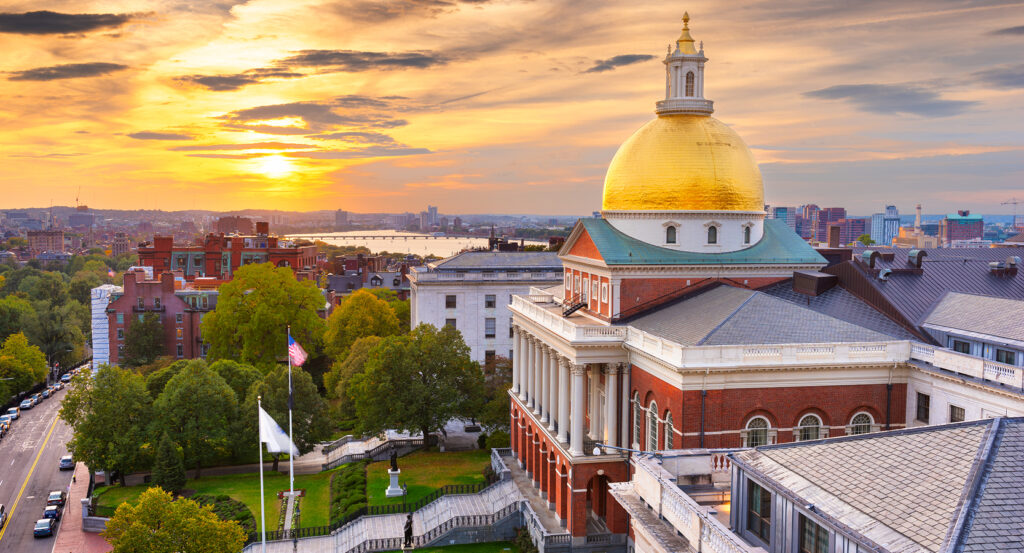
Why you should experience Ashburton Park in Boston, Massachusetts.
Ashburton Park is a peaceful urban green space where Beacon Hill's civic heritage, historic architecture, neighborhood tranquility, and public gardens create a quiet retreat beside Massachusetts' seat of government.
Positioned along Bowdoin Street near the Massachusetts State House and just steps from Louisburg Square, this intimate park blends shaded lawns, mature trees, seasonal plantings, benches, and historic surroundings into a welcoming public space at the heart of Boston's government district. Elegant brick townhouses, granite civic buildings, and carefully maintained landscaping provide a distinctly Beacon Hill setting where residents, office workers, and visitors pause amid one of the city's most historically significant neighborhoods. Every corner reflects the enduring relationship between urban planning, public space, and Boston's architectural legacy. The result is a neighborhood experience defined by historic character, quiet reflection, and one of Beacon Hill's most inviting green spaces.
What you should know about Ashburton Park.
Ashburton Park is best known for occupying land once associated with the nineteenth-century expansion of Massachusetts' government center, preserving a rare pocket of open space within Beacon Hill while forming part of the historic civic landscape surrounding the Massachusetts State House. The park takes its name from Ashburton Place, itself named after Alexander Baring, 1st Baron Ashburton, whose 1842 Webster-Ashburton Treaty peacefully resolved the long-standing boundary dispute between the United States and British North America, shaping the modern border between Maine and New Brunswick. During the late nineteenth and early twentieth centuries, the surrounding neighborhood evolved into Massachusetts' principal governmental district as state office buildings, courthouses, and civic institutions gradually expanded around the State House while much of Beacon Hill's historic residential fabric remained intact. Today, Ashburton Park provides an important landscape buffer within this dense institutional setting, connecting pedestrians with nearby historic landmarks while contributing to the broader network of public spaces that preserve the neighborhood's human scale. Together, diplomatic history, civic development, thoughtful urban planning, and enduring landscape stewardship establish Ashburton Park as a meaningful component of Boston's historic government precinct.
Although modest in scale, the park demonstrates the enduring importance of small urban green spaces within dense historic districts by providing visual relief, pedestrian connectivity, and opportunities for quiet reflection amid one of New England's busiest civic centers. Mature shade trees, carefully maintained planting beds, and the surrounding concentration of nineteenth-century architecture continue reinforcing Beacon Hill's reputation as one of America's finest preserved historic neighborhoods while strengthening the public realm that defines the district today.
How to fold Ashburton Park into your trip.
Ashburton Park works as part of an exploration through Beacon Hill's celebrated civic landmarks.
Begin at the Massachusetts State House before strolling through Ashburton Park to appreciate the neighborhood's quiet historic character. Continue to Louisburg Square, whose elegant Federal and Greek Revival residences represent some of Boston's finest historic architecture. Conclude along the Acorn Street area, where Beacon Hill's iconic brick row houses and cobblestone streets provide a memorable finale celebrating one of America's most distinguished historic neighborhoods. The progression moves naturally from government to neighborhood green space before concluding through Boston's most recognizable residential streetscape, revealing why Ashburton Park remains a valued part of Beacon Hill's civic landscape.
Where your story begins.
Foresyte Travel reveals places that feel extraordinary long before you arrive.
Experience premium editorial crafted for luxury travelers.







































































































