Why Avalon Way matters.
Avalon Way is a elevated corridor where West Seattle's hillside character, maritime heritage, neighborhood connectivity, and panoramic setting create one of the city's most memorable urban streets.
Running through North Delridge between North Admiral and Fairmount Park, the corridor links hillside residential blocks, neighborhood businesses, transportation corridors, and sweeping viewpoints that collectively reflect more than a century of continuous urban development. Craftsman residences, mid-century commercial buildings, reinforced-concrete infrastructure, landscaped medians, Douglas firs, Pacific madrones, ornamental maples, and native evergreen plantings establish a streetscape where engineering achievement and the region's rugged topography remain closely intertwined. Throughout the corridor, generations of engineers, architects, merchants, educators, transit planners, and neighborhood families have cultivated an atmosphere defined by resilience, craftsmanship, and enduring community identity. The result is an experience distinguished by dramatic elevation changes, architectural continuity, and one of West Seattle's defining corridors.
What defines Avalon Way.
Avalon Way is best known for serving as the principal approach to West Seattle, whose modern growth accelerated after the opening of the West Seattle High-Level Bridge in 1984, replacing the earlier Spokane Street crossing and substantially improving transportation capacity between the peninsula and Downtown. Residential and commercial development expanded throughout the twentieth century, introducing Craftsman houses, postwar apartment buildings, neighborhood shopping centers, churches, schools, and transportation infrastructure constructed with reinforced concrete, structural steel, brick masonry, cedar siding, exposed timber framing, and durable asphalt paving engineered for the corridor's steep grades. The avenue evolved alongside civil engineers, transit agencies, educators, healthcare professionals, independent merchants, and neighborhood organizations whose continued investment strengthened West Seattle's role as one of the city's largest residential communities while supporting growing commuter and commercial activity. Douglas firs, western red cedars, Pacific madrones, bigleaf maples, Anna's hummingbirds, bald eagles, and native understory vegetation continue contributing to the corridor's distinctive urban ecology. Together, these transportation milestones, engineering accomplishments, construction methods, occupational histories, architectural traditions, and native landscapes establish Avalon Way as one of West Seattle's defining historic corridors.
Engineer Homer M. Hadley, whose floating bridge innovations transformed transportation throughout the Puget Sound region, influenced the broader era of infrastructure planning that reshaped Seattle's roadway network and reinforced reliable access between West Seattle and the city's urban core. His generation emphasized durable reinforced-concrete construction, carefully engineered roadway alignments, structural redundancy, improved traffic capacity, and long-term public investment that complemented surrounding residential development. Reinforced retaining walls, substantial bridge approaches, concrete safety barriers, steel guardrails, landscaped embankments, and mature roadside vegetation continue illustrating the engineering traditions that distinguish Avalon Way from many neighborhood streets. Together, Hadley's engineering legacy, West Seattle's transportation evolution, and the corridor's cohesive infrastructure explain why Avalon Way remains one of Seattle's most significant gateway corridors.
How Avalon Way fits.
Avalon Way works as an exploration of West Seattle's elevated landscapes, maritime setting, and neighborhood character.
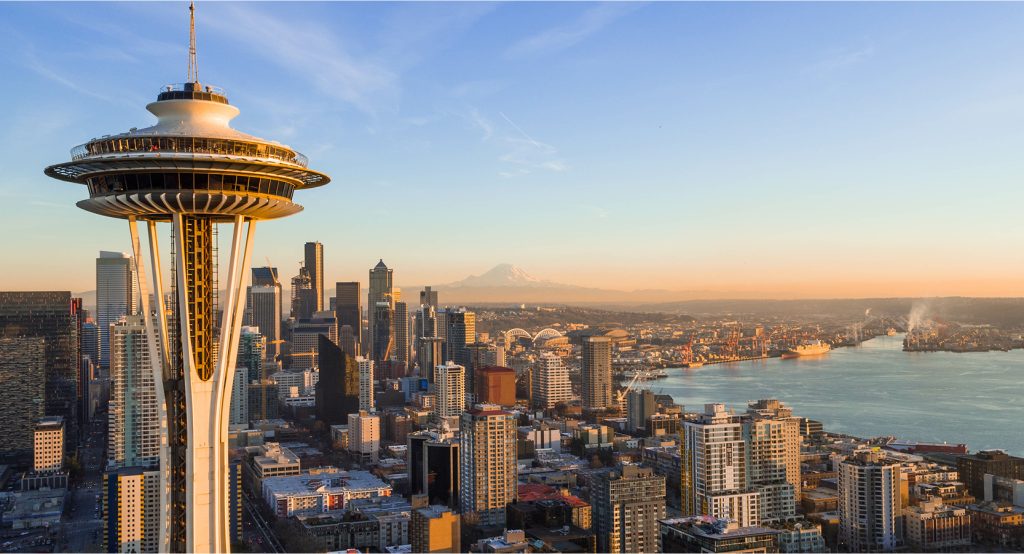
Begin at Hamilton Viewpoint Park, where panoramic views across Elliott Bay, Downtown, and the Olympic Mountains introduce the dramatic geography that defines West Seattle's western hillside. Continue to West Seattle Junction, whose independent businesses, neighborhood gathering spaces, and longstanding commercial traditions deepen appreciation for the community's local character before naturally guiding the experience toward its concluding destination. Conclude at Alki Beach, where Puget Sound shorelines, mountain vistas, and Seattle's historic waterfront setting provide the historical payoff by revealing the maritime landscape that continues shaping the enduring character of Avalon Way. The progression moves naturally from elevated panoramas through neighborhood commerce before concluding beside the shoreline that best expresses the corridor's lasting character.
Where your story begins.
Foresyte Travel reveals places that feel extraordinary long before you arrive.
Enjoy editorial crafted for luxury travelers.
Foresyte may earn a commission when you book.