
Why Brockmont matters.
Brockmont is a secluded enclave where Northwest Glendale's foothill character meets curving residential streets, substantial hillside houses and a residential landscape descending from the Verdugo Mountains toward Kenneth Road.
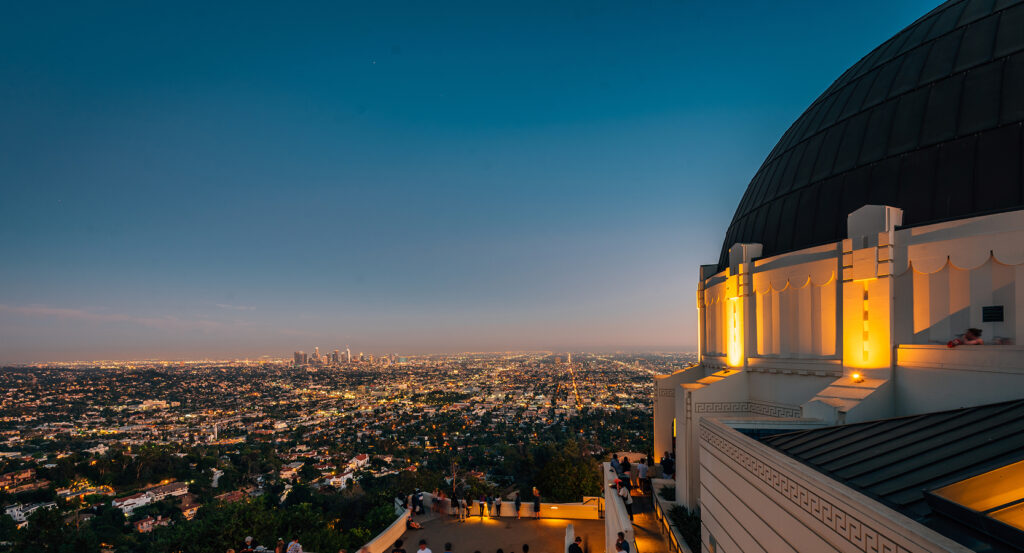
Positioned between Cumberland Heights, Verdugo Viejo, and Grandview, the neighborhood occupies a south-facing foothill tract extending through Arbor Drive, Merriman Drive and Valley View Road above the Kenneth Road corridor. Curving streets climb through mature tree cover and increasingly elevated parcels, replacing the rectilinear pattern of Lower Glendale with a more topographically responsive residential form. Movement through Brockmont follows short bends and gradual ascents where houses sit behind landscaped setbacks, retaining walls and sloping gardens that deepen the separation between individual properties and the street. Views open intermittently toward the Los Angeles basin as the terrain rises, giving the upper blocks a visual reach far beyond the enclosed residential streets below. The result is a neighborhood whose hillside geography, curving roads, mature planting and substantial residential parcels create one of Northwest Glendale's most spatially distinctive foothill environments.
What defines Brockmont.
Brockmont is best known for developing from the 140-acre foothill estate of businessman and philanthropist John C. Brockman, whose private domain preceded the surrounding residential district by more than a decade. Brockman built his grand hillside residence, which he named Brockmont, in 1910, establishing the estate high above the growing city on land commanding the southern slope of the Verdugo foothills. Four years later he added a four-story Spanish Colonial Revival clock tower, creating a highly visible architectural companion to the main house that survives on Arbor Drive. The property remained intact through the remainder of Brockman's life, preserving a large private landscape as residential construction expanded through other parts of Glendale during the early 1920s. His death in 1925 opened the estate to a fundamentally different future when the Home Realty Company acquired and subdivided portions of the acreage as Brockmont Park. The new tract appeared in 1926 with curvilinear streets that distinguished it from the straighter residential blocks developing south of Kenneth Road. A private park became part of the concept, carrying a fragment of the former estate landscape into the subdivision and strengthening the relationship between the new houses and Brockman's original grounds. Construction proceeded around the surviving residence and clock tower as private acreage became residential streets, yet those earlier structures remained embedded within the tract that inherited Brockman's name. The conversion was unusually direct: a single hillside estate supplied the neighborhood's name, its central architectural inheritance, substantial portions of its land and the physical setting around which the succeeding residential community developed.
Residential construction during the late 1920s and 1930s gave the former estate its first substantial architectural layer, with Period Revival houses translating the scale of the original property into individually commissioned homes. Spanish Colonial Revival, Mediterranean and other historically derived styles dominated this first sustained building phase, bringing stucco walls, tile roofs and elaborate domestic compositions to the curving streets. H. Roy Kelley contributed one of the district's substantial examples in 1934 through a Mediterranean Revival residence on Kenneth Road, a 6,101-square-foot house occupying 1.2 acres near the southern edge of the tract. Building slowed during the 1940s, leaving undeveloped parcels among the earlier houses as American residential architecture moved away from the ornament and historical references that had characterized the preceding decades. Construction resumed strongly after World War II, and former portions of the private park, gardens below the Brockman house and other remaining parcels became sites for Ranch residences during the 1950s. More than 30 percent of the houses within the later historic district came from this postwar phase, giving the neighborhood an unusually substantial second architectural chapter. Low horizontal massing and simplified exterior treatment placed the new Ranch houses in visible contrast with the earlier Period Revival residences without displacing the tract's established street pattern. The final house of this extended development cycle arrived in 1959, closing more than three decades of residential construction that had carried the former estate through two sharply different eras of Southern California domestic design. Fifty-eight single-family houses now compose the Brockmont Park Historic District, preserving that architectural succession within the same hillside tract where Brockman had established his private estate in 1910.
How Brockmont fits.
Brockmont works as the anchor for a daytime outing connecting a Californio-era adobe, a rescued Victorian residence and Leslie C. Brand's highly personal hilltop mansion across western Glendale.
Begin at Casa Adobe de San Rafael, built 1870 by Tomás Sánchez, a former Los Angeles County sheriff whose family was closely connected with Rancho San Rafael and the nineteenth-century history of the surrounding valley. Sánchez constructed the house with adobe blocks finished in stucco, creating a residence whose surviving form reaches back to the period before Glendale existed as an incorporated city. The property changed hands in 1875 and subsequently deteriorated, leaving the adobe vulnerable as the surrounding countryside became increasingly urbanized. California Medicinal Wine Company purchased the site in 1930 with plans to demolish the house and remove its mature eucalyptus trees, prompting nearby residents to intervene. Glendale acquired the property that year, and restoration completed by 1932 preserved the adobe with its Monterey-style corridor, tiled roof and long shuttered windows. Continue to Doctors House Museum & Gazebo, an 1888 Queen Anne-Eastlake residence that originally stood on East Wilson Avenue. Four physicians and their families occupied the house in succession, giving the building the name it retains, before Canadian-born filmmaker Nell Shipman rented it with her family between 1917 and 1920. Shipman built a career as an actor, writer, director and independent producer whose outdoor films centered strong female protagonists and incorporated trained wild animals, two bear cubs among the animals living with her at the Glendale house. Threatened with demolition decades later, the residence became the catalyst for formation of The Glendale Historical Society in 1979. The building was moved to Brand Park, restored over the following years and opened as a museum in 1984, preserving one of Glendale's two remaining Queen Anne-Eastlake Victorian houses. Conclude at Brand Library & Art Center, housed inside El Miradero, the mansion Leslie C. Brand completed in 1904 at the base of the Verdugo Mountains. Brand drew architectural inspiration from the East Indian Pavilion he had encountered at Chicago's 1893 World's Columbian Exposition, producing a residence marked by crenellated arches, bulbous domes and minaret-like towers combining Moorish, Spanish and Indian influences. His property occupied a commanding foothill position above Glendale, and Brand remained one of the city's central early promoters until his death in the house in 1925. El Miradero subsequently passed to Glendale with instructions connecting the property to public library and park use, and the mansion became an arts library in 1956. A gallery and recital hall added in 1969 extended the former residence into a broader cultural institution centered on visual art and music. The progression moves from Tomás Sánchez's nineteenth-century adobe through a Victorian house associated with Nell Shipman and culminates inside Leslie C. Brand's 1904 El Miradero, connecting three surviving residences with the successive Californio, Victorian and metropolitan chapters that shaped western Glendale.
Where your story begins.
Foresyte Travel reveals places that feel extraordinary long before you arrive.
Enjoy editorial crafted for luxury travelers.
Foresyte may earn a commission when you book.





































































































