Why California Academy of Sciences matters.
California Academy of Sciences is a pioneering natural history museum where Golden Gate Park's scientific discovery, environmental stewardship, architectural innovation, and living ecosystems unite beneath one extraordinary roof.
Set along Music Concourse Drive near John F. Kennedy Drive and just steps from de Young Museum, this immersive institution invites visitors through rainforest canopies, coral reefs, planetarium domes, natural history galleries, and cutting-edge research collections where the story of life on Earth unfolds across every level. Living habitats, sustainable architecture, world-class exhibitions, and active scientific laboratories transform curiosity into discovery while seamlessly connecting biodiversity, climate, geology, astronomy, and evolution. Exploration, conservation, and scientific inquiry shape every moment inside one of the world's foremost natural science institutions.
What defines California Academy of Sciences.
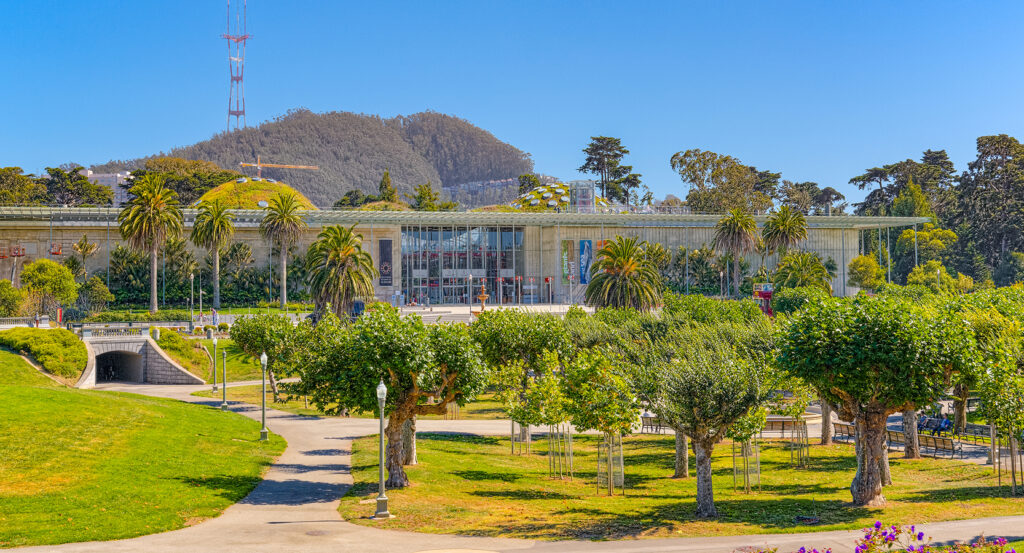
California Academy of Sciences is best known for uniting a world-class natural history museum, aquarium, planetarium, and living rainforest within a single institution whose origins trace to 1853, making it the oldest scientific organization in the western United States, while its current Renzo Piano-designed building, opened in 2008, established an international benchmark for sustainable museum architecture through a 2.5-acre living roof, advanced environmental engineering, and one of the world's most ambitious collections of immersive scientific experiences. Founded by the California Academy of Natural Sciences during the Gold Rush to advance research into the Pacific Coast's extraordinary biodiversity, the institution has grown into a global center for scientific exploration encompassing more than 46 million biological, geological, paleontological, and anthropological specimens representing one of the largest natural history collections on Earth. Architect Renzo Piano collaborated with engineers and environmental specialists to create an energy-efficient structure featuring rolling vegetated roof hills planted with more than 1.7 million native plants, extensive natural ventilation, recycled construction materials, photovoltaic technology, and daylight optimization that earned LEED Platinum certification. Signature attractions include the four-story Osher Rainforest, enclosed beneath a soaring glass dome housing free-flying birds, butterflies, reptiles, and tropical ecosystems; the Steinhart Aquarium, among the world's most biologically diverse aquariums featuring 60,000 live animals; and the Morrison Planetarium, among the largest all-digital planetariums on the planet with a 75-foot dome supporting immersive astronomical visualization. Academy scientists conduct internationally recognized research across taxonomy, evolutionary biology, ichthyology, herpetology, ornithology, geology, anthropology, and climate science, discovering hundreds of new species while leading conservation initiatives throughout the Pacific, Africa, Latin America, and Southeast Asia. Continuing field expeditions, peer-reviewed research, educational programming, and global scientific partnerships reinforce the Academy's position as one of the world's leading institutions advancing knowledge of biodiversity, planetary systems, and environmental conservation.
Research laboratories, living ecosystems, interactive exhibitions, and thoughtfully integrated architecture immerse visitors in scientific discovery spanning billions of years of Earth's history. Tropical forests, coral reef habitats, fossil collections, astronomical simulations, and extensive natural history galleries reveal the interconnected systems that sustain life while demonstrating how scientific investigation continually expands understanding of the natural world. Ongoing conservation initiatives, specimen collection, technological innovation, and educational outreach ensure the Academy remains at the forefront of environmental research and public science education. Scientific excellence, architectural vision, and living biodiversity combine to create one of the world's most influential natural history museums.
How California Academy of Sciences fits.
California Academy of Sciences works as the centerpiece of an exploration through Golden Gate Park's celebrated cultural institutions.
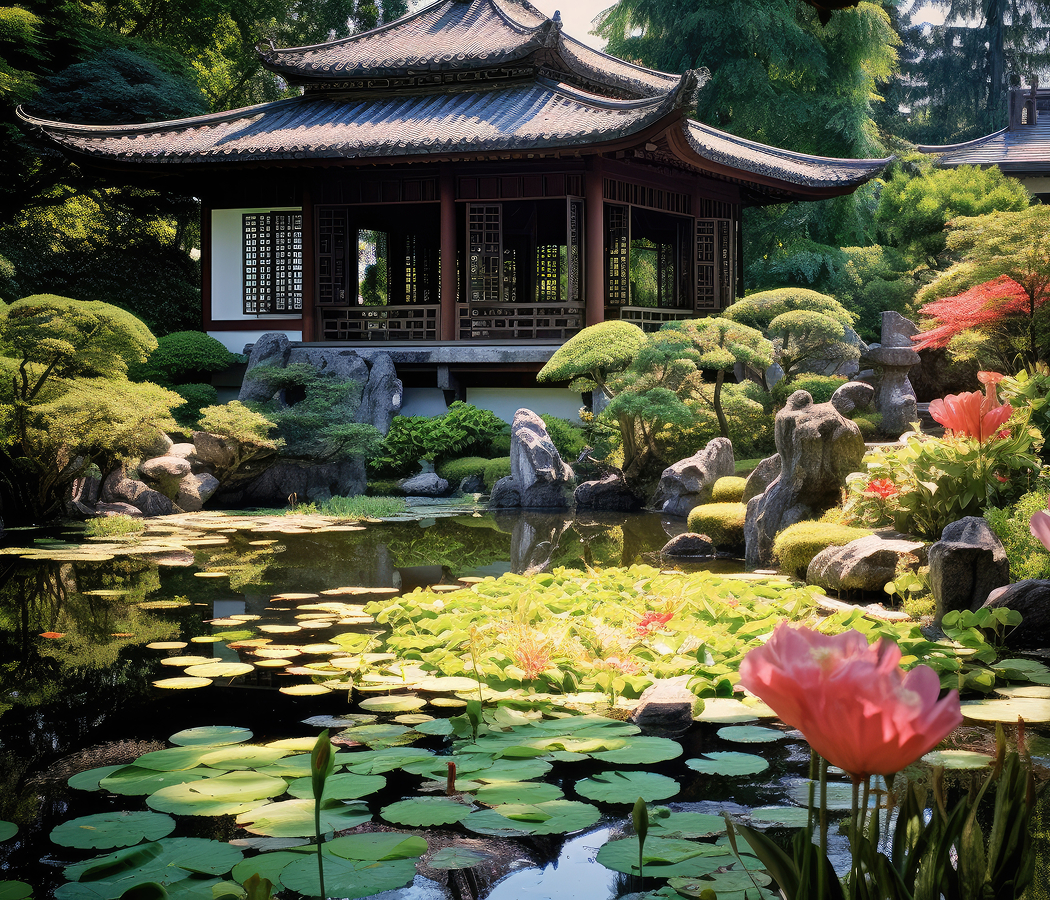
Begin at de Young Museum, where exceptional collections of American art, international textiles, and contemporary exhibitions establish the park's extraordinary cultural landscape before continuing into California Academy of Sciences. Continue to Japanese Tea Garden, whose meticulously designed landscapes provide a tranquil transition celebrating horticultural artistry and Japanese tradition. Conclude at San Francisco Botanical Garden, where thousands of plant species from around the world provide a fitting finale reinforcing the Academy's celebration of biodiversity and global ecosystems. The progression moves naturally from artistic expression to scientific discovery before concluding through one of North America's finest living plant collections, revealing why Golden Gate Park remains among the world's great cultural landscapes.
Where your story begins.
Foresyte Travel reveals places that feel extraordinary long before you arrive.
Enjoy editorial crafted for luxury travelers.
Foresyte may earn a commission when you book.