Why Canlis matters.
Canlis is a distinguished Pacific Northwest fine-dining restaurant where Queen Anne's midcentury architectural heritage meets three generations of family hospitality, James Beard Award-winning design and Seattle's evolving culinary traditions.
Set along Aurora Avenue North near the southern approach to the Aurora Bridge and just steps from the eastern slopes of Queen Anne Hill, the restaurant occupies a dramatic hillside position overlooking Lake Union, Gas Works Park and the Cascade Mountains. Its Northwest Modernist architecture incorporates a sharply angled butterfly roof, extensive glazing and timber structural elements that frame the surrounding landscape. An expansive stone fireplace anchors the dining room, complemented by warm wood finishes, carefully arranged tables and expansive windows angled to control sunlight. The building's descending interior levels create a gradual transition between the entrance and the principal dining areas, reinforcing its connection to the hillside. The result is an exceptionally preserved example of regional modern architecture whose intimate proportions and elevated waterfront views establish one of Seattle's most distinguished dining environments.
What defines Canlis.
Canlis is best known for establishing an enduring standard of Pacific Northwest fine dining through the entrepreneurial vision of founder Peter Canlis and the stewardship of successive generations of his family. The family's restaurant heritage began with Nicholas Kanlis, a Greek immigrant whose early American ventures included a California café established with his Lebanese wife in 1910. Peter subsequently developed his hospitality career in Honolulu, managing food services for the United Services Organizations during World War II. He opened the Canlis Charcoal Broiler in Hawaii in 1946, developing a distinctive approach influenced by Polynesian cooking, Japanese hospitality and American steakhouse traditions. Seattle contractor Jack Peterson encouraged him to establish a restaurant in Washington, introducing the opportunity to build an ambitious dining destination outside the downtown commercial district. Restaurateur Walter Clark helped secure the property, enabling Peter to pursue an architectural commission shaped around residential comfort and exceptional service. Architect Roland Terry developed the building in collaboration with Honolulu firm Wimberly & Cook, bringing an emerging Northwest regional modernism into a major commercial project. Canlis opened on December 11, 1950, establishing a substantial new presence in Seattle's restaurant industry. Peter expanded the business through additional locations in Honolulu, Portland and San Francisco, extending the family name across the West Coast. His death in 1977 brought leadership to his son Chris and daughter-in-law Alice, who concentrated the company's operations around its Seattle flagship. Their sons Mark and Brian assumed leadership in 2007, beginning another period of culinary development and institutional recognition. The James Beard Foundation awarded Canlis its Design Icon distinction in 2019, recognizing the architectural significance of the restaurant and its preservation. Brian departed the business in 2025, leaving Mark to direct its next chapter. That same year, Food & Wine ranked Canlis second among America's best restaurants, extending its national reputation into a fourth quarter-century of family ownership.
James Huffman became the restaurant's eighth executive chef in 2025, introducing a culinary program informed by contemporary American cooking and the ingredients of the Pacific Northwest. His appointment followed the departure of Aisha Ibrahim, whose tenure had introduced a distinctive culinary perspective shaped by Filipino heritage and experience at internationally acclaimed restaurants. The six-course tasting format combines three diner-selected courses with additional preparations determined by the kitchen. Sashimi featuring cured salmon, pickled onion and sea herbs draws on the region's seafood traditions through controlled curing and carefully balanced acidity. Sablefish appears with turnips, spot prawns and guanciale XO, combining the fish's rich texture with shellfish sweetness and a deeply savory condiment. Halibut accompanied by wax beans, mushrooms and dashi introduces Japanese culinary influences through a delicate broth. Savoy cabbage with leek, koji, brassica and hazelnut develops layered vegetable flavors through fermentation and contrasting textures. A beef preparation incorporates kalbi, spring onion and chickpea miso, bringing Korean-inspired seasoning into a contemporary tasting-menu composition. Seasonal desserts include a yeasted corn cake with blackberry and nasturtium sabayon, pairing grain sweetness with fruit acidity and floral aromatics. The Canlis Salad preserves a direct connection to the restaurant's original menu through its tableside preparation. Its combination of romaine lettuce, bacon, mint, oregano, scallions, lemon and Romano cheese established one of the house's enduring culinary signatures. Wine service constitutes another major achievement, supported by a cellar recognized with twenty-nine consecutive Wine Spectator Grand Awards. The restaurant's longstanding emphasis on professional service extends through a substantial beverage program, carefully coordinated dining-room operations and the ceremonial preparation of selected dishes. Canlis combines contemporary culinary experimentation with the technical discipline and hospitality practices developed across its extensive family history.
How Canlis fits.
Canlis works as the culinary anchor for a Seattle outing connecting Queen Anne's public landscapes, the city's maritime heritage and a major cultural institution devoted to the history of the Pacific Northwest.
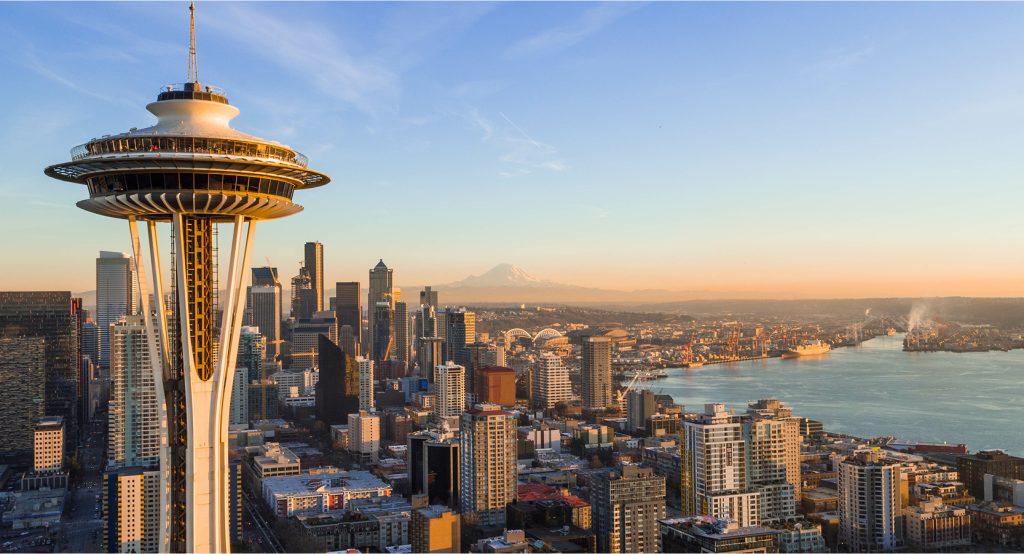
Begin at Kerry Park, the compact public overlook occupying the southern slope of Queen Anne Hill. The park was donated to Seattle in 1927 by Albert and Katherine Kerry, whose gift preserved a prominent viewpoint above the downtown waterfront. Its elevated position provides an expansive panorama incorporating Elliott Bay, the downtown skyline and Mount Rainier on clear days. The landscaped grounds include the abstract steel sculpture Changing Form, created by artist Doris Totten Chase in 1971. Its circular and angular elements introduce a substantial work of modern public art into the celebrated viewpoint. Continue to Lake Union Park, the waterfront public landscape developed along the southern shore of Lake Union. The park occupies land associated with Seattle's maritime industries, preserving connections to the city's historic shipbuilding, transportation and commercial waterfront activities. Its broad lawns, pedestrian paths and shoreline access establish a substantial public gathering area overlooking the working lake. The Historic Ships Wharf accommodates vessels associated with regional maritime history, including the steamship Virginia V and the fireboat Duwamish. Their preservation connects the waterfront with the development of passenger transportation and emergency services across Puget Sound. Conclude at Museum of History & Industry, the institution established in 1952 to preserve and interpret the history of Seattle and the surrounding region. Its present home occupies the former Naval Reserve Armory at the southern end of Lake Union, a substantial Art Deco building completed in 1942. The museum relocated there in 2012, adapting the historic structure for extensive permanent and temporary exhibitions. Its collection includes the Boeing B-1 seaplane, an early aircraft associated with Seattle's emerging aviation industry, alongside artifacts representing regional commerce, technology and civic development. The Bezos Center for Innovation explores the entrepreneurial and technological developments that transformed the Pacific Northwest into an international center of business and engineering. The progression moves from Kerry Park's celebrated urban panorama through Lake Union Park's maritime landscape and culminates at Museum of History & Industry's comprehensive account of Seattle's commercial and technological development.
Where your story begins.
Foresyte Travel reveals places that feel extraordinary long before you arrive.
Enjoy editorial crafted for luxury travelers.
Foresyte may earn a commission when you book.