
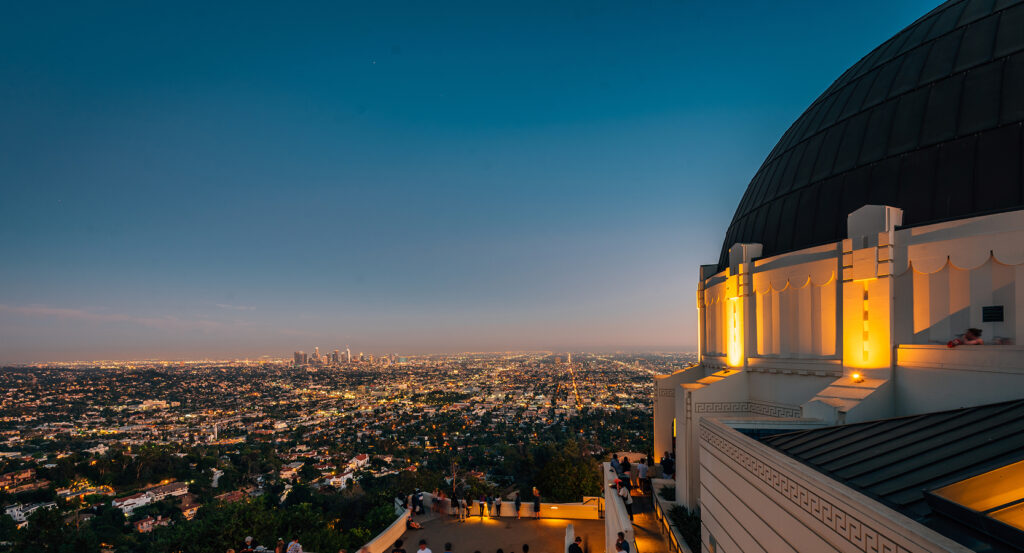
Why Central Pasadena matters.
Central Pasadena is a storied enclave where the San Gabriel Valley's early metropolitan character meets a nineteenth-century commercial core, expansive civic architecture and successive generations of urban growth organized around Colorado Boulevard.
Positioned between North Central Pasadena, East Pasadena, and South Pasadena, the area occupies the city's principal urban core extending through Colorado Boulevard, Green Street and Union Street between the Arroyo Seco approach and the districts surrounding Lake Avenue. Masonry storefronts, enclosed courtyards, apartment buildings and larger institutional structures create rapid changes in scale as the compact blocks of the western commercial core give way to broader avenues farther east. Movement through Central Pasadena follows a dense pedestrian network where short cross streets, alleys and mid-block passages intersect the major east-west corridors, preserving a street pattern established before automobile traffic became dominant. The Civic Center changes that compressed scale through broad axial spaces and formally composed public buildings, creating an expansive counterpoint to the tighter commercial blocks surrounding Colorado Boulevard. The result is a greater area whose nineteenth-century street pattern, concentrated commercial fabric, civic architecture and later urban layers preserve the physical development of Pasadena's metropolitan center within a highly legible core.
What defines Central Pasadena.
Central Pasadena is best known for developing around Colorado Street and Fair Oaks Avenue, the commercial crossroads from which Pasadena's early business district expanded after the community emerged during the 1870s. The arrival of transcontinental railroad service from Los Angeles in 1888 accelerated population growth, tourism and real-estate investment, drawing new residents from the Midwest and East Coast as the former agricultural settlement entered an intense period of urban construction. Businesses spread eastward along Colorado during the following decades, replacing portions of the early Victorian commercial fabric with larger masonry buildings as the city's population and purchasing power increased. Pasadena incorporated in 1886, and its growing reputation as a winter resort supported hotels, shops and services serving both permanent residents and seasonal arrivals drawn by Southern California's climate. The commercial core continued expanding during the early twentieth century until it stretched beyond Raymond Avenue toward De Lacey Avenue, with Colorado becoming the principal east-west artery through the center. A $2.5 million project between 1928 and 1930 widened Colorado Boulevard by fourteen feet on each side, requiring numerous property owners to move buildings, demolish them or remove their original fronts before constructing replacement façades along the new alignment. Several owners cut entire façades away from their structures and rebuilt them farther back, physically altering an established nineteenth-century business street for the traffic demands of a rapidly expanding twentieth-century city. Period Revival architecture increasingly replaced the earlier Victorian commercial character during the same decades, giving the corridor Spanish, Mediterranean and Classical forms associated with Pasadena's broader architectural development. Central Pasadena entered the Depression with a commercial spine shaped by fifty years of migration, railroad access, resort wealth, architectural change and a major reconstruction of its principal boulevard.
Civic ambition supplied a second major chapter during the 1920s as Pasadena translated rapid population growth into one of Southern California's most ambitious City Beautiful ensembles. Voters approved a $3.5 million bond issue in 1923 to finance a new civic center after Chicago architects Bennett, Parsons and Frost developed a scheme organizing government and cultural buildings along a formal axis extending north from Green Street. Bakewell and Brown received the commission for Pasadena City Hall, creating a Mediterranean Revival composition centered on a six-story circular tower capped by a dome rising above the surrounding administrative complex. Construction began in 1925, and the completed building opened in 1927 with hundreds of rooms arranged around a central courtyard, establishing a commanding architectural terminus for the new civic axis. The same campaign brought the Pasadena Public Library into a purpose-built structure designed by Myron Hunt, whose long Southern California career also included major institutional and residential commissions across the region. The Civic Auditorium followed at the southern end of the ensemble, designed by George Edwin Bergstrom, Cyril Bennett and Fitch Haskell and completed in 1931 with an auditorium seating more than 3,000 people. Commercial activity continued immediately west along Colorado Boulevard, allowing the formal civic composition to develop beside the older business center. Economic decline later weakened that commercial core as businesses moved eastward and vacancies increased through the middle decades of the twentieth century, leaving many older buildings vulnerable before reinvestment began during the 1970s. Plaza Pasadena opened in 1980 as part of that renewal period, inserting a large enclosed shopping complex into the center before another generation of redevelopment replaced it with Paseo Colorado in 2001. Central Pasadena carries an unusual sequence of metropolitan ambitions across contiguous blocks, joining the early commercial city, the expansive civic program of the 1920s and repeated efforts to renew the core as Pasadena's economic geography changed.
How Central Pasadena fits.
Central Pasadena works as the anchor for a daytime outing connecting Greene and Greene's residential masterpiece, the evolution of a major American art collection and the astronomical discoveries that changed humanity's understanding of the universe.
Begin at Gamble House, completed in 1908 for David and Mary Gamble as a winter residence designed by brothers Charles Sumner Greene and Henry Mather Greene. The architects integrated structure, furniture, lighting, stained glass and extensive custom woodwork into a unified Craftsman composition, drawing upon Japanese architecture alongside the possibilities of California indoor-outdoor living. David Gamble was the son of Procter & Gamble co-founder James Gamble, and the family retained the house for generations before transferring it to Pasadena in 1966 through an arrangement with the University of Southern California. National Historic Landmark status followed in 1977, placing the residence among the country's most significant surviving works of early twentieth-century domestic architecture. Continue to Norton Simon Museum, whose institutional history began with the Pasadena Art Institute in 1922 before decades of expansion culminated in an 85,000-square-foot building designed by Ladd & Kelsey and opened in 1969. Construction debt threatened the museum within several years, creating the opening for industrialist Norton Simon to assume its financial obligations and management in 1974. Simon brought a collection spanning European painting and sculpture alongside South and Southeast Asian art, and the reorganized institution reopened in March 1975 before receiving its present name that October. Jennifer Jones Simon later directed a 1996 through 1999 interior renovation by Frank Gehry, followed by Nancy Goslee Power's redesign of the sculpture garden. Conclude at Mount Wilson Observatory, founded in 1904 when astronomer George Ellery Hale brought the Snow Solar Telescope from Yerkes Observatory to the mountain above Pasadena under the Carnegie Institution of Washington. Hale subsequently assembled an astronomical center whose instruments included the 60-inch telescope and the 100-inch Hooker telescope, completed in 1917 as the world's largest operational telescope. Edwin Hubble used the Hooker during the 1920s to establish that Andromeda lay beyond the Milky Way, fundamentally enlarging the known scale of the universe, then worked with Milton Humason on observations connecting galactic distance with redshift. Albert Michelson used the same telescope in another major experiment, attaching an interferometer to measure the diameter of Betelgeuse in 1920. The progression moves from Greene and Greene's intensive domestic craftsmanship through Norton Simon's transformation of a Pasadena art institution and culminates with Hale, Hubble, Humason and Michelson on Mount Wilson, connecting architecture, collecting and scientific discovery across Pasadena's extraordinary intellectual history.
Where your story begins.
Foresyte Travel reveals places that feel extraordinary long before you arrive.
Enjoy editorial crafted for luxury travelers.
Foresyte may earn a commission when you book.





































































































