
Why Labyrinth matters.
Deep beneath the Castle Hill district of Budapest lies a world few visitors ever imagine: Labyrinth, a network of ancient caves and passageways steeped in history, myth, and mystery.
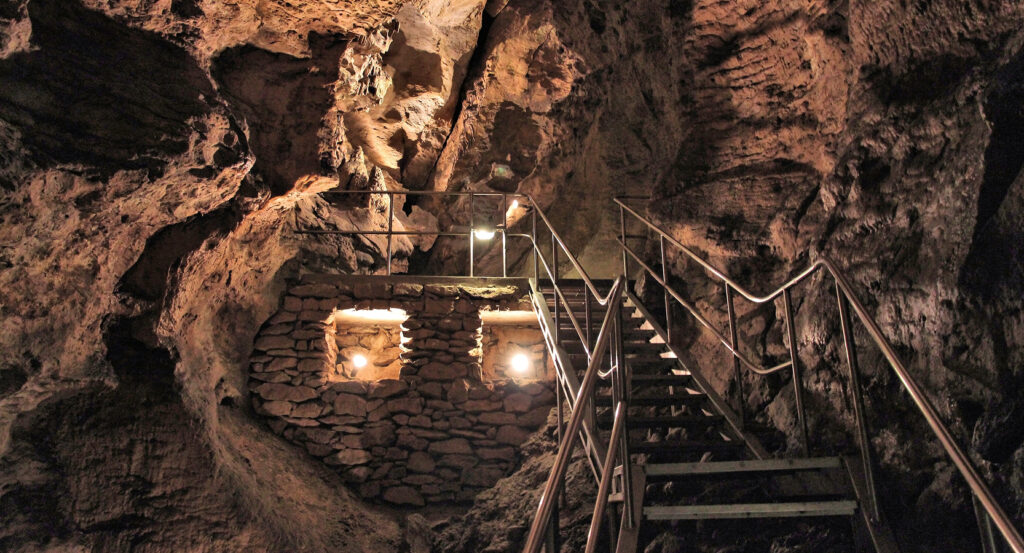
Carved by nature and shaped by centuries of human use, this underground maze extends beneath the Buda Castle, where dripping stone corridors and echoing chambers conjure a surreal atmosphere that feels halfway between dream and history. Once part of a natural cave system formed by thermal waters, Labyrinth has been used for everything from a wine cellar and a bomb shelter to a medieval prison, and, according to legend, the holding place of Vlad the Impaler, the real-life inspiration for Dracula. Walking through its dimly lit halls, illuminated only by flickering lamps and the occasional torch, you feel the weight of centuries pressing close. The air is cool and damp, scented with limestone and time. The experience is immersive, eerie but unique, as sound seems to vanish into the depths and shadows move with quiet intent. The deeper you go, the more it feels like a descent into Budapest's subconscious, where folklore, faith, and fear intertwine.
What defines Labyrinth.
Labyrinth is more than a tourist attraction; it's a layering of European history layered beneath the city's foundation.
Formed naturally over 300,000 years ago by the same thermal springs that feed Budapest's famous baths, the cave system spans 10 kilometers, though only a small portion is open to visitors today. Archaeologists have uncovered artifacts suggesting human presence as early as prehistoric times, while medieval records detail its use as a refuge during sieges and invasions. During the Ottoman occupation, the caverns stored food and weapons; in World War II, they became bomb shelters, protecting hundreds of civilians during air raids. Later, under communist rule, the tunnels were used for classified operations and civil defense planning, their existence quietly erased from public consciousness. When the site reopened as Labyrinth of Buda Castle, it embraced not only its history but its mythology, with exhibits that blend archaeology, Gothic ambience, and theatrical storytelling. The “Labyrinth of Darkness” route, for instance, invites visitors to navigate by lantern through near-total blackness, a symbolic exploration of the unknown. The site also nods to its rumored connection to Vlad Tepes (Dracula), whose imprisonment here in the 15th century is half-history, half-legend, yet wholly captivating. Even the faint strains of music, a Gregorian chant echoing through stone, are part of the artistry, creating a timeless atmosphere that blurs the line between fact and fable.
How Labyrinth fits.
Exploring Labyrinth in Budapest is among the most atmospheric and unforgettable experiences the city offers, best approached with curiosity and a touch of courage.
Begin at Labyrinth entrance on Úri Street, just a short walk from Buda Castle and Matthias Church. The site is open year-round, but the cool, constant underground temperature makes it especially refreshing on hot summer days. Take your time through the narrow corridors, letting your eyes adjust to the dim light as you pass through sections dedicated to different eras, prehistoric chambers, medieval cellars, and the haunting wax exhibits of Hungarian royalty. The Lantern Walk is a must, offering a glimpse of what life underground might have felt like centuries ago. Bring sturdy shoes, as the stone floors can be slick, and prepare for moments of near silence where the only sound is dripping water. After resurfacing, reward yourself with a stroll around the Castle District, pausing for coffee or cake at the Ruszwurm Confectionery, among Budapest's oldest cafés. For history enthusiasts, pair your visit with the Hospital in the Rock Museum, another subterranean site nearby that reveals the city's wartime resilience. Evening visits to Labyrinth are particularly spellbinding, when the torches burn lower and the air seems charged with secrets. Labyrinth in Budapest is more than a cave, it's a mirror of the city's soul: dark, beautiful, resilient, and endlessly layered, where every echo carries a fragment of its haunting past.
Where your story begins.
Foresyte Travel reveals places that feel extraordinary long before you arrive.
Enjoy editorial crafted for luxury travelers.
Foresyte may earn a commission when you book.





































































































