Why Clay Street matters.
Clay Street is a historic Financial District corridor where transportation innovation, commercial heritage, and architectural distinction converge along one of San Francisco's most influential streets.
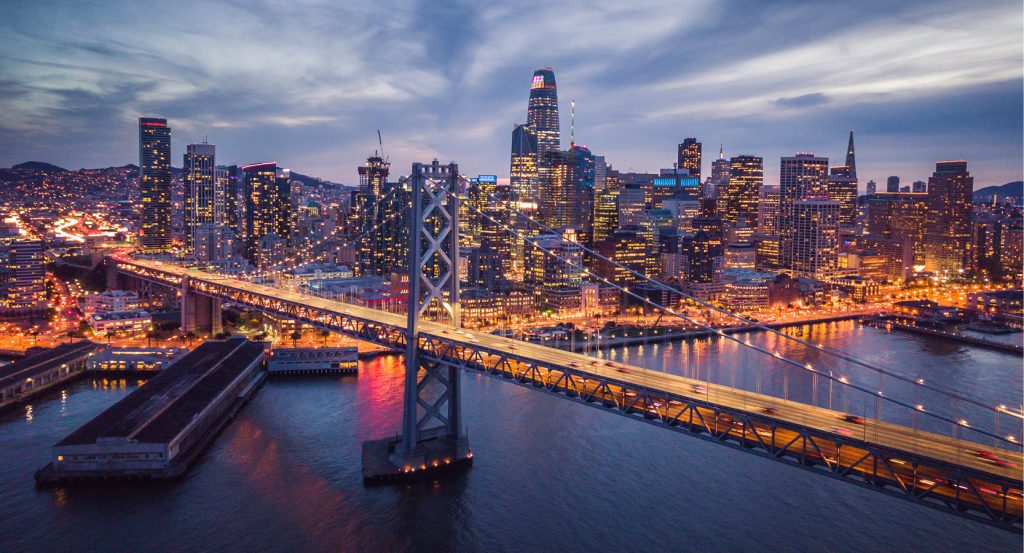
Running through Financial District between Nob Hill and Embarcadero, this distinguished corridor connects landmark office towers, beautifully preserved commercial buildings, historic plazas, celebrated restaurants, elegant public spaces, and architectural icons that have shaped generations of San Francisco life. Historic masonry façades, modern skyscrapers, and energetic pedestrian activity create a streetscape where Gold Rush enterprise continues complementing one of the city's most important business districts. Rising from the original waterfront toward Nob Hill, Clay Street remains one of San Francisco's defining historic corridors. The result is a street defined by engineering achievement, commercial ambition, and enduring metropolitan significance.
What defines Clay Street.
Clay Street is best known for becoming the route of the world's first successful cable car line, when Andrew Smith Hallidie inaugurated the Clay Street Hill Railroad on August 2, 1873, proving that cable propelled transit could safely conquer San Francisco's steep hills and launching a transportation technology that spread to cities across North America, Europe, Australia, and New Zealand.
Hallidie's revolutionary system eliminated the dangers faced by horse drawn streetcars on steep grades while introducing an engineering solution that permanently transformed urban transportation. The success of the line established San Francisco as the birthplace of cable railway technology and inspired the construction of cable systems around the world. Clay Street continues preserving that extraordinary legacy as the corridor where one of the nineteenth century's greatest transportation innovations first demonstrated its remarkable potential.
How Clay Street fits.
Clay Street works as an exploration of San Francisco's engineering heritage, financial landmarks, and historic architecture.
Begin at the Cable Car Museum, where the world's last manually operated cable railway immediately establishes the corridor's extraordinary engineering legacy before exploring Clay Street. Continue toward the Transamerica Pyramid, whose iconic silhouette reinforces the remarkable architectural evolution that defines San Francisco's skyline. Conclude at the Ferry Building Marketplace, where beautifully restored waterfront architecture and sweeping bay views provide a memorable finale to an itinerary shaped by engineering innovation, commercial history, and architectural excellence. Along the route, historic commercial buildings, elegant plazas, landmark office towers, neighborhood cafés, distinguished streetscapes, and energetic public spaces demonstrate how Clay Street connects one of the world's greatest transportation breakthroughs with the city's enduring commercial prominence. The progression moves naturally from renowned engineering landmark to iconic skyscraper to historic waterfront destination, revealing why Clay Street remains one of San Francisco's defining historic corridors.
Where your story begins.
Foresyte Travel reveals places that feel extraordinary long before you arrive.
Enjoy editorial crafted for luxury travelers.
Foresyte may earn a commission when you book.